Reviews
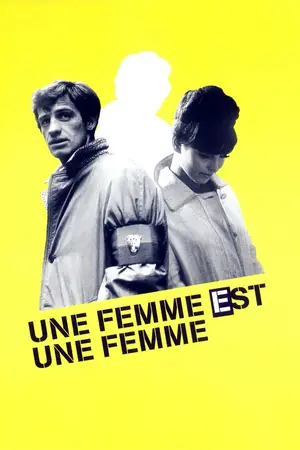
A Woman Is a Woman (1961)
T Timeless Tales BWMay 15, 2025
Jean-Luc Godard’s third feature and first in color bursts with primary hues and bold irreverence. In this modern urban fable, he strips gender dynamics down to their most elemental forms, uncovering both humor and frustration. Like many of Godard’s women, Anna Karina’s character insists on being seen first and foremost as an individual—before any label or role.

The Fiances (1963)
TTimeless Tales BWMay 15, 2025
Timeless Tales BWMay 15, 2025Ermanno Olmi presents the working-class struggles of Milan with a gentle realism, offering not just narrative but documentary-like glimpses of life. His understated, lyrical storytelling evokes a powerful intimacy, as if we’re eavesdropping on life itself. His use of long, narrow frames and deep focus intensifies the protagonist Giovanni’s emotional isolation, especially in scenes where he glances down endless corridors—symbols of both his detachment and quiet yearning.

Ivan's Childhood (1962)
TTimeless Tales BWMay 15, 2025
Timeless Tales BWMay 15, 2025While it lacks the overt stylistic signatures of Andrei Tarkovsky’s later work, Ivan’s Childhood is nonetheless deeply accessible and sincere. Ivan’s story, set against the devastation of war, becomes a tragic portrait of a lost generation. The juxtaposition of crumbling ruins and brutal violence with the fragile beauty of childhood dreams heightens the sense of irretrievable loss. The film’s recurring dream sequences, particularly the intro and the ending, are all interconnected—bookending the narrative with fleeting hope and wrenching despair.

Dirty Angels (2024)
TTimeless Tales BWMay 15, 2025
Timeless Tales BWMay 15, 2025Director Martin Campbell tries to bridge thrilling action with character-driven storytelling, and occasionally succeeds. In several combat scenes, the pacing and tension mirror the protagonists’ emotional turmoil, allowing viewers to experience both physical and internal conflicts simultaneously.

Limelight (1952)
R Rory_ZhangMay 15, 2025
A deeply moving film, "Limelight" feels like an outpouring of Charlie Chaplin’s soul. The sheer emotional weight of it is overwhelming. It’s impossible not to be touched by the sense of personal reflection woven through the dialogue and narrative. Claire Bloom is luminous as the young ballerina—her delicate grace, quiet strength, and unwavering devotion truly touched hearts.

The Amateur (2025)
A Amanda_DaltonMay 15, 2025
The story unfolds with a clear progression. Early scenes focus on Charlie’s quiet life and the grief that propels him into action, laying solid groundwork for the revenge arc that follows. As the plot escalates, the pace picks up. Clever storytelling devices—like Charlie teaching himself lock-picking through online tutorials—add modern relevance and a touch of ingenuity to the spy-thriller formula.

Warfare (2025)
B Blythe_JensenMay 15, 2025
Unlike most war films, "Warfare" feels like a stripped-down fragment of a larger story—focused and brutally realistic. The plot centers on a squad under attack and trying to escape, with no backstory or exposition. Tight pacing, documentary-style visuals, and immersive sound design lend the film an urgent, lifelike intensity. It doesn’t moralize or glorify the military—it simply shows what survival looks like in real combat.

Drop (2024)
S Sean_WardMay 15, 2025
Filmed only with a single setting and two little-known actors, "Drop" punches above its weight thanks to a sharp script. It creates genuine tension with limited resources, and a smart, capable female lead keeps the audience engaged. The storytelling proves that with effective writing, even minimalism can be gripping.

Screamboat (2025)
M Marcus_McintoshMay 15, 2025
The film leans heavily into absurdist humor, gleefully skewering Disney tropes in a way that’s often hilarious. Unfortunately, the monster Willie is a misfire—poor CGI and clunky design make it feel disconnected from the rest of the film. Heavy prosthetics further mask the actor’s expressions, dulling the impact.

DogMan (2023)
H Horst_In_TranslationMay 15, 2025
A colorful, kid-friendly adventure with a simple, broadly appealing storyline and playful visual design. While young audiences will likely enjoy it, older viewers may find it dull and too lightweight.

The Flavor of Green Tea Over Rice (1952)
G Gavin_IrvingMay 15, 2025
Yasujirō Ozu was always a quiet chronicler of Japan’s social shifts, and here he shows how true change often begins at home. The film captures the tensions between tradition and modernity, rich and poor, husband and wife. His use of mid- and wide-shots is masterful, and the era’s tendency to have characters look directly into the camera adds a fascinating intimacy.

Roman Holiday (1953)
D Didier-BecuMay 15, 2025
Maybe my expectations were too high, but I came away slightly disappointed. What troubled me most was how Gregory Peck’s character approaches Audrey Hepburn’s princess with a hidden agenda—it makes the romance hard to believe. Even though he ultimately doesn’t publish the story, that feels more like basic decency than genuine redemption. Still, this was a different era, and perhaps at the time, that ending felt more magical than it does now.

La Strada (1954)
T Tânia_AMay 15, 2025
Giulietta Masina’s character is someone stripped first of choice, then of the very ability to choose. She submits to abuse and control, becoming a victim of patriarchy in its most brutal form. She has not one, but two chances to break free—and still stays. It’s hard not to wonder if this is Fellini’s idea of the perfect wife: passive, broken, and tragically loyal.

The Outcry (1957)
C Cassidy_WilcoxMay 15, 2025
This might be one of Michelangelo Antonioni’s most accessible films. Though he rarely explored working-class lives, the themes here—emotional detachment and the alienation brought on by a changing world—are unmistakably his. The compositions are stunning: figures drift through disjointed foregrounds and backgrounds, while the occasional piano motif adds a haunting, dreamlike vibe.

Nights of Cabiria (1957)
T Trevor_LangMay 15, 2025
Life, in Fellini’s world, is an endless series of emotional gambles. Cabiria, ever hopeful, keeps throwing herself into new adventures, only to be met time and again with heartbreak. Through her encounters with different men, Fellini paints a broader portrait of class disparity—those above her treat her as little more than a passing amusement, while those of lower class mock or exploit her for personal gain.

Tokyo Twilight (1957)
A Alison_OlsenMay 15, 2025
Ozu’s final black-and-white film is also one of his darkest. There are no tracking shots—just static compositions and low angles that imbue the story with a quiet, inescapable sadness. Yet despite its moody tone, the first hour drags, and the storytelling feels less precise and emotional than in his earlier works.

Elevator to the Gallows (1958)
A Alex_McclainMay 15, 2025
Louis Malle’s feature debut—starring Jeanne Moreau—unfolds as a noir murder story gone chaotically wrong. What begins as a clean plan to kill a husband quickly spirals into absurdity through a chain of accidents. With Miles Davis’ haunting jazz score heightening the tension, the film dives into the psychological unraveling of its characters.

The Big Country (1958)
H Harold_MosesMay 15, 2025
A grand-scale anti-Western, this epic production defies the genre’s conventions with sweeping landscapes and an emphasis on human smallness in the face of vast terrain. William Wyler masterfully uses widescreen to undercut the idea of a heroic individual, and both the score and cinematography are exceptional. At three hours, it's long but never dull—packed with drama and a strong anti-heroic message.

The Lovers (1958)
W Willy_GarberMay 15, 2025
A woman trapped in a loveless marriage leaves everything behind for love and freedom—it doesn’t get more quintessentially French than that. With its widescreen framing and audacious driving sequences shot on location, the film was ahead of its time and gave Jeanne Moreau a platform to shine. The sharp, witty dialogue adds a breezy charm.

Breathless (1960)
L lalyInly7May 15, 2025
Godard’s debut and a defining work of the French New Wave, Breathless revolutionized cinema with its jump cuts, upending the continuity editing of classical Hollywood. The extended 23-minute hotel room sequence and fatalistic ending aren’t just stylish—they evoke the existential void at the heart of the film. Between sadness and nothingness, Godard chooses nothingness.