Reviews

The Damned (1969)
F FastAndActionApril 25, 2025
Told from the perspective of a doctor who unwittingly gets caught in a crisis, the film delves into the power struggles aboard a submarine, using individual's experiences to reflect the broader state of society in the final days of the war. It’s far more engaging than merely showcasing battlefield action. However, the conclusion feels rushed, making the opening flashback seem somewhat disjointed. And if the film is meant to be from the doctor’s point of view, why does it occasionally shift to an omniscient perspective?
The Red Circle (1970)
FFastAndActionApril 25, 2025
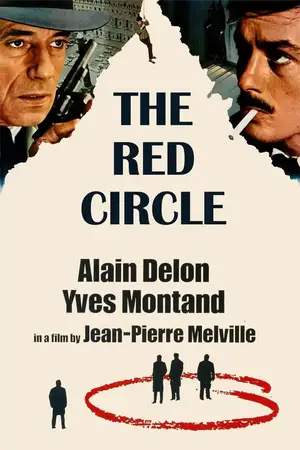
FastAndActionApril 25, 2025A film like this in the 1970s is a testament to Jean-Pierre Melville’s mastery. It’s evident that many directors who came after him were influenced by his work. The meticulous cinematography, the minimalist dialogue, and the unspoken camaraderie between men all bear his unmistakable signature. The infrared-dodging sequence during the heist immediately reminded me of Catherine Zeta-Jones’ stunning moves in "Entrapment"—perhaps that film’s director even took inspiration from "Le Cercle Rouge."
Husbands (1970)
FFastAndActionApril 25, 2025
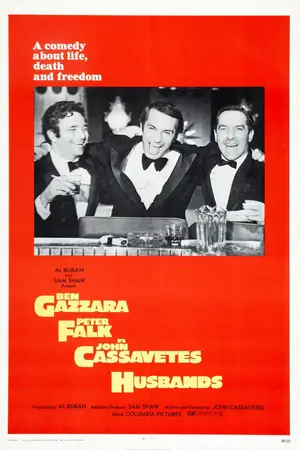
FastAndActionApril 25, 2025Three middle-aged men, shaken by the death of a close friend, abandon their families and responsibilities for a brief period of indulgence. Their escapades, however, are steeped in emptiness and anxiety, exposing the constraints of middle-aged life. Visually, it bears a strong resemblance to "A Woman Under the Influence," with its raw cinematography, desaturated tones, and freeform narrative. However, some moments lack the same gripping intensity, and the performances lack the urgency compared to "A Woman Under the Influence."

A New Leaf (1971)
FFastAndActionApril 25, 2025
FastAndActionApril 25, 2025Elaine May's triple role as writer, director, and lead actress is a tremendous asset to the film, which carries echoes of classic Italian comedies. The story of love within the upper class reaches its feel-good conclusion not by breaking down the divide between aristocracy and commoners, but by embracing the idea that even the wealthy can lead humble, working-class lives and find joy in simplicity.

Murmur of the Heart (1971)
FFastAndActionApril 25, 2025
FastAndActionApril 25, 2025This is a beautiful story, but also an idealized one. A woman who lives so unapologetically on her own terms would be a rarity in reality. The film delivers a profound deconstruction of morality and freedom while perfectly capturing the turbulence of adolescence. The buildup is meticulous, and the narrative control formidable.

Made in U.S.A (1966)
A Arvilla_MilesApril 25, 2025
The story draws on the real-life abduction of Moroccan dissident Mehdi Ben Barka, but it’s also a stylized homage to American noir—especially films like The Big Sleep. The dialogue is deliberately nonsensical, like a noir screenplay written by AI after bingeing on genre films. When plot explanations do surface, they’re often drowned out by noisy airplanes, as if the film itself is purposely hiding the truth.

Cool Hand Luke (1967)
A Alfred_HawkinsApril 25, 2025
Cool Hand Luke carries a potent religious subtext. Luke transforms from a cynical antihero into a figure of quiet faith. War may have stripped away his belief, but love for his mother rekindles it. His death—shot in a church, filmed from below with a cross looming behind—becomes a symbolic martyrdom. The prison guards, once mere figures of authority, morph into symbols of corrupted justice and the suppression of freedom.

In the Heat of the Night (1967)
A Alayna_AbbottApril 25, 2025
The film’s strength lies in its gripping plot and powerful performances. It embeds its racial commentary within a tense murder mystery, allowing both threads to develop in parallel. Rod Steiger’s white sheriff and his character arc feels natural. The opening scenes are especially atmospheric.

The Jungle Book (1967)
D daniela15April 25, 2025
This animated feature captures the behavior of humans and animals with remarkable realism. The boy’s clumsy gait and awkward presence in the jungle contrast perfectly with the agility or sluggishness of the various animals. The musical numbers are lively and in tune with the film’s themes of optimism and return. The ending—where the boy rejoins human society while the animals resume their own lives—feels emotionally sound and even progressive by today’s standards.

Two for the Road (1967)
C Chase_TurnerApril 25, 2025
I didn’t expect this to be a road movie, but that’s exactly what it is—one that elegantly traces a relationship from chance meeting to romantic high to mid-marriage crisis, all through the deft use of cross-cutting and nonlinear storytelling. By the end, you realize just how perfectly matched the couple is. The film’s second characteristic is its female-centric perspective, which subtly frames the relationship’s unraveling as largely the man’s fault. The reconciliation at the end feels slightly abrupt, but the dialogue throughout is delightful—lyrical, sharp, and loaded with character.

Faces (1968)
J JeesezApril 25, 2025
As the title suggests, "Faces" is a film built around expressions—stark, intimate, unrelenting. John Cassavetes, an actor turned self-taught director, knew faces like few others. Unlike the New York avant-garde of his time, Cassavetes charted a more grounded, realist path within the American independent cinema movement, one that strays from Hollywood.

The Conformist (1970)
V Victor_StaffordApril 25, 2025
When Marcello enters the minister's office, Bertolucci frames the scene in an extreme long shot from a high angle, dwarfing the human figure within a vast, mechanical space. It’s a striking visual metaphor for the crushing power of authoritarianism. The character's placement at the bottom of an unbalanced frame emphasizes his alienation and spiritual desolation. Meanwhile, three lingering close-ups of a woman’s bare feet hint at the decadent moral emptiness of both the fascist and bourgeois classes. Bertolucci reveals a masterful ability to externalize inner states through image and composition.

Claire's Knee (1970)
M Manda0testApril 25, 2025
This exquisitely crafted film is part of Éric Rohmer’s "Six Moral Tales" series. The protagonist, a diplomat, finds himself entangled in an emotional game with two young women just before his wedding. Rohmer’s cinema is like a microscope—his meticulous lens dissects the psychology of European men and the complexities of male-female relationships. In this story, the female writer serves as Rohmer’s proxy, using the diplomat as her guinea pig in an experiment on human desire.

Death by Hanging (1968)
C Carolina_RobersonApril 25, 2025
Not only is this one of Nagisa Ôshima’s most unique works, but it also stands out in both Japanese and global cinema history. Ôshima obliterates the boundaries between narrative film, documentary, legal commentary, and absurdist theater. What begins as a musing on the morality of capital punishment soon shifts into an exploration of criminal psychology, then into the struggles of Zainichi Koreans in Japan, and ultimately into an indictment of Japan’s wartime atrocities.

The Lion in Winter (1968)
U UptownbetaApril 25, 2025
The film wastes no time with excessive footage—every cut is purposeful, and the stellar cast breathes life into the characters. The story itself isn’t particularly novel, but the sharp scriptwriting and compelling performances keep the audience fully engaged. However, its one flaw is the overtly theatrical style, which may not appeal to everyone.
Army of Shadows (1969)
B Brett_AtkinsonApril 25, 2025
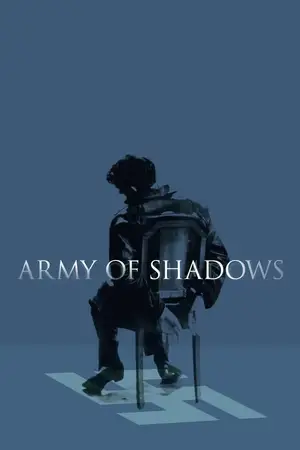
The film does not seek to discredit revolution or present an objective stance on resistance movements. On the contrary, by confronting the reality of the French Resistance, it highlights both the inhumanity of war and the extraordinary yet tragic sacrifices made by resistance fighters. The film deliberately leaves gaps in character fates, instead using voiceovers to bring their inner turmoil to life.

Midnight Cowboy (1969)
R rySEMApril 25, 2025
The film is packed with montages, and its editing techniques and soundtrack felt cutting-edge at the time. The ending is deliberately understated—life doesn’t stop just because a small-time hustler dies. For Joe, the hapless cowboy, drifting from place to place is all the same. His work is degrading, barely profitable, and he is no different from the city's abandoned souls, condemned to a life of solitude.

Deep Cove: Les Adolescents (2014)
B BENTAYMANApril 25, 2025
This film is a tumultuos journey. Not many can say theyve finished its runtime of 10mins or so and remained unchainged. Pierres accent is confusing but ultimatly sort of french canadian. 10/10

Submarine (2010)
T Timeless Tales BWApril 24, 2025
Tearful moments by the seaside, standing side by side without eye contact, Polaroids, a dreamy OST, running through the woods, and fireworks all around—while nothing here feels new, every shot and note oozes pure artistry. Some things are meant for a 15-year-old’s reckless heart; by 38, you just don’t do that anymore.
Submarine (2010)
FFastAndActionApril 24, 2025
FastAndActionApril 24, 2025It is a quirky, indie film that follows a teenager struggles with love and family—lost, confused, and full of conflicts. The soundtrack, by the way, is outstanding.