Reviews

The Great Dictator (1940)
A Anissa_WagnerMay 26, 2025
Though it a bold choice to use a speech to end off the film, it must be viewed in the context of its time. Made during World War II, the monologue serves as a rousing plea for justice, unity, and human dignity—a fierce denunciation of fascism and Nazism and a hopeful call for peace. Its legacy prevails, as it exemplifies cinema’s power to voice resistance and envision a better world.


The Shop Around the Corner (1940)
C Cedric_BoothMay 26, 2025
Though the outcome is predictable from the start, the film remains a thoroughly charming romantic comedy. It's a story of two strangers who are more familiar than they realize, an epistolary love affair that delicately explores the tension between fantasy and reality. The script remains fresh even by today’s standards, full of wit and subtle grace.
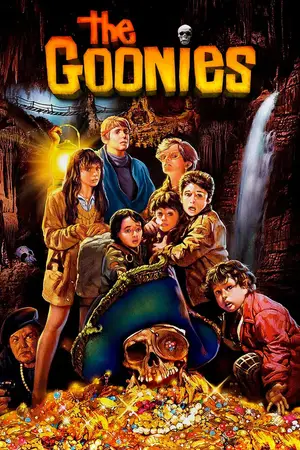
The Goonies (1985)
A Aleshia_WilkinsonMay 26, 2025
More than just a great kids’ movie, "The Goonies" is a superb piece of commercial entertainment that's still a joy to watch decades later. The themes are timeless, the characters well-drawn, and the emotional beats surprisingly resonant. The villains may feel a bit cartoonish, but that doesn’t detract from the film’s energy or sense of wonder.

Police Story (1985)
A Aubrey_HammondMay 26, 2025
At the height of his career, Jackie Chan came closest to becoming a real-life superhero. His stunts—whether jaw-droppingly choreographed or death-defyingly raw—remain unmatched even today. The film’s blend of physical comedy and brutal action redefined the action-comedy genre and marked it as one of the era’s boldest cinematic experiments.

Lost in America (1985)
C Chelsey_ScottMay 26, 2025
A delightful road movie blending midlife crisis with chance misadventures, this Albert Brooks comedy is laced with the biting sarcasm and offbeat humor typical of the 1980s. Beneath its surface lies a quiet reflection on the compromises of adulthood. The film opts for a grounded, unvarnished ending.

The Purple Rose of Cairo (1985)
J Jayden_LeblancMay 26, 2025
The film explores an age-old theme of the tension between dreams and reality. Within the story, the onscreen movie represents fantasy, while the protagonist’s everyday life embodies grim reality. To underscore this contrast, Woody Allen uses black-and-white for the dream world and color for the real one, and the character Tom—who steps out from the screen—remains in monochrome throughout.
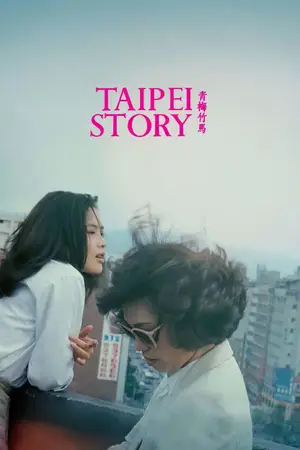
Taipei Story (1985)
A Aleen_StoneMay 26, 2025
Edward Yang’s second feature was a substantial production at the time, but it bombed at the box office and drew skepticism from critics. In hindsight, part of the disappointment stemmed from the stark contrast with "That Day, on the Beach." In striving to articulate his introspections, Yang slowed the film’s pacing to a crawl, which proved alienating for many viewers.
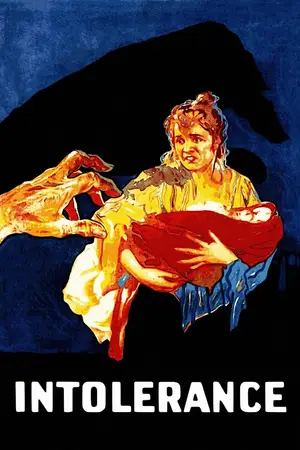
Intolerance (1916)
A Angel_BuckleyMay 26, 2025
"Intolerance" is a true spectacle on the big screen—its set pieces are nothing short of breathtaking. While its editing isn’t always fluid, the cross-cutting and parallel montage sequences are pioneering, with some edits even achieving matched cuts. More than spectacle, though, the montage's metaphors and the film's argument are the highlight—albeit with a degree of simplicity.

The Phantom Carriage (1921)
A Andre_BuckleyMay 26, 2025
Over a century old, "The Phantom Carriage" remains a towering achievement—as Ingmar Bergman's favorite film, it's a clear inspiration for "The Seventh Seal," and an early echo of "The Shining." Its nested narrative structure was daring for its time, and the film explores the moral extremes of good and evil with poetic clarity. It’s emotionally astonishing and formally sophisticated for a silent film.

Dr. Mabuse, the Gambler (1922)
M Margarida-777May 26, 2025
This sprawling crime saga follows the elusive Dr. Mabuse, a criminal mastermind who employs hypnosis, disguise, and gambling to orchestrate a vast underworld empire. The film charts the relentless pursuit by a principled prosecutor, delivering a suspenseful and twisting narrative. Despite its strong visual language—marked by expressionist design and impressive deep-focus shots—the pacing drags at times.

The Wheel (1923)
L Lloyd_MercerMay 26, 2025
Often hailed as Abel Gance’s masterpiece and a landmark of impressionist cinema, "The Wheel" is a four-and-a-half-hour epic whose full version allegedly runs nine. While the plot itself is relatively simple—arguably too slight for the runtime—the film’s stylistic innovations, especially its use of accelerated montage, remain striking.

Day of Wrath (1943)
M momochanMay 26, 2025
The lighting in this film is remarkable. Side-lighting combined with close-ups draws us deep into the characters’ emotional states, while carefully orchestrated shadows mirror their psychological turmoil. In one striking image, a conductor’s hands cast ghostly movements across sheet music, resembling a prelude to death. During the execution, the choir silhouetted against the fire sings a requiem, fading with the old woman’s final scream.
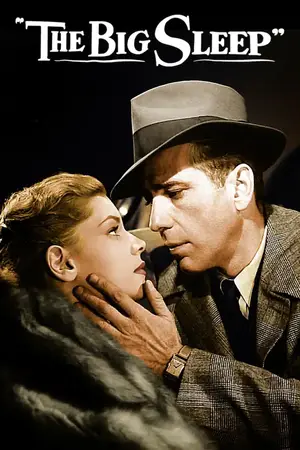
The Big Sleep (1946)
B Bill_GreeneMay 26, 2025
The film’s dialogue captures the cultural essence of its era—it’s more than just exposition; it’s a vehicle for wit, tension, and atmosphere. Each line feels carefully crafted and loaded with meaning. "The Big Sleep" is a definitive noir: stylish, cynical, and reflective of the cinematic language of its time.

Laura (1944)
A Ana_PowersMay 26, 2025
I was slightly disappointed by the reveal—Laura’s innocence feels too convenient, and the script veers away from noir’s usual fare of moral ambiguity to ensure a happy ending. Still, the film’s visual design and final moments are stunning. This stands out as one of the best classic black-and-white films.

Gaslight (1944)
E emilioMay 26, 2025
The ending may be predictable early on, but the film thrives not on plot twists, but on the suspenseful journey toward the truth. What makes "Gaslight" exceptional is that it doesn’t ask the audience to piece together a puzzle—it lets them in on the secret, then draws them in with the tension of how it will all unravel.

Heavenly Puss (1949)
B Bret_PowellMay 26, 2025
A hauntingly imaginative episode, with heavenly elevators, echoing bells, and hellish flames etched in my memory. Like Tom, I felt pure relief upon waking from the nightmare. The short is not only fantastical but also musically rich—one of the earliest classical music experiences of my childhood.

Letter from an Unknown Woman (1948)
A AdelailianMay 25, 2025
Beyond the film’s poignant story and elegant adaptation, Joan Fontaine’s transformation—from a young innocent girl to a poised aristocrat—is pitch-perfect in both performance and presence. The film’s narrative structure and symbolic use of objects are masterfully handled. This might be Fontaine’s finest performance of all - she is irreplaceable as Lisa, no other actress could have captured the role with such grace and nuance.


The Best Years of Our Lives (1946)
N Noah_KiddMay 25, 2025
Adapted from MacKinlay Kantor’s novella "Glory for Me," the film tells the story of three returning veterans trying to find purpose after the war. Their journeys reflect the deep emotional scars left by combat and the alienation they feel back home. More than just a postwar drama, it’s a quiet indictment of a society unprepared to welcome its heroes back.