Reviews

On the Waterfront (1954)
A Aurora_MorrisJune 12, 2024
Though not a fan of Marlon Brando, I must admit his performance in this film is truly exceptional. He seamlessly integrates into the dockworker community, maturingnaturally and convincingly from a lackey to an uncompromising hero.

Seven Samurai (1954)
M MÁRIO1010June 12, 2024
The peasants are depicted as foolish, cowardly, cunning, and selfish, but they arewell-crafted characters and portrayed with excellent performances. Even minor roles, like the kidnapped woman, leave a lasting impression. The story's conflicts and climaxes are well-executed, but the 207-minute runtime feels excessively long.
Seven Samurai (1954)
D dada.butesJune 12, 2024
The samurai spirit, to my understanding, is a relentless commitment to fulfill a promise regardless of the risk to life, even for a bowl of rice. "Seven Samurai" encapsulates courage, wisdom, cooperation, the hardships of peasant life, and the gap between peasants and samurai. The optimism that bubbles out amidst heavy pressure and the impossible romance stand out. The ending where the main characters ponders in front of the graves prompts a contemplation on who the real winners are.

Tokyo Story (1953)
A Angel_EdwardsJune 12, 2024
The allure of Yasujiro Ozu's work lies in its tranquility and meticulous detail. The composition is exquisite, with each frame resembling a painting, filled with thoughtfully arranged elements. However, the most compelling aspect is the story itself that hides profound insights into human nature and life under a simple narrative. Many films depict the regret of not being able to care for parents, but none convey this sorrow as deeply and helplessly as this one.
Tokyo Story (1953)
S Stanley_HoltJune 12, 2024
The film evokes a sense of familiarity, depicting the story of a Japanese family with reticent elders from the countryside and their overworked but calculative children in the city, which closely mirrors my personal experience. The portrayal of the loss of family members in the war provides a lens into post-war Japanese life, be it accurate or not. Putting everything aside, the film has a universal warmth we can all resonate with.

Singin' in the Rain (1952)
A antonpegJune 12, 2024
As a musical, the film's songs and dances may seem overly lengthy and tedious, but the iconic "Singin' in the Rain" sequence is undeniably iconic, leaving no room for hate. The moment when Gene Kelly proclaims Kathy as "the real star" remains a favorite of mine; it's also an especially poignant moment from my childhood, when it sparked my true appreciation for cinema. One of America's top ten films of the century, it’s admired not just for its music and performances but for Hollywood's spirit of innovation. Even watching an old man dance in the rain is tearjerking, a testament to the timeless charm of classics when watching in a theater.
Singin' in the Rain (1952)
J Joeca3June 12, 2024
The film's long shots beautifully showcase its dance sequences, making it evident that this is a movie about the industry and its essence. The layered structure is well done, blurring the lines between musical and film, emphasizing that art transcends categories and is defined only by quality. "Singin' in the Rain" is exceptionally melodious with an astounding choreography. Singing and dancing are vital elements of the film, and they make one feel that life is so much more interesting because of them.

High Noon (1952)
B Brionna_BridgesJune 12, 2024
As an anti-Western, it reveals all the contradictions of Western films. The hero’s conflict with civilized society, the community’s mixed feelings towards him, and the ideal that the hero will kill the villain and then ride away into the sunset. The wife’s plea for him to abandon his gun for the sake of family highlights these contradictions.
High Noon (1952)
A Adriana_WhiteJune 12, 2024
The focus isn’t on the final showdown but the journey into loneliness and isolation leading up to it. It’s about upholding one's principles despite being abandoned, and the courage to face certain defeat alone. The sheriff throwing his badge to the ground at the end contrasts sharply with the beginning when he put it on. This is both a pure 'anti-Western' Western and a forward-thinking 'anti-hero' hero film.

A Streetcar Named Desire (1951)
A Alexia_GainesJune 12, 2024
Before Marlon Brando appears, the screen is filled with intriguing details, such as varying camera movements, editing, and set designs. Once he appears, he captivates audiences entirely, with every subtle expression and gesture contributing to his performance. He is truly a multi-faceted and complex actor.
A Streetcar Named Desire (1951)
L Lawrence_ParksJune 12, 2024
Blanche, driven to vanity, greed, and near collapse by love, is a character I cannot dislike. The film, staged like a play, features contrasting performances from Vivien Leigh’s theatrical style and Marlon Brando’s natural approach, yet their interactions blend seamlessly, showcasing the best of their respective styles.

Rashomon (1950)
I Ines_Ines3June 12, 2024
Kurosawa’s breakthrough film which earned him the Golden Lion award at the Venice Film Festival. The cinematography and editing are superb, with Mifune’s performance being particularly impressive. The film exposes the weaknesses and lies of humanity, as well as issues on gender relations and social status. "Rashomon" is now a widely recognized term for conflicting accounts of the same event (due to different perceptions/vested interests etc). We can even view the world around us as an expansion of Rashomon.
Rashomon (1950)
V verbwellJune 12, 2024
It was groundbreaking at that time, but it may not appeal to modern audiences. Discussions on human nature are conveyed through dialogue by a beggar and a woodcutter. Toshiro Mifune's performance, along with others, seems overly dramatic and 'lagging' compared to "Seven Samurai." Akutagawa's original short story likely offers deeper insights into human nature.

Late Spring (1949)
J Jordan_JenkinsJune 12, 2024
This film made me realise that women share a common destiny - that is, they are the"perpetual others", strangers who leave from one home to the next. Marriage as a ritual means leaving one's homeland and familiarity behind, towards an uncertain future with no way back. The father's desolate posture at the end fully represents the plight of women, a moment of intense feelings all captured in a moment.
Late Spring (1949)
B Bryan_SaundersJune 12, 2024
Ozu’s film inspired a series of "marriage films," compared to "Equinox Flower" which illustrates the conflict between the old and new worldviews, "Late Spring" delves deeper, exploring the unspeakable desires of humanity—what is "dirty" and "indecent"? The father appears to sacrifice himself for his daughter's 'happiness' but also inevitably deprives her of her agency. Only you can define your own happiness and make yourself happy.

The Third Man (1949)
A Ali_WolfeJune 12, 2024
I watched the CanalStudio 4K restored version, which transports me back to the 1920s German Expressionist era. The American visitor's disillusioned and perplexing journey and struggles between friendship and justice serves as a powerful metaphor for post-war Vienna. The background music subtly conveys a sense of optimism. This classic is unforgettable, especially its final scene.
The Third Man (1949)
O objectionregulationJune 12, 2024
This film is a masterpiece with its meticulous composition, Dutch angles, and symmetry - Anna and the police chief, Harry and Holly, right and wrong, love and justice. Any character could be "the third man". The editing creates a Vienna filled with suspense, with Orson Welles’ iconic entrance, a bloody hand emerging from a manhole, and the final poignant shot. The film truly offers endless interpretations.

The Treasure of the Sierra Madre (1948)
W wickeremergedJune 12, 2024
The film delves into human greed, the cycle of fate, and nature's dark humor. Dobbs gains everything only to lose it all; Howard, the wisest, finds happiness; Fred represents the self-destructive nature of greed, while Curtin offers a glimmer of hope, overcoming temptation and facing a more positive future.
The Treasure of the Sierra Madre (1948)
W waiverJune 12, 2024
This film is a stunning revelation of human nature. The three main actors deliver top-notch performances, revealing their true selves as the story unfolds. The plot is intriguing: when they are penniless, they support each other; after winning the lotteryby luck and preparing to mine gold together, they emphasize brotherhood and mutual support. But as they start finding gold, suspicion and mistrust grow, leading to a tragic, ironic end.
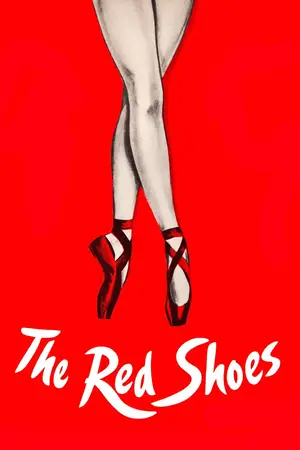
The Red Shoes (1948)
Ú Úrsula4ÚJune 12, 2024
The 17-minute ballet sequence is the highlight, making the stage surreal as focusing on the protagonist's movements becomes an immersive experience. It's a unique cinematic portrayal of ballet. The insertion of such a lengthy ballet sequence was bold, captivating audiences. The film-within-a-film structure is evident, though the characters' emotional journeys aren't that clearly portrayed.