Reviews
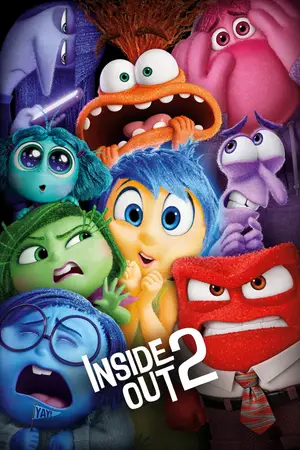
Inside Out 2 (2024)
L Leydi Laura Jiménez FrancoAugust 22, 2024
Intensely part one (2015):
Positive message: The film teaches us the importance of accepting all our emotions, both positive and negative, and how these influence our decisions and actions. Additionally, it highlights the importance of family and friendship in our emotional development.
(The good):
Originality: The premise of exploring a girl's inner world is unique and creative.
Memorable characters: Personified emotions such as Joy, Sadness, Anger, Fear and Disgust are very charismatic and easy to identify.
Visually appealing: The animation is colorful and vibrant, creating a visually stunning inner world.
(Bad):
Some parts may be complex for younger children: Some emotional concepts may be difficult for younger children to understand.
Inside Out 2 (2022):
Positive message: The second part delves into the exploration of emotions, this time focusing on adolescence and the emotional changes experienced during this stage. The film highlights the importance of adaptation and personal growth.
(The good):
Continuity: The sequel maintains the essence of the first film, but explores new aspects of emotions.
New Characters: The introduction of new characters such as Alegría 2.0 and 4,000 thoughts adds depth to the story.
Relevant Themes: The film addresses themes such as identity, friendship, and social pressure, which are very relevant to teenagers.
(Bad):
It may seem less innovative than the first part: Being a sequel, some elements may feel more familiar.
Overall, both Inside Out films are very well-made animated works that offer a positive and thoughtful message about emotions. The first part set a very high standard and the second part managed to maintain the quality and expand the universe of emotions.

Harry Potter and the Sorcerer's Stone (2001)
R Richard MaloneyAugust 21, 2024
This series was a breath of fresh air needed for not only children but adults of all ages. The story line is pleasant with many hidden gems of complex relationships among the characters. The hero and his two trusty sidekicks with help of others combat the darkness which torments him and trys to destroy him. special effects add a new layer of enjoyment to the movie with the quidage game on brooms magic spells gone wrong add in a friendships and enemies forged.
The social tier class of rich/poor and entitlement shown adds new layers of awareness to this world and theirs.
Its a movie that you can sit down and watch many times with the family and friends over a bowl of popcorn.
The social tier class of rich/poor and entitlement shown adds new layers of awareness to this world and theirs.
Its a movie that you can sit down and watch many times with the family and friends over a bowl of popcorn.




The Old Oak (2023)
P Paul_LeoAugust 20, 2024
The film has a strong political stance, yet the story and its central themes feel uninspired. The characters are thinly drawn, the narrative flat, and the plot twists abrupt. While the film’s intentions are clear, they don't translate into something genuinely impactful or relatable.
The Old Oak (2023)
B Bartholomew SwiftAugust 20, 2024
Ken Loach's empathy for the working class, his critique of racism, his contemplation of refugee issues, and his ongoing focus on class struggles in British society are what make him so compelling. For him, filmmaking is no longer about surpassing his past work but about maintaining a sharp, insightful view of the world.

Family Life (1971)
L Lloyd_SimsAugust 20, 2024
In this film, Ken Loach exposes the flaws in the British family and mental health systems of the time through the extreme case of a normal, free-spirited girl being crushed by her conservative, ignorant parents. The screenplay, adapted by the original author, provides a clear and rational analysis of each character’s motives and the deeper reasons behind them.
Family Life (1971)
D Dale_PrestonAugust 20, 2024
Ken Loach’s extraordinary observational skills shine through in this film. With a calm and objective lens, he documents the tragedy of a family where the generational gap, outdated parental views, societal ignorance, and individual helplessness all contribute to the tragedy.

Land and Freedom (1995)
T tsp2August 20, 2024
Loach delivers a simple yet profound message: idealistic beliefs can inspire people to march forward with unwavering conviction, but they are ultimately no match for the complexities of human nature. Idealists deserve respect, but they are rarely the victors, and history often leaves them behind, forgotten like old letters and newspapers lying in a dusty box.
Land and Freedom (1995)
C Colby_ReedAugust 20, 2024
Ken Loach’s war films have always centered on the militia, eschewing grand battle scenes in favor of intimate, brutal skirmishes. Yet, he consistently captures both the collective and individual tragedies in these conflicts.

My Name Is Joe (1998)
B Bert_WigginsAugust 20, 2024
I’m beginning to understand why Ken Loach is considered a chronicler of Britain. In what appears to be a meticulously crafted narrative, every decision his characters make is driven by their immediate reality. These working-class individuals lack the luxury of time to deliberate on their predicaments; they are merely pushed forward by the society that Ken Loach so keenly observes.
My Name Is Joe (1998)
E Ethan_ChangAugust 20, 2024
Through the love story of Joe, an unemployed man, and Sarah, a nurse, Ken Loach explores the insurmountable barriers posed by differing social classes and the corrosive impact of structural societal factors on the lives of the working class. These personal stories of marginalized groups, often overlooked by history and mainstream narratives, deserve more representation in quality artistic works.

Sweet Sixteen (2002)
A Amanda_KelleyAugust 20, 2024
My admiration for Ken Loach stems largely from his deep understanding and empathy for his characters’ environments. Even when he imbues his characters with flaws and tragic fates, he does so with a sense of compassion and love. Liam endures a series of unfortunate events, whether by fate or poor choices, yet he remains a 16-year-old boy at heart.
Sweet Sixteen (2002)
A Alvin_WiseAugust 20, 2024
I feel Ken Loach’s films are getting more documentary-like. Though his narratives are often highly dramatized, his characters’ motivations remain grounded in realism, setting him apart from directors who revel in crafting elaborate dilemmas.

The Angels' Share (2012)
A Alexis_MortonAugust 20, 2024
It doesn't matter when you're at your lowest; what matters is the resolve to change and take action. The scene where they steal the whiskey had me on edge—it’s a thrilling, all-or-nothing gamble. The film is fundamentally kind-hearted, depicting a protagonist surrounded by a loyal wife and child, a caring elder, and well-meaning, if not always bright, friends. Life may be full of challenges, but such tenderness makes it all worthwhile.
The Angels' Share (2012)
A Ava_ZhangAugust 20, 2024
Despite the hardships the characters face, the film is imbued with a sense of hope. This is a modest, slightly quirky, and heartwarming story. Ken Loach delivers a film that’s optimistic and full of love, leaving me in a good mood for the rest of the day after watching such a delightful story.

Tickets (2005)
A Arturo_SmithAugust 20, 2024
What surprised me most was how seamlessly the film transitioned between the three stories without feeling disjointed. The transitions between narratives were so smooth, yet each segment subtly shifted in style, showcasing the directors’ prowess. Ermanno Olmi’s first story stands out with its non-linear editing, portraying the professor’s evolving emotions through a chance encounter, and culminating in a focus on humanitarian themes.
Tickets (2005)
B Brionna_CoffeyAugust 20, 2024
This film thrives on its conceptual ingenuity—a train ride to Rome connects three interrelated stories, each metaphorically representing life’s ongoing struggles. Personally, I found the first story the most compelling, where the director skillfully uses cross-cutting and montage to juxtapose the professor’s internal thoughts with the chaotic atmosphere of the train, capturing his psychological transformation.

Where Is the Friend's House? (1987)
V vvvVítoAugust 20, 2024
The child, with his bright eyes and determined expression, is single-minded in his quest to return a notebook to his classmate, running tirelessly even as the moon rises. Abbas Kiarostami’s use of simple, straightforward cinematography touches the audience's most tender emotions, and the small yellow flower tucked inside the notebook at the end leaves a warm, lasting impression.
Where Is the Friend's House? (1987)
L Lee_OrtizAugust 20, 2024
The scene where a child and an elder walk through a dimly lit street at night, with light only coming from half-opened doors and stained-glass windows, is a masterclass in blending reality with narrative. As the elder recounts his experiences as a door and window maker, it feels as though they are physically walking through the memory he describes—a brilliant interplay of the real and the imagined.