Reviews

Gran Torino (2008)
C Charles_CaldwellAugust 27, 2024
The film is peaceful yet extraordinarily powerful. The first half unfolds the story at a slow and steady pace, with no glaring flaws but also no standout moments, leading me to believe the entire film would be the same. However, the film is quietly impactful by the end. Plot twists are hidden beneath the predictable plot.

True Lies (1994)
D Dominic_HermanAugust 27, 2024
The film dramatically portrays the extraordinary life of a U.S. federal agent, blending romance with thrilling action. James Cameron infuses the film with a subtle social commentary and a touch of romantic comedy, making it another milestone in his directing career.
True Lies (1994)
B Brandy_CunninghamAugust 27, 2024
This is the third collaboration between James Cameron and Arnold Schwarzenegger, and once again, they’ve delivered a classic. The film’s pacing is exhilarating, seamlessly blending large-scale action sequences with humor and light-hearted moments. The use of miniature models is also iconic. This movie represents the pinnacle of action cinema, and watching it again today is still an overwhelming experience.

The Lady from Shanghai (1947)
T Trevor_NguyenAugust 27, 2024
Orson Welles has a remarkable eye for composition, often placing characters at opposite ends of the screen, separating them to symbolize conflict. Thematically, Welles explores the darkness and desires of human nature. The mirror maze in the circus at the end is particularly brilliant, with its black-and-white lines echoing German Expressionism and the multiple reflections symbolizing a fractured identity.
The Lady from Shanghai (1947)
L Luís-MárioAugust 27, 2024
This is a noir film written, directed, and starring Orson Welles. The pacing is tight throughout, with the first half masking its sinister undercurrents beneath a calm surface, while the latter half features a courtroom scene that blends comedy and suspense. The climax, set in a hall of mirrors, is a groundbreaking sequence that has been imitated in countless films since.

Cries & Whispers (1972)
B Bailee_PetersAugust 27, 2024
Red can signify vitality, violence, or decay, but in Bergman’s film, it becomes a symbol of oppression, isolation, and estrangement. The film’s greatest tragedy lies in the depiction of a person seeking love among those incapable of giving it.
Cries & Whispers (1972)
A Aura_JohnsonAugust 27, 2024
Bergman’s first color film, which inevitably brings to mind Antonioni’s “Red Desert”. The use of red transitions creates an atmosphere of repression and sorrow, with each character’s face revealing profound emotions under shifting light and shadows. The director delves into unprecedented depths of the heart with a minimalist narrative that transcends realism. The final scene is serene, where the four characters walk and share a nice moment on swing in the garden, provides an emotional release for the entire film.

It Ends with Us (2024)
S Simon_McCormickAugust 27, 2024
The protagonist comes from a family utterly devoid of affection, where no one ever supported her interests. She is ostracized by her peers just for speaking to a homeless classmate on the school bus, and she has never experienced what a normal relationship should be like. Yet, this woman understands how to accept others' kindness, embrace love and freedom, and recognize what she truly needs when reality doesn’t match her ideals. Her decisiveness in making choices is something we can all learn from.
It Ends with Us (2024)
B Bridget_MccarthyAugust 27, 2024
This film lingers in the mind long after watching. I kept pondering whether Ryle truly qualifies as an abuser, given that his violent outbursts only seem to occur when he is severely provoked. At other times, he is the epitome of kindness and gentlemanly behavior. The more I thought about it, the more I realized that the film's message is precisely this: we must leave behind anything or anyone that harms us, even if it’s wrapped in the guise of love. We shouldn’t be fooled by sugar-coated poison.

The Adjuster (1991)
T towtomásAugust 27, 2024
This is a film about desire and the loss of one’s soul. The director seems somewhat lost in his own world, but the consistent tone throughout the film holds it together. The composition is distinct, with most shots framing isolated buildings in wide shots or characters positioned at the edge of the frame, reflecting their emotional states. A chilling sense of detachment that permeates the entire film throughout.
The Adjuster (1991)
L Luis_SimonAugust 27, 2024
The film as a whole is rather obscure; I could barely understand it. Though the characters are somehow connected to each other, each needs to be interpreted individually, and each character can be understood from multiple perspectives. All of them are also tied to various imagery. The director's audiovisual techniques are impressive, and this film is certainly not just a simple erotic piece or an exercise in obscurity. It’s great but undeniably difficult to appreciate.

Personal Shopper (2016)
P Perry_MerrittAugust 27, 2024
Surprisingly captivating, this film justifies Assayas’s Best Director win. While it appears to explore themes of reality versus illusion and self-perception versus the external world, it ultimately reveals that it’s not ghosts that are frightening, but people. The story is rich, the vibes masterfully crafted, and the performances are solid. Despite some viewers’ criticism of the special effects, they are not as bad as suggested. Overall, the film leaves a strong impression.
Personal Shopper (2016)
C Charlie_BryantAugust 27, 2024
Assayas’s experimentation in different genres is certainly commendable, but this film is ultimately a replica of his previous work. By attempting to merge two unrelated storylines—mediumship and fashion—into a commentary on materialism and the protagonist’s awakening, the film sets up grand themes but lacks the substance to support them. The result is a narrative that feels hollow, with many scenes and shots serving little purpose.

Irma Vep (1996)
E Edward_JensenAugust 27, 2024
It's clear that Assayas has a deep admiration for Maggie Cheung. Both films they've collaborated on heavily emphasize her presence in the narrative, offering her ample opportunities to shine. The ending is quite playful, adding a layer of intrigue to the film.
Irma Vep (1996)
B Bianca_AtkinsonAugust 27, 2024
Olivier Assayas created a meta-film paying homage to the French New Wave, filled with elements cinephiles would love. The most iconic of these is casting Maggie Cheung as herself. The film captures a sense of disorientation both in the context of a foreign actress navigating a new environment and in the surreal transition from playing an "Eastern hero" to a vampire. Additionally, Assayas attempts to express his dedication to the art of making cinema, with a press interview scene that feels almost like a self-defense. However, the overall narrative is too disjointed, with many scenes lacking clear purpose.

Clouds of Sils Maria (2014)
B Betsy_HorneAugust 27, 2024
The film features intricate characterisations and carefully crafted dialogue. Through the play-within-a-play structure, it explores the subtle shifts in the characters' mindsets and relationships, blurring the line between rehearsing lines and genuine conversation. Juliette Binoche delivers a fantastic performance, authentically portraying the emotions and psychological changes of a once-famous actress who is now facing the mid-life crisis.
Clouds of Sils Maria (2014)
C Carmen_SmallAugust 27, 2024
An impressive film. The actors engage in dialogue within the play-within-a-play, where every line reflects the thoughts of the characters in the drama, yet each word also speaks directly to their own current realities. The film captures with authenticity the anxieties, fears, and frustrations of women, or more specifically, actresses, as they age. The disdain and envy they feel when observing the boldness of youth are portrayed with striking realism.

Aparajito (1956)
C Charlie_RandallAugust 27, 2024
This film largely retains the content and style of its predecessor. It's intriguing how the train motif is used throughout both films, symbolizing life, the connection with his sister and mother, and, in this film, the passage to the outside world. The train also represents the longing of people from the old world for the new.
Aparajito (1956)
A Alison_BullockAugust 27, 2024
The cinematography and editing in this sequel are even more refined than in the first film. Though the narrative sometimes veers towards melodrama, the depiction remains as realistic and natural as ever. The most poignant moment for me was when Apu deliberately missed the train, only to later realize that this decision allowed him to spend one last day with his mother before she passed away.
Pather Panchali (1955)
A Arturo_SampsonAugust 27, 2024
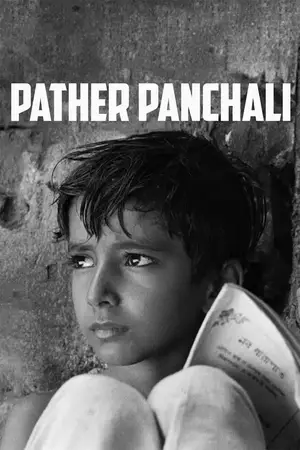
The film is a somewhat slow and lengthy record of life, magnifying the hardships of a bygone era through the microcosm of a single family. The cinematography can be divided into two categories: life and death. The dilapidated houses and stone walls signify 'death', while the cats and children embody 'life'; the muddy roads and poverty are 'death', whereas the reeds, wind, and sunlight are 'life'. The grandmother's death in the forest and the sister's fatal fever after being caught in the rain connect life and death, blurring the lines and making it difficult for the audience to distinguish between the two. To the characters, everything that happens is marked by suffering and scars.