Reviews

Wrong Move (1975)
T thinkmillerFebruary 28, 2025
Based on a novel, Wim Wenders turns the story into a poetic meditation on existentialism. The protagonist seems to be seeking either death, love, or creative inspiration on his journey—or maybe all three. Yet it feels like he’s merely running away from everything, hoping to escape his past troubles.

Marriage Italian Style (1964)
TthinkmillerFebruary 28, 2025
thinkmillerFebruary 28, 2025The first 30 minutes flow smoothly, with seamless transitions and the added allure of attractive leads. Vittorio De Sica once again showcases the boundless love and tolerance women has. The film emphasizes that achieving a happy marriage requires significant sacrifices.

Still Life (2013)
TthinkmillerFebruary 28, 2025
thinkmillerFebruary 28, 2025The story is subtle, void of dramatic twists or forced sentimentality. Yet the protagonist’s every action evokes a quiet sadness. His life is simple and monotonous—basic meals, plain tea, and the same routine every day. While his job might seem insignificant to others, he’s diligently done it for 22 years. The film’s small details are profoundly moving.

Winner (2024)
TthinkmillerFebruary 28, 2025
thinkmillerFebruary 28, 2025The film effectively brings this little-known story to life, exploring key moments in U.S. history—9/11, the opioid crisis, election manipulation, and Edward Snowden. It presents Reality Winner’s actions as justifiable and morally sound.

Devotion (2022)
TthinkmillerFebruary 28, 2025
thinkmillerFebruary 28, 2025Despite depicting only three war scenes, the film focuses more on friendship and Jesse Brown’s story as an African-American hero in times of war. It captures a miraculous bond between friends rather than glorifying war itself.

Becoming Led Zeppelin (2025)
TthinkmillerFebruary 28, 2025
thinkmillerFebruary 28, 2025The documentary offers little new, simply covering the band members’ growth and their rise to fame. However, it’s clear that these four individuals were destined for music. The highlight is the archival tour footage, though some clips are reused, and the editing feels disorganized. Still, hearing the music in IMAX and admiring Robert Plant’s charisma is worth it.

Love Hurts (2025)
TthinkmillerFebruary 28, 2025
thinkmillerFebruary 28, 2025"Love Hurts" prioritizes action over plot, much like its predecessor, "Nobody." Unfortunately, the action sequences don’t live up to expectations. Ke Huy Quan seems pigeonholed into becoming the next Jackie Chan, mimicking his martial arts style and persona.

Les dames du Bois de Boulogne (1945)
TthinkmillerFebruary 28, 2025
thinkmillerFebruary 28, 2025Though the happy ending of "The Ladies of the Bois de Boulogne" might seem like a narrative misstep, Bresson’s choice is more of a satirical punctuation to the film’s intricate plot. What initially seems like a world steeped in desire and hatred is suddenly rendered trivial by "true love," turning the entire drama into a dark irony.

Yesterday, Today and Tomorrow (1963)
TthinkmillerFebruary 28, 2025
thinkmillerFebruary 28, 2025"Yesterday, Today and Tomorrow" consists of three separate stories, with the first one being the longest at nearly an hour. It follows a rural couple who keep having children to avoid imprisonment. The story is charmingly whimsical, especially with the entire town rallying to help—from moving furniture to raising money for fines. It feels like a fairytale coming to life.

Brainwashed: Sex-Camera-Power (2022)
TthinkmillerFebruary 28, 2025
thinkmillerFebruary 28, 2025"Brainwashed: Sex-Camera-Power" raises the question: does cinema objectify women? Based on the host’s case studies, it seems undeniable. Yet whether this is a director’s deliberate choice remains uncertain, as many filmmakers unknowingly adopt these techniques from their training. When they gain the chance to direct, such visual language feels natural and unquestioned.

The Fearless Vampire Killers (1967)
TthinkmillerFebruary 28, 2025
thinkmillerFebruary 28, 2025Roman Polanski’s fourth film is also his lightest and most playful. Unlike his typically dark, despair-filled works, this one radiates humor. Perhaps the film’s joyous tone reflects his romance with Sharon Tate, which began on set.

Grizzly Man (2005)
TthinkmillerFebruary 28, 2025
thinkmillerFebruary 28, 2025For Treadwell, the Alaskan wilderness was a utopia—an escape from the ugliness of civilization. Yet this utopia was ultimately a fantasy, as the bears he revered took his life. Meanwhile, the humanity he scorned worked to preserve his memory. Herzog contrasts idealism with brutal reality, revealing beauty and darkness in equal measure.

Encounters at the End of the World (2007)
TthinkmillerFebruary 28, 2025
thinkmillerFebruary 28, 2025Herzog dismisses the beauty of Antarctica’s landscapes—there are no grand icebergs or dazzling auroras. Instead, he focuses on the individuals stationed in the unforgiving wilderness, each with a unique story. For Herzog, the human experience takes precedence over the scenery.

Never Rarely Sometimes Always (2020)
TthinkmillerFebruary 28, 2025
thinkmillerFebruary 28, 2025The absent father figure and fleeting references to the protagonist’s family highlight the story’s focus on female solidarity. Certain male characters are portrayed with a menacing undertone, while the film’s emotional climax—centered around a counseling session—elevates the entire narrative. Hittman’s use of close-ups immerses us in the protagonist’s internal world.

Ride with the Devil (1999)
TthinkmillerFebruary 28, 2025
thinkmillerFebruary 28, 2025Ang Lee’s delicate storytelling style focuses on personal emotions rather than the large-scale drama of the American Civil War. His indifference to the war’s outcome, emphasizing human vulnerability instead, makes the film feel understated and slow at times. Yet, the few action scenes are executed with brilliance.

Black Rain (1989)
S Sônia-1February 28, 2025
A sobering reflection on war, this film follows a family that survived the Hiroshima bombing, revealing how WWII haunted Japanese civilians for life. It focuses on the horrors of war but also the unending physical and psychological suffering of those who lived through it.

Repast (1951)
V Vicente_HodgeFebruary 28, 2025
Even the strongest love can grow stale under the monotony of daily life, especially with the unpredictability that comes with cohabitation. The film mirrors life so well that its details resonate with audiences’ own experiences, making it feel authentic.
Ashes of Time (1994)
L Luan.M00February 28, 2025
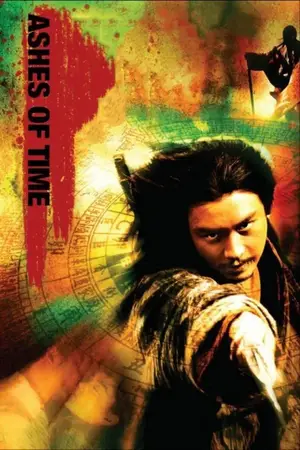
In hindsight, this was an avant-garde film—even the lead actors admitted they didn’t understand it. Under the guise of a wuxia story, it’s really about love and relationships. Wong Kar-wai uses a fragmented, nonlinear narrative that complicates the plot. Beyond its story, the cinematography, music, dialogue, and performances are all outstanding.

Hahaha (2010)
C Catalina_BurnsFebruary 28, 2025
The film alternates between black-and-white stills and moving color pictures, clearly separating memory from reality. Curiously, it subverts expectations: instead of using stills for nostalgia and color for the present, director Hong Sang-soo flips the norm—stills represent reality, while fluid shots carry a dreamlike quality. This technique deepens the narrative and blurs the lines between memory and reality.

Close-Up (1990)
J jacinto@SFebruary 28, 2025
Real people reenact real events, with documentary-like shots and even equipment malfunctions “deceiving” the audience. It prompts viewers to reflect on the meaning and degree of authenticity in film. In just 90 minutes, the film vividly captures the mood of 1990s Tehran and its people’s mindset.