Reviews
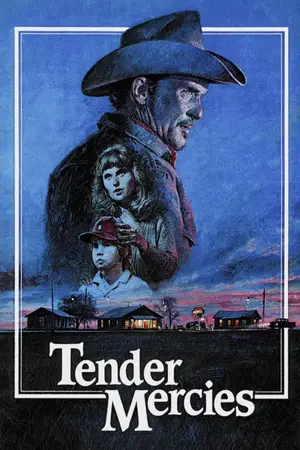
Tender Mercies (1983)
R Remigio3May 27, 2025
Tender and restrained, the film avoids the clichés of redemption arcs and instead finds beauty in the everyday life. Rather than focusing on the protagonist’s battles with addiction or professional comeback, it draws poignancy from the simplicity of life itself—an approach that is quietly powerful and profoundly moving.

To Our Loves (1983)
RRemigio3May 27, 2025
Remigio3May 27, 2025What starts as a love story gradually reveals itself to be a coming-of-age drama rooted in dysfunctional families. Maurice Pialat’s film may be over four decades old, yet its depiction of family turmoil still feels raw and immediate. We come to understand the protagonist’s recklessness as a reaction to emotional neglect and youthful confusion.

Another Country (1984)
RRemigio3May 27, 2025
Remigio3May 27, 2025The film unfolds under a heavy, muted atmosphere that never quite lifts. In this rigid class system, survival demands conformity—personal beliefs and desires, including sexual identity, must be subdued. Judd’s clarity of mind is admirable, but the film suggests that such awareness is a luxury not everyone can afford.

Boy Meets Girl (1984)
RRemigio3May 27, 2025
Remigio3May 27, 2025It’s hard to believe this is a debut—the cinematography, editing, lighting, and framing are all top-tier, brimming with New Wave flair and homage. But for all its technical prowess, the story felt flat to me—monotone, tedious, and rooted in a vision of love that I find alien and unconvincing.

Calamari Union (1985)
RRemigio3May 27, 2025
Remigio3May 27, 2025Shot in crisp black-and-white, Aki Kaurismäki’s second feature is striking in its visuals—trees, rain-slicked streets, and shadowy subways are all rendered with care. The soundtrack is impeccable, elevating even the most absurd scenes. Yet no Frank ever reaches the so-called promised land; reality delivers its punch with sober finality.

Friday the 13th: The Final Chapter (1984)
RRemigio3May 27, 2025
Remigio3May 27, 2025As a so-called finale, this film is a mess. It confuses its own mythology—Jason seems immortal at the start, yet somehow killable by the end, undermining any sense of internal logic.

Full Moon in Paris (1984)
RRemigio3May 27, 2025
Remigio3May 27, 2025Éric Rohmer handles romantic entanglements with his signature subtlety. The film’s final twist sees the seemingly self-assured heroine outplayed, yet Rohmer offers no judgment, only a quiet commentary on human desire and its contradictions.

Romancing the Stone (1984)
RRemigio3May 27, 2025
Remigio3May 27, 2025Directed by Robert Zemeckis, this is one of the many adventure films that followed in the wake of Raiders of the Lost Ark. Unlike Indiana Jones, the focus here is less on treasure hunting and more on the chemistry between the leads. It’s fast-paced, sharply written, and filled with vivid characters—an enjoyable ride.

Friday the 13th: A New Beginning (1985)
RRemigio3May 27, 2025
Remigio3May 27, 2025This installment is about a copycat killer, and while Jason himself is absent, that hardly matters—what’s more disappointing is how little effort was put into the makeup and effects. Most of the kills feel rushed and unconvincing.

Hail Mary (1985)
RRemigio3May 27, 2025
Remigio3May 27, 2025Pasolini tackled this subject too, but Jean-Luc Godard’s version is by far the most iconoclastic—Mary becomes a vessel for questioning divine authority itself. The subplot with Eva broadens the inquiry to the origins of humanity and the cosmos. During this period, Godard frequently turned to serene natural landscapes and empty frames to evoke poetic introspection.

The Bitch (1931)
RRemigio3May 27, 2025
Remigio3May 27, 2025Compared to Fritz Lang’s remake, Renoir approaches the material with a cooler, more observational tone. This may render the drama less emotionally gripping, but his ending is far superior—a quiet rebuke to Hollywood's tendency to retrofit every story into a romance.

Boudu Saved from Drowning (1932)
RRemigio3May 27, 2025
Remigio3May 27, 2025Renoir’s social satire is both biting and generous. He doesn’t idealize or demonize either class; instead, he observes their differences with a curious, ironic eye. The crowd scenes, too, double as a mirror to the viewer—subtly suggesting that we are not above the gawkers which we watch on screen.

I Was Born, But... (1932)
RRemigio3May 27, 2025
Remigio3May 27, 2025The first half is lighthearted, filled with playful school scenes and childhood games. The second half grows more introspective as the children struggle with their father's fall from pedestal. Unlike Ozu’s later style, the film contains a fair number of tracking shots and wide framings, not all of which are purposeful. The tonal shift from comedy to realism is effective, though the transition is occasionally uneven.

Toni (1935)
RRemigio3May 27, 2025
Remigio3May 27, 2025What sets Renoir’s realism apart is his refusal to reduce human tragedy to social determinism. Characters’ fates unfold as the natural consequence of their own actions and choices, making the tragic ending all the more poignant and human.

The Lower Depths (1936)
RRemigio3May 27, 2025
Remigio3May 27, 2025Turning his gaze from workers and capitalists to the ruined aristocracy, Renoir paints these characters with surprising warmth. They’re not villains but casualties of a vanished world, often kinder than the ruling elite. In his humane vision, both classes deserve dignity, even redemption.

The Crime of Monsieur Lange (1936)
RRemigio3May 27, 2025
Remigio3May 27, 2025Renoir’s first film to systematically employ depth of field cinematography, it emphasizes on the mise-en-scene even if the narrative lags. The story pits corrupt elites against the working-class, making its political stance unmistakable. Despite the sluggish pacing, its vision of collective resistance is powerful and unmistakably Renoir.

The Only Son (1936)
RRemigio3May 27, 2025
Remigio3May 27, 2025A transitional work, "The Only Son" marks Ozu’s shift toward maturity. While still experimenting with pacing and sound, his trademarks are already present—low camera angles, domestic intimacy, and a compassionate, nonjudgmental gaze. The pacing may lag, and the score may be a tad excessive at times, but the emotional core is unmistakably Ozu.

Swing Time (1936)
RRemigio3May 27, 2025
Remigio3May 27, 2025Surprisingly, this was my first time seeing Astaire and Rogers together, and their chemistry is flawless. Each routine is impeccably choreographed, emotionally rich, and inventive. Unfortunately, the story is contrived and painfully silly, culminating in a forced, awkward group laugh that lands with a thud.

The Hunchback of Notre Dame (1939)
RRemigio3May 27, 2025
Remigio3May 27, 2025A classic from Hollywood’s Golden Age, yet one that softens Hugo’s tragic vision. The casting and performance choices stray from the novel, and the shift to a hopeful conclusion robs the story of its essential darkness. Stripped of its tragedy, the tale loses much of its soul.

Wuthering Heights (1939)
RRemigio3May 27, 2025
Remigio3May 27, 2025The film reduces the depth of Heathcliff's vengeful arc and omits key developments, including his motivations and his vengeance against the Linton descendents. Only Catherine and Edgar were well-written, other characters like Hindley are flat.