Reviews

The Night Before Christmas (1941)
R Remigio3May 27, 2025
The film perfectly captures the joy of Christmas through its audiovisuals. Tom’s design at this stage is particularly charming—more lifelike than in later years, with a mischievous sparkle in his eyes that makes him irresistible even as he chases Jerry.

There Was a Father (1942)
RRemigio3May 27, 2025
Remigio3May 27, 2025This film reminds us that life is meaningful because of its mix of joy and sorrow. Long separations make brief reunions all the more precious. Beneath the surface, it captures the stoicism, stubbornness, and quiet pride of men living in a world where emotions are rarely spoken. The story may be simple, but it reflects the complexities of real life.

Obsession (1943)
RRemigio3May 27, 2025
Remigio3May 27, 2025"Ossessione" shook the foundations of Italian cinema with its raw energy and stark realism. By placing his characters in the grime and poverty of fascist Italy’s forgotten towns, Visconti exposed the hollowness of the regime’s claims—there’s no “order and punctuality” here, only chaos, despair, and deception.

The Silence of the Sea (1949)
RRemigio3May 27, 2025
Remigio3May 27, 2025Melville’s first feature is a quintessential work of literary cinema, one dominated by voiceovers and portrayals of introspection. The plot is minimal, and the pacing is deliberately slow, but the film excels in subtle details and psychological nuance. Its fidelity to the original text, especially in the ending, is quietly powerful.

Bellissima (1951)
RRemigio3May 27, 2025
Remigio3May 27, 2025Visconti was one of the first to push neorealism beyond its early conventions. Though structured around a central character and driven by personal conflict, "Bellissima" uses a mother’s story to reflect postwar Italian hardship. Her muttered monologues and the film’s sly humor are genuinely enjoyable, but the audition playback sequence leaves a knot in your stomach.

Europe '51 (1952)
RRemigio3May 27, 2025
Remigio3May 27, 2025Roberto Rossellini threads postwar Italian identity, urban ruin, class tension, and spiritual salvation through each character’s arc. But this abundance of themes sometimes causes the plot’s logic to falter, with a few transitions feeling too forced to be emotionally persuasive.
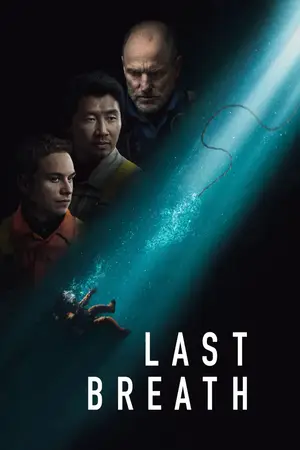
Last Breath (2025)
A Alexandria_LemonMay 27, 2025
Though the plot is quite thin—disaster, rescue, and recovery all wrapped in under an hour—it somehow avoids feeling tedious. The film’s emotional punches are delivered with simplicity and sincerity, especially during the character’s sudden revival, which is rendered with raw intimacy. Combined with reminders that it’s based on true events, it leaves you with genuine reverence for the fragility of life.

Kraven the Hunter (2024)
A Anne_DunlapMay 27, 2025
The action isn’t impressive enough to hold interest, and the gangster drama elements are too undercooked to be effective. The film never really clarifies Kraven’s powers either—he seems slightly stronger and faster than average, but that’s about it. The entire narrative feels disjointed, like a string of unrelated scenes stitched together.

Havoc (2025)
J Joe_MillsMay 27, 2025
With tightly choreographed fight scenes and seamless editing, "Havoc" immerses you in a gritty, adrenaline-fueled underworld. It carries the same violent, visceral DNA as Gareth Evans' "The Raid" films, weaponizing brutality as a stylistic tool.

The Legend of Ochi (2025)
P Patrick_GrossMay 27, 2025
A textbook example of family-friendly fantasy, complete with whimsical costumes and beautifully composed settings. The standout here is the film’s retro-styled establishing shots. Oddly, though, I found myself simultaneously charmed by the film and deeply annoyed by every human character in it—their personalities and actions felt uniformly unpleasant and grating.
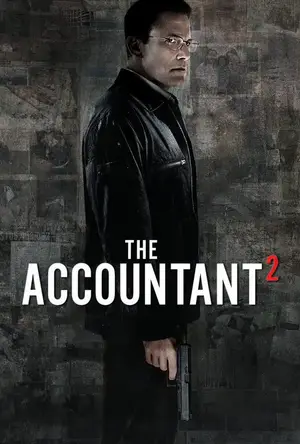
The Accountant 2 (2025)
C cosmoscoMay 27, 2025
The director focuses more on emotional nuances than action this time around. Through lingering close-ups and careful pacing, we witness Christian Wolff’s internal conflict unfold, particularly during moments of moral ambiguity. However, the action choreography doesn’t quite match up to the pensieve moments, lacking the precision needed to elevate the stakes.

Until Dawn (2025)
J Jim_HuberMay 27, 2025
I haven’t played the game, but "Until Dawn" is surprisingly well-executed as a horror film. The dungeon-like structure, array of supernatural threats, and the immersive, dimly lit setting all make for compelling viewing. The use of phone-camera footage works to recreate a game-like POV, though watching characters filming during life-or-death moments feels like the film's too committed to the gimmick.
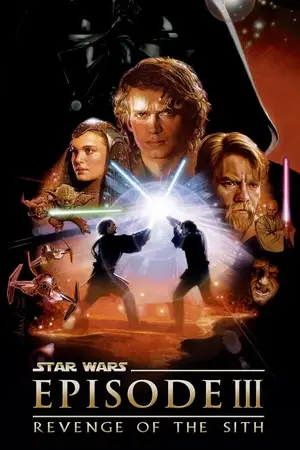
Star Wars: Episode III - Revenge of the Sith (2005)
M MATEUS-505May 27, 2025
Seeing this masterpiece again in a theater this year was a reminder of how unique the "Star Wars" saga is among blockbuster franchises. Its strength lies in its mythic storytelling and the care it gives to detail. This time, I found myself absorbed in its allegories and the nuanced portrayal of its characters. I still admire Anakin, and this film is a triumph of commercial cinema at its finest.
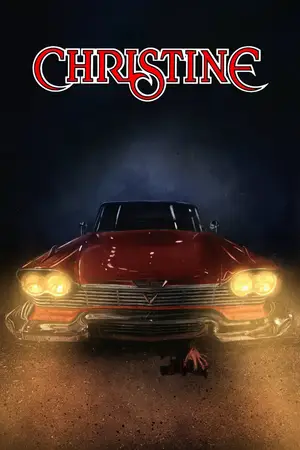
Christine (1983)
P Patrick_AdamsMay 27, 2025
It's rare to see a B-movie horror with such restraint in storytelling and clarity in visual expression. The film doesn't just tell the tale of a murderous red car; it subtly tracks its eerie evolution into something almost human. Beneath the surface of supernatural horror lies a more abstract transformation—how the machine becomes a being.

In Our Time (1982)
R Russell_HahnMay 27, 2025
The four segments reflect childhood, adolescence, youth, and adulthood, each with its own set of challenges. I especially loved the first—it ends on a note of quiet melancholy that lingers long after. The second delicately captures a teenage girl’s coming of age. The third has an energetic finale that captures the spirit of youth, while the fourth offers humor and insight into the awkwardness of entering the workforce as a newbie.

That Day, on the Beach (1983)
A Andrew_RosalesMay 27, 2025
I can’t believe I waited this long to watch Edward Yang’s debut feature. What surprised me most was that even back in the early 1980s, he was already exploring themes of female agency. The protagonist escapes a patriarchal household only to fall into another trap—marriage. Yang has always had this way of showing how no matter the choices his characters make, their stories often circle back to regret.

The King of Comedy (1982)
B Bertram_NashMay 27, 2025
"The King of Comedy" is directed with remarkable restraint. Martin Scorsese adopts a documentary-like approach, using a static camera and avoiding close-ups, a nod to Edwin S. Porter’s early American cinema. The result is a grounded, observational tone that feels almost journalistic.

Pauline at the Beach (1983)
C Catalina_FossMay 27, 2025
The story unfolds in a linear structure with intercut perspectives from three men and three women, thus the audience have an omniscient perspective throughout. I found myself dreading the moment the protagonist might learn the truth, while also fearing that she never would. There’s no right or wrong, only different perspectives on love and desire. Much of the film is devoted to open discussions of romantic ideals, which cleverly foreshadow the plot twists to come.
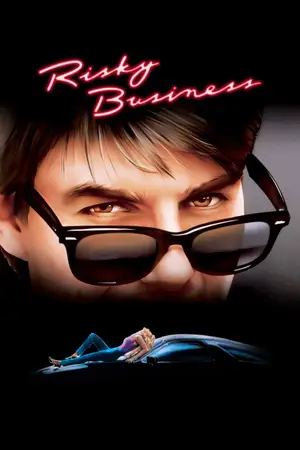
Risky Business (1983)
S Shaun_JohnsonMay 27, 2025
I expected the film to end in tragedy, with a reckless rich kid eventually forced to grow up and face reality. Instead, the director grants him a perfect ending—he wins both love and an Ivy League admission. It’s a reminder that film often offers the kind of wish-fulfillment real life rarely does.

Rumble Fish (1983)
E EDMUNDO.edMay 27, 2025
This is the most visually stunning film I’ve seen so far. Though shot in black and white, Francis Ford Coppola’s camera language and visual transitions are elegant, while the action sequences are raw and powerful. Watching Matt Dillon, Mickey Rourke, and Nicolas Cage in their prime is just pure pleasure.