Reviews

Dr. Mabuse, the Gambler (1922)
K Kleber WuMay 29, 2025
The screenplay attempts a narrative density far beyond the expressive capabilities of silent cinema. Much of the plot is carried by intertitles, which slows the flow and undermines the drama. Still, Fritz Lang’s visual storytelling is remarkably refined, with sharply constructed sequences that suggest a turning point in his career.
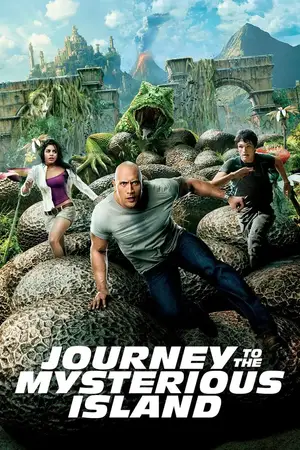
Journey 2: The Mysterious Island (2012)
B belu violettaMay 29, 2025
I love this movie because I enjoyed it, the actors are amazing!! I recommend that you read the book and then watch the movie.
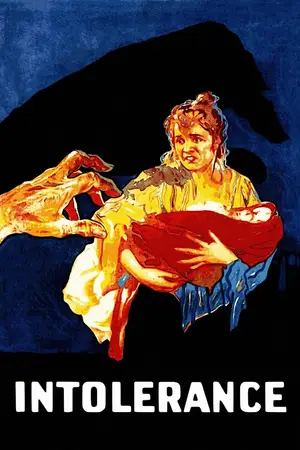
Intolerance (1916)
A Alma_LynchMay 29, 2025
There’s no question this is a film far ahead of its time. Even by today’s standards, its intricate narrative construction and thematic ambition remain towering achievements—especially for an era dominated by linear storytelling. The elaborate sets and lavish costumes are impressive, but they’re mere complements to its structural innovations.

A Working Man (2025)
F Frantz CasillasMay 29, 2025
The film exists firmly within a cultural tradition, that quintessentially American breed of action cinema tailored unmistakably for the middle-class dad—think backyard grilling, mild-mannered suburban bravado, and garage weekends distilled into celluloid. It’s the cinematic equivalent of a sturdy pair of boots: practical, reliable, comforting, if a bit pedestrian.
Yet, within this humble intent, the movie undeniably delivers. It is a popcorn ride par excellence, trading subtlety and nuance for kinetic spectacle and straightforward catharsis. In the embrace of Dolby Cinema, it transforms itself—not into high art, never that, but into a visceral, immersive event. The thunderous sound design reverberates through your bones, the choreography of violence elevated from mere spectacle to theme-park ride thrill. In this venue alone, A Working Man makes a compelling argument for theater attendance, the physicality of the experience compensating for narrative thinness.
However, the film does stumble, particularly when it overreaches aesthetically. Night scenes are drenched in artificial moonlight, a bloated supermoon hanging improbably in the sky, flanked by the telltale glare of floodlights clearly visible in-frame. These moments break the spell, forcibly reminding the viewer of the film’s stage-bound reality. The backdrop, perhaps born from the pixelated womb of Unreal Engine, punctures the delicate veil of suspension of disbelief, grounding the film in artificiality.
Yet even these missteps possess a certain charm. They underscore the fundamental honesty of the film’s purpose: it never pretends to be Cannes fodder, never feigns aspirations beyond its grasp. Instead, it proudly wears its intentions on its sleeve, an earnest declaration that what you see in the trailer is precisely what you get on the big screen. And in a media landscape oversaturated with deceptive marketing, there’s something genuinely refreshing in this straightforwardness.
In short, A Working Man thrives precisely when and where it intends—in the controlled chaos of Dolby Cinema, as a communal joyride rather than a solitary contemplation. At home, it risks devolving into background noise, mere accompaniment to chores. But with expectations properly calibrated, it offers exactly what it promises: solid, unpretentious entertainment, a film comfortable in its limitations, celebrating spectacle over subtlety, and action over artifice.

Conclave (2024)
FFrantz CasillasMay 29, 2025
Frantz CasillasMay 29, 2025There’s a kind of hush in Conclave—not silence, but the coiled, breath-held quiet of ancient ritual dressed in modern cutlery. It hums beneath cassocks and gritted teeth, beneath the Sistine ceiling that feels less like heaven and more like surveillance. This is a thriller measured in eye flickers and murmured allegiance, where every footstep echoes like a gavel against the ribs of God Himself.
The film dares to strip theology of majesty and expose its scaffolding—fragile men with trembling hands attempting to steer the eternal. It is not about faith; it’s about the performance of belief, a kind of ecclesiastical LARP in the Vatican's bowels, where politics and power pirouette around a slowly dying candle.
Fiennes walks like a man who’s been hollowed out by too many whispered truths. His performance isn’t acting, it’s a slow possession. You watch him dissolve into robes and ritual, until only guilt remains—dense and invisible as incense. His eyes do most of the speaking, which feels apt in a film where words are dangerous currency.
But what I loved—what made this film throb with relevance—was how it made the divine feel mundane, and the mundane feel profound. A key in a drawer has the tension of a loaded gun. A hallway becomes a confession. And when secrets slip through cracks, they don’t fall—they metastasize.
The final reveal is less twist and more transubstantiation. A quiet heresy buried in cloth and dust. And it asks—not whether men can speak for God—but whether they've just been speaking to themselves, in a cathedral-sized echo chamber.

On Becoming a Guinea Fowl (2024)
FFrantz CasillasMay 29, 2025
Frantz CasillasMay 29, 2025Watching On Becoming a Guinea Fowl was like being invited into a crescendoing howl—a piercing yet exquisite cry against silence. This African masterpiece isn't just cinema; it's visceral poetry, a simple yet devastating revelation of cultural truth woven masterfully through layers of absurdity, humor, and raw vulnerability.
What makes this film an astonishing experience isn't merely its narrative prowess, but its masterful handling of perspective. Through multiple viewpoints, the movie gradually funnels you toward a singular, unavoidable truth—one that resonates with startling logic and profound empathy. Each frame pulses with authenticity, pulling us into a world where women grapple against the suffocating grip of a male-dominated society.
The brilliance lies in its restraint: every moment you anticipate relief or resolution, the film gently yet ruthlessly reminds you of the relentless logic imposed by tradition, one that's skewed, oppressive, and heartbreakingly entrenched. It underscores the tragedy of generational silence, where women's voices are systematically muted by the old guard's relentless grip on power.
Yet, amid its profound critique, the film manages to dance gracefully between laughter, reflection, and tears—achieving that rare trifecta that elevates storytelling to something transcendent. The humor isn't trivial but essential, illuminating absurdities that sharpen the film’s incisive social commentary.
Ultimately, On Becoming a Guinea Fowl is more than a film; it is a scream—loud, unapologetic, necessary. It captures the raw, primal feeling of powerlessness transformed into a battle cry, a declaration that sometimes, shouting into the void is the sharpest blade one possesses. A stunning, emotional journey that's as enlightening as it is entertaining, this film is nothing short of a revelation.

That Day, on the Beach (1983)
J Jackson_PlantMay 29, 2025
Yang’s sharp insight into society shapes this portrait of a woman coming into her own. While the early ’80s in Taiwan was brimming with optimism, he chose to examine the psychological undercurrents of that period of change—and in doing so, created something timeless.
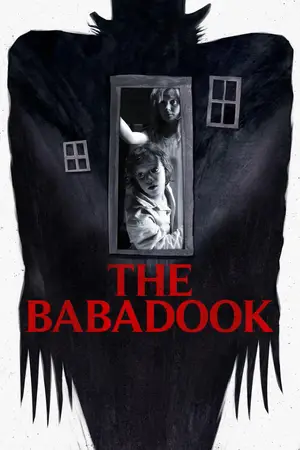
The Babadook (2014)
G Gwen PemMay 29, 2025
I think I'm pretty hard to scare, but The Babadook really got to me. I was hesitant in the first half, mostly distracted by how much Sam's character made me never want children, but the second half was so unsettling, and tied everything together so perfectly that I've forgotten what it was I didn't like in the first place.
Also confirms that the only safe place to hide from monsters is under the covers
Also confirms that the only safe place to hide from monsters is under the covers

Friendship (2024)
GGwen PemMay 29, 2025
Gwen PemMay 29, 2025This shouldn't work for me, but somehow it does. The tension and absurdity are balanced so deftly that I can't tell if I'm cringing because I'm laughing or laughing because I'm cringing. One of the strangest things I've seen all year

The Phantom Carriage (1921)
B Birdie_SawyerMay 29, 2025
"The Phantom Carriage" is historically vital as a testament to post–World War I national cinema. Its ghostly double exposures created a haunting image of death’s carriage, while its segmented structure and Russian nesting doll–like flashbacks helped shape the language of modern film narrative.
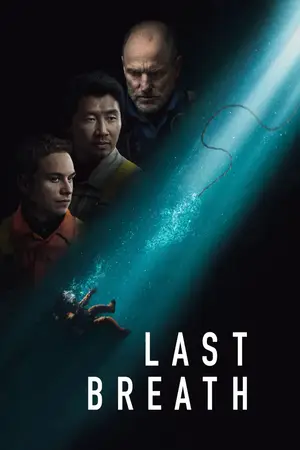
Last Breath (2025)
C cccHRISTIANO77May 29, 2025
There’s an almost mythic quality to the story, and the performances elevate the material. With more attention to production detail and character development, it could have been truly great. Still, the underwater scenes do capture a harrowing sense of isolation and helplessness at the ocean’s depths.

Taipei Story (1985)
P Plantão CinéfiloMay 29, 2025
Departing from conventional dialogue-driven storytelling, "Taipei Story" leaves generous silences throughout, and these moments—paired with frequent deep-focus cinematography—lend the film a sense of realism. Within those pauses lies a psychological richness, inviting the viewer to linger and reflect, rather than be passively guided.
Death of a Unicorn (2025)
L Lucas.May 29, 2025
This movie was kind of a waste of time. Will Poulter made the movie, but everything else was forgettable.

Megalopolis (2024)
LLucas.May 29, 2025
Lucas.May 29, 2025Say what you will! This is an iconoclast at his peak. How can you not respect the ambition? How can you laugh at a veteran director who is still trying to push the form to its outer limits? This will be remembered as one of the greatest and most expensive experiments in cinema history.

The Ten Commandments (1956)
LLucas.May 29, 2025
Lucas.May 29, 2025An old--school epic. This is a testament to what movies can be. The colours and set design are amazing. The story is epic and I love the magic elements. Obviously of its time, but still worth a watch.
Friendship (2024)
LLucas.May 29, 2025
Lucas.May 29, 2025This movie was hilarious. I love Tim Robinson and this movie was everything that I wanted it to be. Shoutout to T Boy. Shoutout to Jimp.

Adolescence (2025)
LLucas.May 29, 2025
Lucas.May 29, 2025It's a good show. The hype is a bit overblown, but it is creative and it tells a heartwrenching story

The Last Laugh (1924)
V Vincent_BryantMay 28, 2025
A near-perfect silent film, rich in technique despite its lack of intertitles. It features elegant editing, subjective camera work, and memorable superimpositions. The core idea is brutally simple: the fall from grace is a spectacle few can look away from. The final 15 minutes, though, feel unnecessary—perhaps Murnau thought so too.

The Wheel (1923)
A Abbey_FischerMay 28, 2025
Among the French Impressionist filmmakers, Abel Gance was perhaps the most inventive. "The Wheel" stands as his most celebrated work from that era, and its use of accelerated montage to simulate the relentless momentum of a train wheel creates a visceral visual experience. Though the narrative may be conventional, the infusion of literary allusions gives it unexpected depth.

The General (1926)
J Jared_StanleyMay 28, 2025
One of Keaton’s defining works, this genre-blending adventure features war, romance, and slapstick in equal measure. Shot in just eight weeks, the film’s symmetrical train chase structure is a marvel of classical narrative, and Keaton’s physical comedy remains effortlessly charming.