Reviews
Only God Forgives (2013)
T troyd-3May 30, 2025
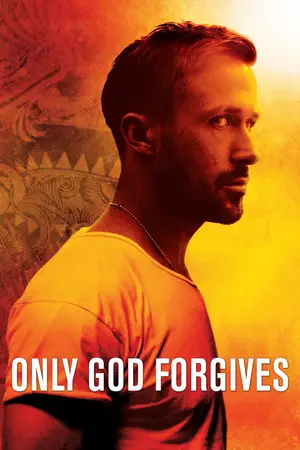
Following their collaboration on "Drive," Ryan Gosling reunites with Nicolas Winding Refn for a far moodier turn in "Only God Forgives." Here, stylized lighting, bold color contrasts, and pulsating electronic music replace traditional narrative, creating a hallucinatory noir vision of Bangkok as a seductive and menacing crime haven.

Speed (1994)
Ttroyd-3May 30, 2025
troyd-3May 30, 2025With no big-name stars and a limited budget for special effects, the success of "Speed" relied entirely on the ingenuity of its creators. Inspired by "The Bullet Train" (1975) and "Runaway Train" (1985), the film swaps trains for a city bus, instantly raising the stakes. Unlike a train confined to tracks, a bus must navigate unpredictable city traffic, like gridlocks and broken overpasses, making for a far more suspenseful ride.

The Accountant (2016)
Ttroyd-3May 30, 2025
troyd-3May 30, 2025Watching "The Accountant 2" prompted me to revisit the original, and I came away with a deeper appreciation for its themes. Beneath its crime-thriller surface, it’s a story about the inner world of someone on the autism spectrum, and the issues with family, identity, and interpersonal connections. It’s far more than just a slick action film.

Pink Floyd: Live at Pompeii (1972)
Ttroyd-3May 30, 2025
troyd-3May 30, 2025By splicing together scenes from Pompeii’s ruins, bubbling lava, and intense close-ups of the band, the film achieves a kind of cosmic scale. The editing is as experimental as Pink Floyd’s sound, evoking the same spirit as David Bowie’s "Moonage Daydream." Still, a deeper dive into the recording process and band dynamics would’ve added real substance.

The Dead Zone (1983)
Ttroyd-3May 30, 2025
troyd-3May 30, 2025Christopher Walken delivers an outstanding performance, and I share the general sentiment among viewers: adaptations like this are hard to pull off. Cramming an entire novel into a two-hour runtime inevitably leads to gaps and rushed transitions. What saves the film is Walken’s magnetic portrayal, which grounds the story even when the script falters.

The Outsiders (1983)
Ttroyd-3May 30, 2025
troyd-3May 30, 2025Even if the story is boring, the music and cinematography are fantastic. Some tracks later reappear in “Rumble Fish,” and while the fight scenes lack realism, they’re entertaining. Coppola’s flair for stylized blocking and foreground-background interplay is already evident here.

First Name: Carmen (1983)
Ttroyd-3May 30, 2025
troyd-3May 30, 2025The disjoint between sound and image, and the repetition of scenes from different camera angles, struck me as boldly innovative. This isn’t a film that seeks emotional engagement—in fact, it deliberately keeps you at a distance through the use of music, minor characters, and empty shots.

Crime and Punishment (1983)
Ttroyd-3May 30, 2025
troyd-3May 30, 2025This early work by Finnish director Aki Kaurismäki already displays his hallmark style—minimalist storytelling, emotionally rich yet understated characters, and sparse but impactful dialogue. Kaurismäki builds atmosphere through careful set design and a highly curated soundtrack that includes psychedelic rock from The Doors and classical compositions by Franz Schubert and Dmitri Shostakovich. His taste in music, especially Nordic rock, becomes an integral part of the film’s tone.

Superman III (1983)
Ttroyd-3May 30, 2025
troyd-3May 30, 2025While the film flirts with interesting ideas about artificial intelligence and the limits of superhero power, it pales next to contemporaries like "Blade Runner." Its shallow depiction of AI, coupled with sidelining Lois Lane and replacing her with forgettable characters, renders it a disappointing misstep.
Tender Mercies (1983)
Ttroyd-3May 30, 2025
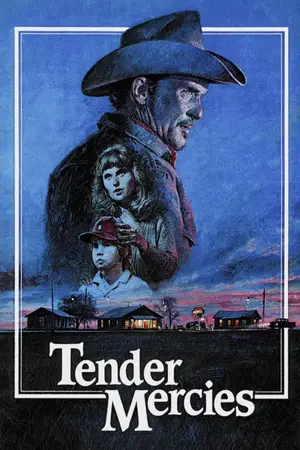
troyd-3May 30, 2025Tess Harper’s character is a model of quiet strength and compassion. Her respect for her son and the broken country singer in her life radiates warmth. Her empathy, patience, and strong morals illuminate the path to redemption—not just for others, but for the viewer as well.

To Our Loves (1983)
Ttroyd-3May 30, 2025
troyd-3May 30, 2025Framed from a male perspective, the film focuses on the protagonist’s entanglements with family and lovers. She is both a vulnerable young woman craving affection and a shrewd manipulator of male psychology. These contradictions reflect her subconscious rebellion against the gendered power dynamics and social structures that confine her.

Another Country (1984)
Ttroyd-3May 30, 2025
troyd-3May 30, 2025Though labeled a queer romance, "Another Country" is more invested in political and social critique. The characters’ debates about ideal societies and their disillusionment with the student council echo larger frustrations with institutional power. However, the conclusion feels rushed, leaving key threads unresolved.

Boy Meets Girl (1984)
Ttroyd-3May 30, 2025
troyd-3May 30, 2025Leos Carax’s debut channels the full force of the French New Wave’s visual and literary traditions, echoing Godard’s techniques of alienation and disjunction between sound and image, while drawing from the existential stream-of-consciousness style of postwar European cinema. Abrupt blackouts rupture the characters’ thoughts, and the final starlit scene is a lyrical triumph.

Calamari Union (1985)
Ttroyd-3May 30, 2025
troyd-3May 30, 2025With this film, Kaurismäki firmly established his distinct voice. The narrative drifts with a sense of rootlessness, reflecting a spiritual aimlessness that permeates each frame. His lens draws viewers in close, dissolving the barrier between the character and the audience.

Friday the 13th: The Final Chapter (1984)
Ttroyd-3May 30, 2025
troyd-3May 30, 2025The timeline is shortened to create more tension, and the improved makeup and effects give Jason a more terrifying presence. Most intriguingly, Corey Feldman’s character, Tommy, emerges as a symbol of both vengeance and human resilience under extreme pressure.

Full Moon in Paris (1984)
Ttroyd-3May 30, 2025
troyd-3May 30, 2025Rohmer often uses romantic relationships to explore moral ambiguity. Here, the heroine resents her controlling partner and yearns for freedom, even though she loves him. Her heartbreak when discovering his infidelity reveals how deeply she cares, but her own betrayal underscores the cost of wanting both love and independence. In Rohmer’s world, choices have consequences.

Romancing the Stone (1984)
Ttroyd-3May 30, 2025
troyd-3May 30, 2025Riding the post-Raiders of the Lost Ark wave, Romancing the Stone checks all the boxes for a classic adventure flick: treasure, romance, and action. While it doesn’t match Raiders in spectacle, it delivers its own charm with a lighter, more playful touch.

Friday the 13th: A New Beginning (1985)
Ttroyd-3May 30, 2025
troyd-3May 30, 2025Apart from the lead, the characters are barely developed, serving more as disposable targets than actual people. Visually, the film lacks style and coherence, relying instead on gratuitous violence, excessive nudity, and exploitative shots of women to attract attention.

Hail Mary (1985)
Ttroyd-3May 30, 2025
troyd-3May 30, 2025Like many male auteurs of the 19th century, Godard stumbles in articulating feminist ideas. The narrative is chaotic, the dialogue fragmented, and the nudity often gratuitous. It’s hard to discern what those images are meant to convey, beyond provocation. Ironically, the most evocative segment lies outside the main film—a half-hour depicting Mary’s childhood, where female imagination and potential come alive.

Greedy People (2024)
A Antony_VargasMay 30, 2025
For a low-budget crime satire, “Greedy People” is impressively sharp. It juggles multiple narratives without losing coherence, weaving a clever plot full of dark humor. The idyllic small-town facade quickly crumbles to reveal a web of deceit and hypocrisy, as nearly every character hides a selfish secret. It’s a biting commentary on human nature’s darker instincts.