The Lord of the Rings: The War of the Rohirrim -- You Wanna Know How I Got These Scars?
General Reviews
Some weeks, you finally get to watch the movie you actually want to watch. It was a privilege to watch the French-Canadian indie Phoenixes. Gladiator II was the movie of the moment and I felt a sense of duty to go see it. And it was a fun, nostalgic trip to sit through Y2K. But what I've really wanted, what I've yearned for, is this:The Lord of the Rings: The War of the Rohirrim.
From the moment I watched the trailer, this epic, anime return to Middle Earth was placed right at the top of my must-watch list.
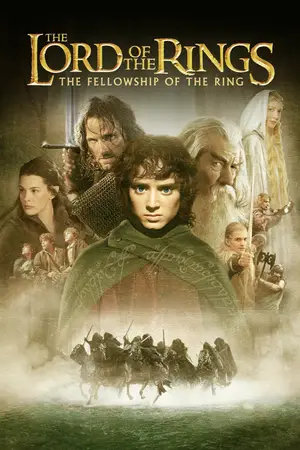
Over the past few years, my love for Peter Jackson's The Lord of the Rings trilogy has only increased. Each rewatch takes that trilogy higher up on my ranking of great movies, especiallyThe Fellowship of the Rings. It's a go-to, comforting watch, which always spins my creative mind in a wild web and reminds me what it takes to make a good story great. On top of that, my friends and I quote these movies ad nauseam (with "meat's back on the menu" and “why shouldn't I keep it?” landing at the top of the most quoted quotables).

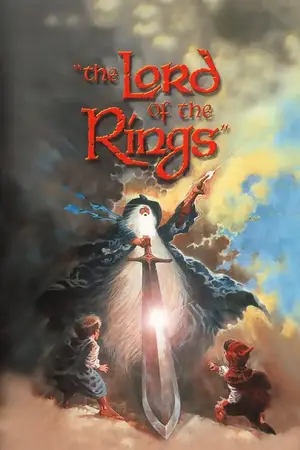
Let's start with the most debatable aspect of The War of the Rohirrim: the animation. Choosing Kenji Kamiyama as director for this adaptation was a bold choice. However, I loved The War of the Rohirrim's anime style. Although I'm not a major anime fan, having only seen a handful of Studio Ghibli movies and a couple others like Ghost in the Shell, I still thought the animation in The War of the Rohirrim was gorgeous. It brought an exciting, new flair to Middle Earth, choosing to forge its own trail rather than following in the animation footsteps of 1978's The Lord of the Rings. The battles are epic; the landscapes are beautiful; the people are detailed and memorable. The soaring shots of Rohan made me want to pack my things and move there.
Ah, the life of a Rohirrim villager. Harvesting root vegetables, answering to Helm Hammerhand, and trying your best not to get burned alive by the raiding Dunlendings. What a dream. But, alas, I'm getting ahead of myself.
The War of the Rohirrim centres on Héra, daughter of King Helm Hammerhand. She is the piece of the diplomatic puzzle that is most important to Freca, a Dunlending lord. Freca, power-hungry and ugly, wants Héra to marry his son, Wulf, in the name of an alliance, but also to shore up his chances of gaining the Rohan throne from Hammerhand. However, Héra is already sworn to a lord of Gondor, and, frankly, she doesn't seem too keen to marry anyone. Not only this, but Hammerhand sees right through Freca's presumed good tidings. He sees that Freca is not interested in an honest marriage. He wants to join Helm's family in order to destroy it and take the throne of Rohan for himself.

There is an additional layer to this story: Héra and Wulf have a lifelong history. They were childhood friends and, possibly, they once had feelings for one another. As kids, while play fighting with swords, Héra accidentally caught Wulf with her blade, leaving him with a scar across his eye. With one swing of steel, she became the girl that Wulf could never forget. This subtext of old kinship plays a vital role in creating The War of Rohirrim's emotional depth.
However, on the night that Freca visits Hammerhand to propose this marriage, more pressing than old memories is the insult Freca has waylaid on Hammerhand. The gall of this leader to try and weasel his way onto the Rohan throne through marriage. In the first of many unforgettable Hammerhand moments, the king suggests that he and Freca settle this like pugilists: that is, by taking it outside and beating the daylights out of each other.
If I wasn't already sold on this movie, now it had me hooked.
From here, ent-draught hits the fan. Hammerhand, being a stone-cold G, one punches Freca and kills him instantly in front of Wulf and the rest of the Rohirrim villagers (talk about a king that provides entertainment!). Wulf swears revenge, before leaving the Rohan kingdom and not returning for years.
With his family embarrassed/dead and Hammerhand still holding the throne, the stage is set for war between Hammerhand's Rohan and Wulf's mercenary band of Dunlendings.

At the centre of this conflict is Héra, the pride of Rohan and the girl that gave Wulf his scar.
What The War of the Rohirrim does best is display Wulf's descent from a good person to a downright dastardly demon. When we first meet him, on that fateful night in Rohan, he is mild-mannered, somewhat edgy with his scar and long hair, but also familiar to our protagonist, Héra, who is all but happy to see him.
Once he reappears in the story, some scenes later, he is undoubtedly changed. No longer is there a sparkle behind his eye. He is hellbent on vengeance. However, the audience may still hold out hope for him to change his ways, make peace with Héra and live happily ever after. But, as events unfold, his actions become more and more evil to the point that he becomes unredeemable. He murders senselessly; he ignores the advice of his most trusted aid; he lies to his soldiers in order to continue his vengeful quest. Even though I liked Wulf when I first saw him in The War of the Rohirrim, by the end, I was cheering for his comeuppance.

The War of the Rohirrim is filled with epic moments. Other than the one-punch kill I mentioned earlier, there are myriad moments that will have LOTR fans cheering, because, if there's one thing that LOTR fans love, it's epic shit.
An early sequence of epic action is a confrontation between a rabid mûmak and the Watcher in the Water. Although this sequence plays somewhat like an unnecessary diversion from the main plot, it is still very entertaining, with sharp action, wicked animation and some clever strategizing by Héra. Perhaps the writers meant this as Héra's “save the cat” moment – it makes us believe that she's capable of great things because of how she skilfully handles the rabid mûmak. Whatever the reason, I'm glad this sequence made the final cut because I was thoroughly entertained.

The most epic sequence in The War of the Rohirrim is Hammerhand's final stand. This shouldn't come as too big of a surprise, but Hammerhand does not make it to the final credits. Although the logic of this sequence is somewhat questionable, I cannot deny that it was my favourite part of the movie. In a brutal winter storm, Hammerhand stands outside the entrance to Hornburg and takes on Wulf's mercenaries, one by one, one-punching them to oblivion. Wulf watches but does not attack. The snowy storm consumes the scene and we're left to believe that Hammerhand was overpowered by the onslaught of Wulf's men.
That is not the case.
Hammerhand dies, frozen in place, fist to the sky in a valiant final punch, his knees unbent. A noble end to an epic king.
There are other mesmerizing moments in The War of the Rohirrim, like the building of the siege tower, the negotiation between Wulf and Hammerhand, and the paranoid fear that consumes the mercenaries when they perceive the wraith of Hammerhand. But none of these moments create such an intense emotional attraction to a character's end than Hammerhand's last stand.
I have little to nothing negative to say about this movie. Perhaps Héra plays a bit of a second (or third) fiddle in her own story, as other characters like Hammerhand and Wulf get the movie's best moments. But I don't necessarily think that this sentiment is entirely true. Héra has her own development, and she is the thread that connects all these stories together. She provides us with a unique perspective and gives us plot-twisting scenes like when she watches the war's first battle from an outlook in Rohan.
This teichoscopy scene is reminiscent of the Iliad, when Helen watches the battle from the walls of the kingdom. Outside of its mythology connections, it also provides an important plot point that twists the plot of The War of the Rohirrim and keeps the audience guessing throughout the second act.
For LOTR fans, I can't recommend this movie enough. If you can accept that it isn't Peter Jackson and it's not even really J. R. R. Tolkien, I think what you'll find is an epic yet concise story that ads a welcome thread of myth to the already rich world of Middle Earth.

Mentioned in this piece
 The Lord of the Rings: The War of the Rohirrim2024
 The Lord of the Rings: The Fellowship of the Ring2001
 The Lord of the Rings: The Two Towers2002
 The Lord of the Rings: The Return of the King2003
 The Lord of the Rings1978
 The Lord of the Rings: The Rings of Power2022
 Brian Cox
 Gaia Wise
 Luca Pasqualino
 Kenji Kamiyama
 Philippa Boyens
 Jeffrey AddissWill MatthewsPhoebe GittinsArty Papageorgiou
Comments 1