Ghosts in Paris
General Reviews
When I bought my first Moleskine notebook, the first thing I wrote was a cringe-inducing poem about why I wanted to live in Paris. Yes, I've always been insufferable. Though I've tried to write things that no longer make me wince when I read them, I still hold a soft spot in my heart for the City of Light. I know, it's cliché, but it is what it is. To walk the arrondissements is to walk through history. There are ghosts in those streets, with centuries of stories. How can you not fall in love with such a place?

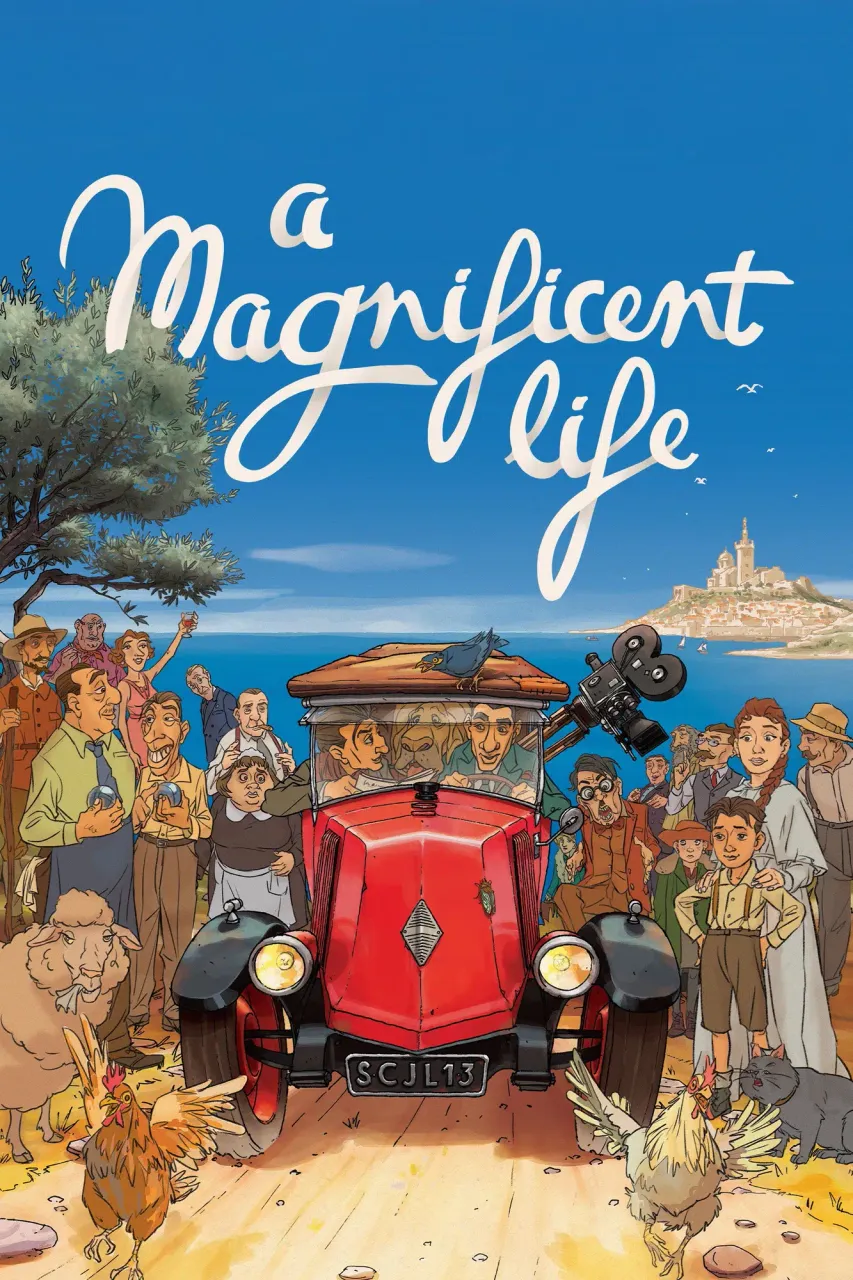
The other weekend, in my beautiful but normal city of Vancouver, I went to the VIFF Centre for a showing of A Magnificent Life. It is the latest feature film by director and animator Sylvain Chomet. I'd fallen in love with Chomet's work years ago when one of my university professors screened The Triplets of Belleville for the class. His animation style stuck with me. InTriplets, it was those bike-race scenes, where the racers' legs looked like they were about to pop with lactic acid, that stuck in my memory. Chomet's style is as beautiful as it is scary, but it's also difficult to replicate. Since he'd only released two animated features prior, this third feature felt like a must-see movie for me.
A Magnificent Life is an animated biopic about French writer and filmmaker Marcel Pagnol. Don't worry, I didn't know who he was either. According to the film, he's a pretty big deal in France. The film is framed as such: Pagnol is asked by Elle to write his memoirs for publication. He locks himself in his office and starts to think, but he can't remember anything. That's when a ghost/spirit of his younger self comes to remind him of all the magnificent things that have happened in his life.
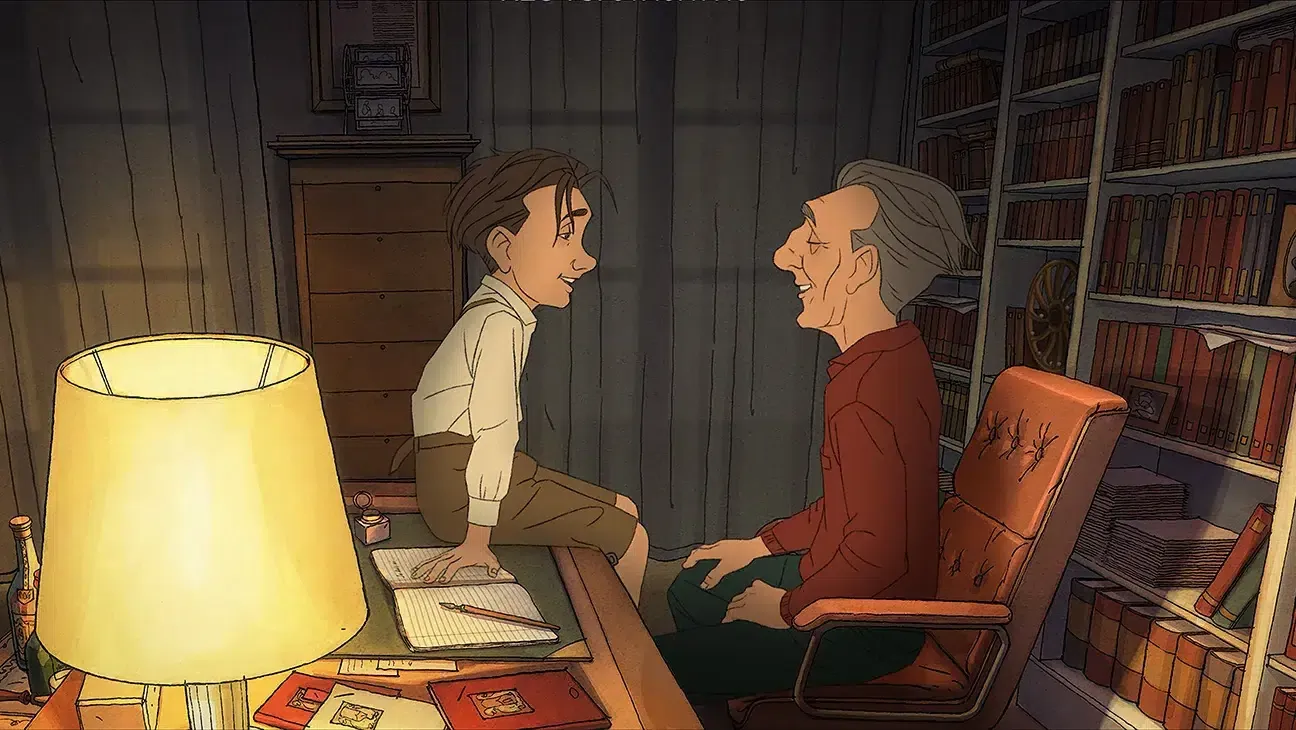
The film doesn't unfold like a conventional biopic. This one plays up its frame narrative. It really is like listening to an old man reflect on his entire life. Scenes are short, romanticized, and life's bleaker moments are either ignored or brushed over. This might not make for high drama or deep personal reflections, but it makes for an easy-going story that is heightened by the gorgeous, animated backdrops created by Chomet.
The director-animator's style has softened since the 2003 release of Triplets. It's still distinct, but it's not as obsessed with the grotesque. Lines are still clean and harsh, but Pagnol and the other characters are drawn with a softer sense of love. I think this is meant to reflect the golden lens of nostalgia that shrouds this story.
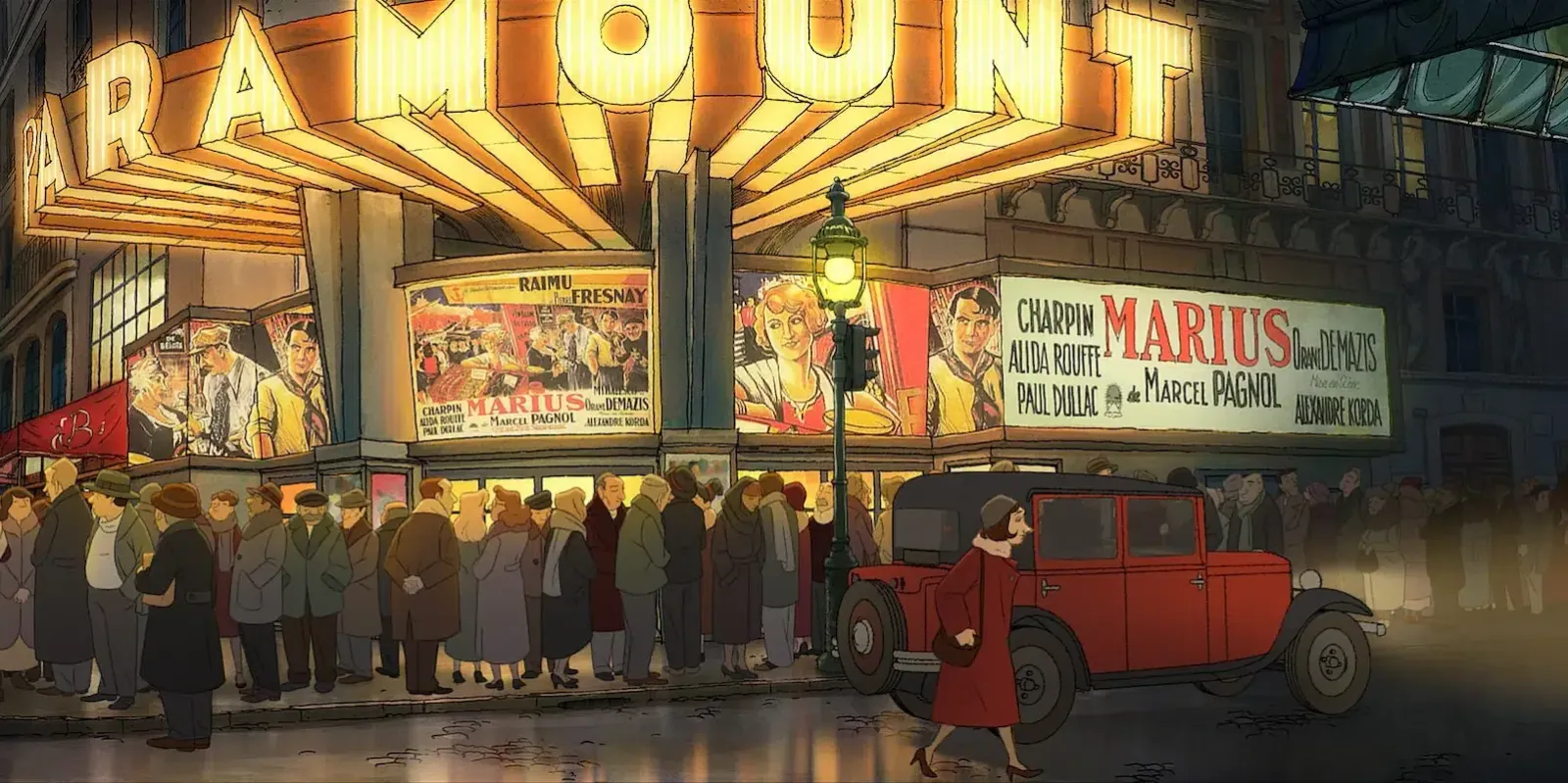
The majority of the film takes place in Paris and Marseilles, with brief interludes in London and Monaco. As Pagnol comes up in the arts world, his story takes us to the backstages of Parisian theatres, cafés where artists hang out, and movie studios with their early-20th-century charm. Being who I am, a writer and avid supporter of the arts, these settings were like a dreamscape to me. An empty theatre during a dress rehearsal, where the producer and writer sit in the audience alongside a critic that is asleep, will never not be romantic.
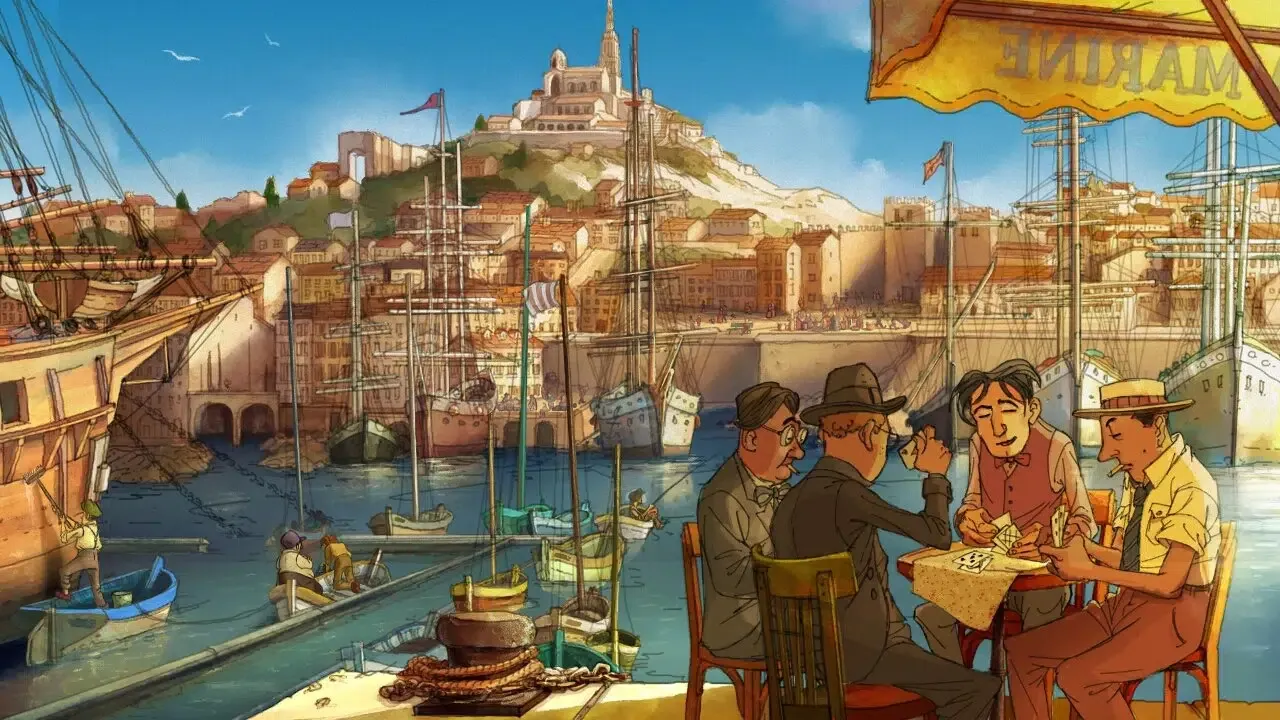
Paris and Marseilles in A Magnificent Life are remembered fondly by Pagnol. Although it's realistically drawn, there is still the romanticization that comes from reflecting on one's life. Paris isn't remembered as a dirty city, but as a place of opportunity. Marseilles isn't a sleepy town, but home and a muse for Pagnol.

Even the less grandiose sets, like Pagnol's first apartment, up on the top floor with a skylight, reminded me of those years-ago dreams I penned in my Moleskine. I don't care how cliché Parisian bohemian chic is, it's still a wonderland that my imagination tap dances through on a routine basis. A Magnificent Life allowed me to see these dreams on display, and the romance was heightened by just how successful Pagnol became.
As the film tells it, Pagnol faced very little adversity. My dreams were always lofty: Become a writer, have a screenplay produced by a major Hollywood studio, get into producing, make a million dollars and win an Oscar. Only one of those things kind of, sort of, temporarily, barely happened. For Pagnol, nothing seems to stand in his way. Using the power harnessed by his deceased mother's ghost, he goes to Paris and finds quick success as a playwright. He convinces the Parisian theatre powerplayers to get into movies, and Pagnol again finds success writing and directing his own pictures. He makes his own film studio and it works too. Watching this on the big screen, I was happy that at least someone got to live my dream.
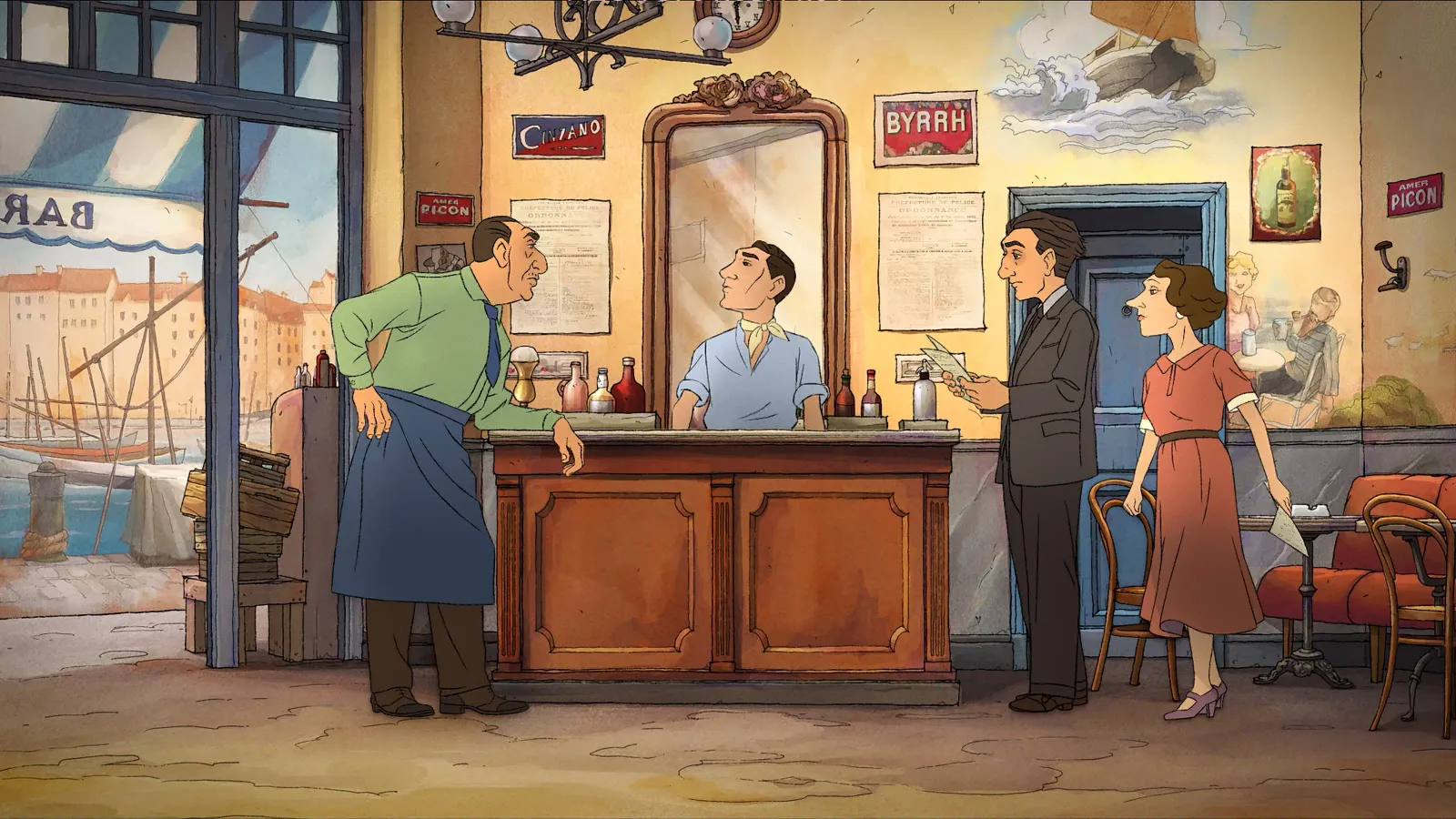
Although it was kind of annoying that Pagnol didn't face much conflict, I suppose I can think of it like an unreliable-narrator situation. As Pagnol is the one remembering his own life, it makes sense that he would remember the bright moments more than the dark ones.
I liked that Chomet chose to give this film a mystical element, reflected in the many ghosts that haunt these scenes and the inclusion of an afterlife. The ghosts don't really affect the plot in any important way, except in one scene where a ghost causes a chance encounter, but they do reflect the realities of writing and what Pagnol was trying to get at with his life's work. As is revealled through a quote at the end of the film, Pagnol treated writing as a portal to communicate with his loved ones who had died. The film takes this idea and makes it material.
This makes the movie heartfelt and personal, and accentuates the romanticism of the film. However, with that romanticism, comes a glossing over of topics that don't really fit into this biopic. They're included because Pagnol went through them, but he rarely interacts with the larger history. The film is at its best when Pagnol is struggling with the realities of being an artist, not when it encapsulates all of World War II in the span of 20 minutes.
Despite the issues with this film, it is still a beautiful animated world. It is one that I hope to return to once this film hits streaming, even if I decide to watch it with the sound off. I'll play it in the background as I write more mature, totally not cringey poetry in my Moleskine about why Paris is still the place where I want to be.


Comments 2