Reviews



One Battle After Another (2025)
D Diego Pineda PachecoSeptember 27, 2025
Movies like this make me feel overwhelmed, because there’s no possible way for me to capture the grandeur of what Paul Thomas Anderson and company have just achieved here in words. There’s nothing new I can possibly add to the conversation on this terrifyingly timely masterpiece. It is, indeed, the best film of the year, and it will be remembered twenty years from now as one of the decade’s defining works. But if I can’t say anything revolutionary about “One Battle After Another”, then I will at least try my best to express why it’s one of the greatest films I have seen in a long time.
If for nothing else, then PTA is at least a genius for having convinced Warner to give him what essentially amounts to a blank check to make one of the most overtly pro-revolution, anti-fascism, gleefully leftist films that modern studio money has ever gone to. This story had been brewing in its author’s mind for about a decade, but there’s no better time during which it could have possibly come out than now. The way this indictment of the American militarization and systematization of violence, racism, and oppression reflects current events will be lost on no one, but I’m most fascinated by how intimate this story feels in spite of its huge scope. Here we have a film about a father navigating the difficulties of raising a biracial daughter in a country where she’s increasingly unsafe; a coming-of-age where the young girl’s coming-of-age is just as important as the dad’s, whose eyes are opened to the fact that the revolution is safe in the hands of the next generation. Here we have a film that asks how you can possibly justify having children in this twisted world we live in, and answers that question confidently and with distinct rebelliousness.
PTA is at his most adventurous and intrepid here, aided by a jazzy and hugely complex score by Jonny Greenwood, Michael Bauman’s constantly jaw-dropping camera (there are some shots here, particularly in the third act, that will live at the front of my memory for years), and editing that gives you not a single second to catch your breath yet never feels like it’s too much. “One Battle After Another” is wild. It’s frenetic, it’s colorful, it’s unexpectedly hilarious. It’s deeply meaningful, yes; but its biggest achievement is just how irresistibly entertaining it is, too.
DiCaprio delivers one of the best performances of his career. He’s constantly hysterical as the bumbling yet enchanting buffoon that is Bob Ferguson, but also offers plenty of moments of deep pathos. Sean Penn comes SO close to being cartoonish without actually crossing that line that his is probably the most memorable performance of the film, and Benicio Del Toro is fantastic as well. But this movie belongs to the women. Teyana Taylor is a scene-stealer, Regina Hall leaves a huge mark despite her relatively limited runtime, and Chase Infiniti is a huge star in the making.
“One Battle After Another” is a thrilling, relentless love letter to fatherhood, youth, revolution, and fearlessly standing up to fascism. It deserves to be watched in the biggest, loudest, fullest theater you can find. You’ll want to watch it twice.


Time to Die (1966)
T The DCSeptember 27, 2025
A classic Western with a Mexican touch. Story and symbolism are straightforward, and that makes you miss some of the flair Carlos Fuentes and Gabriel García Márquez are known for. A pretty solid movie all around, but the acting sometimes feels wooden. Check it out if you're trying to get into Mexican cinema.
The Long Walk (2025)
TThe DCSeptember 27, 2025
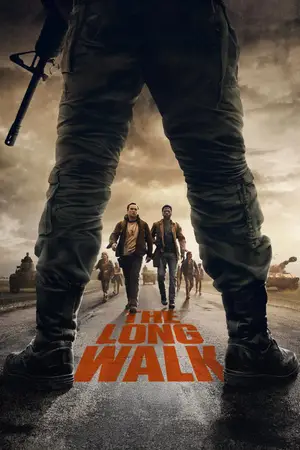
The DCSeptember 27, 2025Great acting except for Mark Hamill, who seems to think he's a cartoon bad guy. It's hard to get into the movie when no one feels real. The characters are sketches, they never come close to feeling like real people. The idea hooked me, and the are some great moments, but overall, it's predictable and easy.


Bananas (1971)
S Sean_SimmonsSeptember 25, 2025
As one of Woody Allen’s rare ventures into overtly political territory, the film lampoons the media and those in power with sharp absurdity. Yet its satire sometimes feels too pointed to resonate deeply with viewers, and the distance between the film’s political chaos and ordinary life makes it less emotionally engaging than his more personal works.
Bananas (1971)
A Andre_KiddSeptember 25, 2025
“Bananas” is a madcap political satire about Fielding Mellish, an ordinary office worker who falls in love, joins a South American communist revolution, and somehow ends up becoming president. Woody Allen skewers not just communism but also authoritarianism and the pursuit of power itself, suggesting that in the chaos of revolution, ideology often takes a backseat.

Ace Ventura: When Nature Calls (1995)
A Alex_ZhangSeptember 25, 2025
Carrey’s manic physical comedy remains the film’s brightest asset, from exaggerated vocal tics to outlandish improvisation. Its themes of animal conservation and anti-colonial critique are admirable, yet the uneven script, unrestrained performances, and outdated stereotypes leave it feeling more like a relic of its era than a timeless comedy.
Ace Ventura: When Nature Calls (1995)
A Arvilla_HartSeptember 25, 2025
Jim Carrey doubles down on his signature brand of slapstick chaos, transporting Ace to Africa for a story built around tribal conflict and colonial greed but disguised as a battle over animal waste. Beneath the absurdity, the film cleverly mirrors exploitative power dynamics, using its bizarre premise as a satirical jab at resource-driven colonialism.
The Last Movie (1971)
J Jacob_WestSeptember 25, 2025
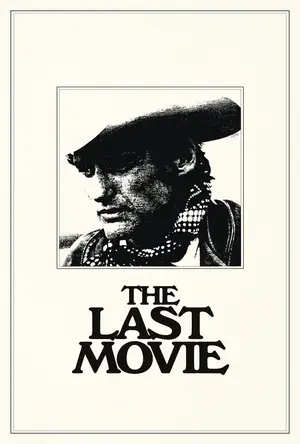
The production design deserves credit for immersing viewers in distinctive settings that capture a rich sense of time and place. Yet, as with many experimental films of the era, individual scenes work better in isolation than in sequence, resulting in a work that seems intriguing without ever being fully coherent.
The Last Movie (1971)
C Chantel_CombsSeptember 25, 2025
Dennis Hopper’s vision aims to blur the lines between fiction and reality, creating a meta-commentary on cinema itself. Unfortunately, the disjointed editing and fragmented storytelling make it difficult to stay engaged, leaving the film more fascinating in concept than in execution.

The 7th Voyage of Sinbad (1958)
B Bridget_SchaeferSeptember 25, 2025
Even today, the film’s special effects carry an undeniable charm, and for the late ’50s, they were groundbreaking. By blending Arabian mythology with dazzling monster design, it not only unlocked the commercial potential of fantasy cinema but also set a new standard for cinematic spectacle. Its frame-by-frame craftsmanship remains a technical triumph of its era.
The 7th Voyage of Sinbad (1958)
U User-1117048418September 25, 2025
A landmark fantasy adventure that pioneered stop-motion creature effects, this Ray Harryhausen classic still commands respect for its boundless imagination. While modern viewers may find the production rough around the edges, its creativity and ambition remain admirable, reminding us how far visual storytelling has evolved.

My Dead Friend Zoe (2024)
A Anne_DunlapSeptember 25, 2025
The beginning is its strongest, skillfully establishing camaraderie and loss while exploring trauma with subtlety. Yet the title itself gives away too much, undercutting the emotional weight of the opening. The inclusion of a special message and donation QR code at the end feels intrusive, making the closing notes less effective.
My Dead Friend Zoe (2024)
A Augustine_DunlapSeptember 25, 2025
Instead of focusing on the brutality of war, the film centers on Merit’s grief, her struggle with PTSD, and her bond with her Alzheimer’s-stricken grandfather. The pacing and emotional beats are handled with care, yet the film ultimately feels restrained, leaving little lingering impact beyond its closing moments.

Morning Glory (2010)
A Alysha_JohnsSeptember 25, 2025
Workplace dramedies often feel formulaic, yet this one stands out thanks to the sharp dialogue and a charming lead performance from Rachel McAdams. The plot follows familiar beats—office conflicts, romantic entanglements, and a hard-fought success—but the execution is so polished and lively that it becomes surprisingly enjoyable.