Reviews

White Nights (1957)
A Amy_ColesApril 4, 2024
This is Luchino Visconti's most iconic film. First off, the lighting and overall visual presentation are top-notch. Maybe only black-and-white frames can really capture the vibe of "White Nights" like this. Also, it’s pretty rare to see Marcello Mastroianni portraying such an intensely passionate and loyal male character, and he nailed it. Maria Schell is so stunning and captivating, whether she's laughing or crying. The brilliance of the setup is obvious when you realize the scenes reflect the characters' emotions. For example, the blinding passion of love is intensely presented in the ballroom scenes, while the giddy romance and happiness during the snow scenes can transform into a lonely and desolate landscape. The dilapidated buildings and homeless wanderers at night embody Italian neorealism's spirit. Finally, Nino Rota's music is so expressive and touching.
White Nights (1957)
O Oliver_PruittApril 4, 2024
It's based on a book of the same name. I was more moved by the sadness in Luchino Visconti’s movie than by the seriousness in Robert Bresson's. Visconti really used colors to show the difference between wealth and poverty, and "White Nights" is the most unique one among all his works with that style, and it’s the only one that explores and captures the enchantment of love and pure romance. The dancing in the ballroom and the lighting reminded me of "The Fiances." What also really impressed me was how they used shots of fire to transition between the characters' emotions and different periods, how they used the scenery to mirror their feelings, and how the final scene had a triangular composition. It all just left such an impression on me.
Rocco and His Brothers (1960)
B Bonita_LeachApril 4, 2024
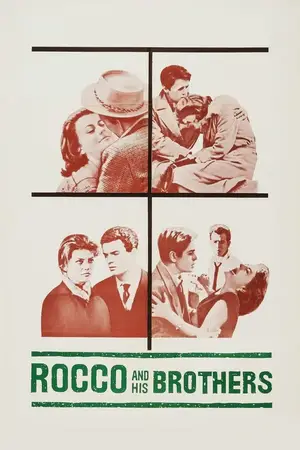
This movie follows the classic formula for a "tragedy of ordinary people," focusing heavily on building characters and showcasing their distinct qualities. The plot is carefully designed to revolve around these characters and what they stand for. However, the film's techniques and tone feel a bit outdated, with emotions blown out of proportion (to the point where viewers are confused) and metaphors that are overly repeated. Nevertheless, this piece provides valuable perspectives on the era it depicts, especially by shedding light on rural and urban life.
Rocco and His Brothers (1960)
A Angelita_SanchezApril 4, 2024
I'm really let down. I just can't give this movie a positive review. The story is way too exaggerated and cliché, and the plot is overly intense and dramatic. It left me speechless. And it feels kinda weird because Luchino Visconti constantly focuses on Alain Delon with close-ups and emphasizes his body in almost every chapter of the story. Hey, director, maybe you should stick to making movies about aristocrats, just like you used to. It's really hard to believe that he's the same person who directed the classic "The Leopard."
Rocco and His Brothers (1960)
A Alta_LiuApril 4, 2024
Cutting out an hour would make this film even better. The film’s structure is meticulously crafted, creating a vibrant picture of different social classes coexisting. Luchino Visconti was the first Italian director to break free from the constraints of realism, skillfully capturing the complexities of people's emotional struggles through visual storytelling. It's difficult to determine whether casting Alain Delon was a good or bad decision because he radiates an aristocratic and melancholic presence that starkly contrasts with the other actors. Paradoxically, however, it adds a hint of the bourgeois to this commoner's tragicomedy.

Vital (2004)
D Dominic_HoltApril 4, 2024
So amazing! It's exactly the genre I'm into. The emotions are off the charts, intense as hell, and full of imagination, which sucks you right into those memories and dreams. It all feels so real, and the acting is incredibly natural. The camera angles are well-chosen, although they could have been more refined.
Vital (2004)
C cchristinaApril 4, 2024
This movie still rocks the same filming style that Shinya Tsukamoto often uses, like in music videos. It's got tons of close shots and close-ups, and the composition is pretty creative, too, like those rain streaks on the window. The story is new and easy to appreciate, but it reminded me of Hirokazu Koreeda's "After Life" when I got to the second half of the film. The present-day scenes have this cool and depressing color palette that's the total opposite of the sunny beach scenes in the flashback parts.

Run Lola Run (1998)
O Oscar_DoughertyApril 4, 2024
"Run Lola Run" really shows that movies can be appreciated as pure audiovisual art. It uses a kaleidoscope-like selection of frames and camera movements, high-energy music, and some surreal expressions. The pace is fast, and the design of the movie's structure is seriously top-notch, showing off the director's skill. Even though its plot breaks the traditional mold, it still has a solid theatrical vibe, and the hilarious storyline keeps the audience hooked. I'd call it a form of "alternative experimental expressionism."
Run Lola Run (1998)
B Buster_SchultzApril 4, 2024
Oh my god! What can I even say? This movie is just out of this world! It's seriously cool. I especially love the scenes of Lola running. The music sets the vibe just right, and even though the editing seems a bit chaotic, it still looks amazing. The story is straightforward, but the way it's told is just awesome. And even though the animation could use a little work, it fits the vibe of the whole movie. I'm really curious about the director's original ideas for camera work and editing, because I've seen some seriously cool and unconventional designs in this movie.
Run Lola Run (1998)
C Car_ReyesApril 4, 2024
The movie follows a three-act structure, with the first story being the most realistic, the second adding a touch of comedy, and the third story filled with dreamlike elements. Each story has a different ending, and even the minor characters on the sidelines have unique conclusions. The way these stories are intertwined captures the unpredictability of life. This movie is impressive and well-paced; it even throws in some elements of animation. Lola's character design is super interesting, and whenever she starts running, I just wanna hit the pavement with her.

Perfume: The Story of a Murderer (2006)
B Breixo_BrenoApril 4, 2024
So, what exactly was the director trying to convey in this movie? At first, I thought it might explore how people's desires make them toss aside morals and boundaries, but in the end, the movie just boils down to a simple story of admiration. The movie's storytelling style is super weird, and it feels like it's pushing some messed-up values on us, almost like it's trying to cover up the bad stuff and mess with the audience.
Perfume: The Story of a Murderer (2006)
F filipemanuelnetoApril 4, 2024
Tom Tykwer really nailed this novel adaptation. The story itself is a fascinating yet dark reflection of human nature, with the main character being a complex blend of good and evil. The mix of murder and perfume-making is simultaneously grim, scary, and romantic. The director skillfully brings out "smell" using techniques like quick editing, close-up shots, smooth tunes, various background sounds, and visual effects. Plus, Ben Whishaw totally kills it with his acting.
Cloud Atlas (2012)
A Alisa_WatersApril 4, 2024
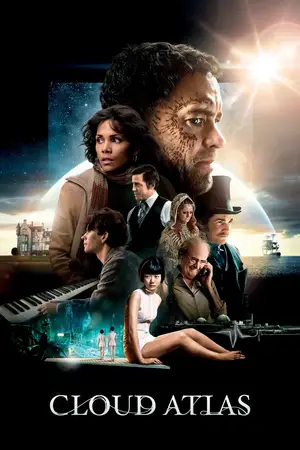
This movie is all too "formalized." It's trying to be this super revolutionary film with all these complex parallel editing techniques, but it doesn't change much. So, it didn't work out. The connections between the stories are just surface-level stuff, and the hours of cross-cutting make the movie lose its flow—it feels like it never ends. Props to them for cleverly blending those six stories and keeping the storytelling smooth and well-paced. I mean, that's actually pretty tough to pull off. Additionally, the music score is outstanding!
Cloud Atlas (2012)
A Alexandra_SmallApril 4, 2024
Such an amazing movie that I'm gonna cry! The storytelling is mind-blowing, and I can't even begin to imagine how much skill is needed to edit and seamlessly navigate such a complex plot. The production team is incredibly talented! The plot and theme may not be the newest, but they've breathed new life into them. What a refreshing take on this! I'm even gonna dive into the original novel right away!

Faces Places (2017)
K KaimayApril 4, 2024
Agnès Varda's done a fantastic job with this documentary—it's truly out of this world. The story sucks you in with a thought-provoking theme, and the cinematography is stunning yet not over the top. The old lady and the cool artist are so lively and adorable in it. The movie is sweet, but laced with a touch of sadness, like a French ode to life. The part with Jean-Luc Godard at the end was really captivating—so natural and mysterious at the same time.
Faces Places (2017)
S SycamoreApril 4, 2024
This is Agnès Varda's last movie experiment. It tries to capture the essence of everyday life, which tends to be peppered with unexpected moments. Each person's face tells the story of a village and honors the hard work of its laborers. Varda creates a historical record with the portraits she photographs, paying homage to these laborers. Jean-Luc Godard touches upon the certainty of regrets in life, while Agnès Varda gazes at the lake and reminisces about those beautiful times.

Vagabond (1985)
B Bea_triz0April 4, 2024
The movie shows us the vagabondage of a woman before she passes away from different angles. Its cinematography is straightforward and grounded, with plenty of deep-focus shots, non-professional actors, and techniques borrowed from realist films to make everything feel genuine. The way the scenes are framed, with the main character often placed at the edge, really highlights her struggles. Instead of going for a mysterious vibe, the film focuses on portraying everyday life realistically. However, this approach leaves the main character's personality and story feeling a bit incomplete, which is a flaw in the film.
Vagabond (1985)
H hildebrando-0833April 4, 2024
This story is firmly grounded in reality, but Agnès Varda expertly infuses it with a dash of fiction. The result is a resounding masterpiece, thanks to her genius. The "documentary-style" filming in fact exposes the fictional nature of Mona's life depicted in the scenes. The characters, who know Mona in real life, share her story, while the film ultimately liberates Mona with the power of fiction. The story erupts with raw realism as we witness her passing at the end of the film.

Cleo from 5 to 7 (1962)
W Willa_WalshApril 4, 2024
I absolutely adore the cinematography in this film. It's so elegant and vibrant, and it knows where and when to draw emphasis on certain things. This masterpiece, directed by Agnès Varda when she was just 34, beautifully captures the universal liberation of human nature through a delicate female perspective. Every person and scene on the streets of Paris carries symbolic significance in the eyes of the leading lady. However, as the story unfolds, the audience will realize alongside her that true freedom lies in embracing the essence of life beyond symbolic representations.
Cleo from 5 to 7 (1962)
A Adelynn_SawyerApril 4, 2024
This is Agnès Varda's first feminist feature film. With nuance and duality, it handles the contrasting ideas of objective reality and abstract consciousness, life and art, public and private, and object and subject. After the introductory scene with tarot cards, the film switches to black and white. Over two hours, it takes us through bustling scenes on the streets of Paris and captures moments with a distorted perspective that reflects the protagonist's overwhelming fear of cancer.