Reviews

Daisies (1966)
D Dallas_BryanJune 12, 2024
Using the destructive antics of two mischievous girls to critique war is a sophisticated choice. The collage-style editing, bold colors, surreal sound effects, and rhythmic pacing all enhance the intrinsic qualities of the art form. The conclusion, starting with an intentional upbeat atmosphere that allows viewers to revel in chaos, ends by showcasing the futility and irony of violence and war.

For a Few Dollars More (1965)
F filipemanuelnetoJune 12, 2024
While "For a Few Dollars More" has noticeable plot flaws, such as the illogical reasoning behind Joe infiltrating the gang, Sergio Leone's masterful overall handling of the film made these flaws inconsequential. The distinct and well-crafted characters overshadow any story inconsistencies, with the highly entertaining sound and visuals being the icing on the cake. This captivating film is something I can wholeheartedly embrace.
For a Few Dollars More (1965)
A Alaina_LewisJune 12, 2024
The second installment of Leone’s "Dollars Trilogy" far surpasses its predecessor with a compelling story of two heroes against a tyrant. The score remains grand and timeless. Lee Van Cleef, with his cool and clean demeanor, easily outshines the young and brash Clint Eastwood. Many scenes and plot elements are so classic they've inspired countless films since.
The Sound of Music (1965)
F Federa28948June 12, 2024
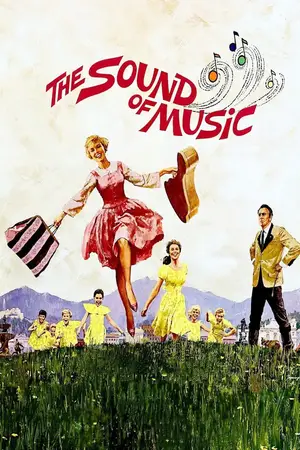
Being the 1966 Oscar winner for Best Picture, "The Sound of Music" represents the last high point for Hollywood musicals before their decline. Songs like "The Sound of Music," "Edelweiss," "Do-Re-Mi," and "The Lonely Goatherd" have become timeless classics. The Austrian and Alpine landscapes are stunningly beautiful, and the use of soft focus and warm, bright colors is pleasing to the eye. Although the plot is somewhat conventional, the suspenseful elements and patriotic sentiment in the scenes opposing the Nazis add significant meanings to the film.
The Sound of Music (1965)
0 0BEmuleJune 12, 2024
The songs in this film, like "Do-Re-Mi," "The Lonely Goatherd," "Edelweiss," and "The Sound of Music" have become iconic. What moves me more, however, is the profound love hidden behind the music. In the end, the von Trapp family’s escape to the majestic Alps symbolizes their journey from oppression to freedom.

Pierrot le Fou (1965)
T Timeae4UJune 12, 2024
In Godard's films, the characters' dialogues and actions are erratic, more like they are floating between reality and idealistic pursuits, drifting in dreams. The audience never knows when the protagonist will stop and deliver an incomprehensible monologue. We just watch Pierrot drive his car into the sea without any logical reason. This illustrates a so-called freedom of "aimlessness."
Pierrot le Fou (1965)
S SuperMovieJune 12, 2024
This film marks a turning point in Godard's career, reportedly shot without a script. Godard described it as a Velázquez painting, while others see it as a bourgeois middle-aged man seducing a young girl or a gangster story. The film's seemingly chaotic logic is compelling in style, transforming the couple's escape into an existential romantic tale, incorporating reflections on aesthetics, narrative, and art.

Alphaville (1965)
R Ricky_HernandezJune 12, 2024
This film feels like Godard's response to "1984." His techniques are incredibly inventive, creating a defamiliarized Paris through new setups and the use of sound-image separation, resulting in a low-budget sci-fi movie. However, in terms of science fiction itself, the plot is not particularly imaginative. Godard likely didn't intend to reinvent the sci-fi genre, making me think that Varda, Resnais, or even later works by Claire Denis offer more intriguing sci-fi ideas.
Alphaville (1965)
C Chad_NashJune 12, 2024
In Alphaville, the soundtrack, even the dialogue, are almost disconnected from the visuals. The fictional city is controlled by a central processor named Alpha 60, whose command voice feels like a nightmare. Sound plays an extremely crucial role in this film.

Doctor Zhivago (1965)
C CSK1903June 12, 2024
I finally watched it after a long delay. David Lean focuses on the emotional experiences of people rather than pure history. The beautiful main theme, "Lara's Theme," permeates every scene of joy and sorrow. I must mention Rod Steiger, whose limited but outstanding performances are consistently distinct and vivid, despite some criticism of his style.
Doctor Zhivago (1965)
C Carl_HullJune 12, 2024
One of David Lean's epic trilogies, this time moving from the vast Arabian desert to the frozen Russian steppe. The snow scenes, especially the overlapping ice sculptures in the abandoned estate, are among the highlights. Omar Sharif's tear-filled eyes and Julie Christie's performance stand out. With the beautiful balalaika accompaniment, this love story set against the backdrop of revolution and political struggle is profoundly moving.
Dr. Strangelove or: How I Learned to Stop Worrying and Love the Bomb (1964)
T TopiesedJune 12, 2024
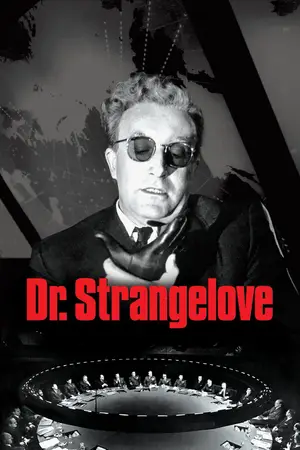
I am in awe of Kubrick's genius imagination and his profound social critique. This film is a sharp satire of rational thinking in human society. The seemingly absurd behaviors depicted are actually driven by the rational thinkings of man. Michel Foucault's works, such as "Madness and Civilization" and "Discipline and Punish," offer profound insights into this topic, presenting discourses on modern societal standards that we need to consider critically.

The Gospel According to St. Matthew (1964)
C Cecilia_MaddoxJune 12, 2024
This film faithfully adheres to the biblical context, narrating Jesus' life from birth to resurrection. It's no surprise that Pasolini directed this, as he portrays Jesus as an idealized warrior. Specific artistic choices, like avoiding making Jesus appear overly holy and giving secondary characters sufficient screen time, effectively showcase an idealistic faith. The downside is its heavy reliance on text to convey poetry; otherwise, its rating could have been higher.
The Gospel According to St. Matthew (1964)
A Ayla_JenningsJune 12, 2024
The conclusion of Jesus' passion feels rushed. Despite its flaws, this is still the best Christian film, with each character feeling solemn and dignified. Jesus remains stern and melancholic most of the time, chastising the Pharisees in resonant Italian. Hollywood couldn't produce such a stark and solemn Jesus. Ironically, it was Europe's atheistic leftists who did.

Goldfinger (1964)
A Alison_BurtonJune 12, 2024
This is another Bond film with ideological and Chinese elements, with Bond reversing the situation using his charm. Though the formula seems implausible, "Goldfinger" shows improvements in pacing and set pieces compared to the previous two films. "MythBusters" has used many scenes from this film for experiments, highlighting the gradual technological advancements in subsequent productions.
Goldfinger (1964)
R Randy_FosterJune 12, 2024
Goldfinger is a formidable opponent, making Bond seem particularly helpless in this installment. The plot is quite bland, with the exception of the iconic scene of the gold-painted woman. The two sisters who appear early on have such looks and figures that I thought they were the Bond girls of this film, only to see them killed off by the second act, making me skeptical of the actual Bond girl's significance in this installment.

My Fair Lady (1964)
R Rafael_EdwardsJune 12, 2024
This film is a visual classic literature. Beyond creating two iconic characters, it satirizes the hypocrisy of so-called middle-class morals with sharp and amusing insights. Hepburn is pure, elegant, and playful, truly angelic, and her performance is full of nuance. The film is particularly brilliant in contrasting male and female mindsets, exposing the flaws of male chauvinism—arrogance, selfishness, and a lack of empathy—all hidden under the veneer of gentlemanly behavior. This aspect of giving voice to women deserves praise.
My Fair Lady (1964)
A Alvin_PattersonJune 12, 2024
Audrey Hepburn perfectly portrays the challenging role of the flower seller. She and Rex Harrison are a match made in heaven on screen. The story of a linguist and a flower seller is a prime example of love overcoming social disparity. However, if shehadn't become the fine lady she was, the linguist wouldn't have fallen in love with her despite spending every day together. The story, after all, is just a story, fulfilling ordinary people's fantasies.

Marnie (1964)
SSuperMovieJune 12, 2024
SuperMovieJune 12, 2024The overall atmosphere is well-crafted, and the use of color is spot on, with the red lightning scenes being particularly striking. The set design has a deliberate nostalgic touch. The actors are stunning, and Sean Connery's character, while seemingly unrealistic, is explained through his strong inner qualities. It’s said to reflect the director's own emotions, adding depth to the film. Overall, it is very much in Hitchcock's style, although the editing can be too fragmented sometimes.
Marnie (1964)
W wickeremergedJune 12, 2024
Alfred Hitchcock has always been deeply interested in psychoanalysis, repeatedly and superficially incorporating Freud's theories—especially the principles of dreams, childhood trauma, and the Oedipus complex—into his films. This is particularly evident in this movie: Marnie is attached to her mother, rejects men, and often falls into nightmares she can't wake up from. The shots through the red filter point directly to her childhood traumas, while natural phenomena like lightning and thunder create a tense, anxious, and fearful atmosphere.