Reviews

Picture This (2008)
L Let's Talk About...April 10, 2025
Richly infused with Indian cultural elements, the film uses a wedding as its backdrop, showcasing traditional rituals, music, and dance. Beyond its vibrant aesthetic, it explores the tension between modern aspirations and deep-rooted traditions. As Pia navigates love and career, her clashes with familial expectations highlight the delicate balance between personal ambition and cultural heritage.

Ghost Dog: The Way of the Samurai (1999)
LLet's Talk About...April 10, 2025
Let's Talk About...April 10, 2025Jim Jarmusch pays homage to Jean-Pierre Melville, crafting a compellingly stoic assassin bound by fate. Ghost Dog exists in a state of contradiction—modern cinematography and soundtrack accompany a nostalgic, almost antiquated philosophy. Through the journey of a solitary man, Jarmusch explores the pursuit of purpose and freedom.

Anna and the King (1999)
LLet's Talk About...April 10, 2025
Let's Talk About...April 10, 2025The film’s greatest misstep lies in its climax—the battle between the King of Siam and the rebels. The logic is flimsy, the execution unconvincing, and the entire sequence crumbles under scrutiny. As a commercial romance film, it inevitably simplifies history and politics. Despite these shortcomings, it remains a worthwhile watch.
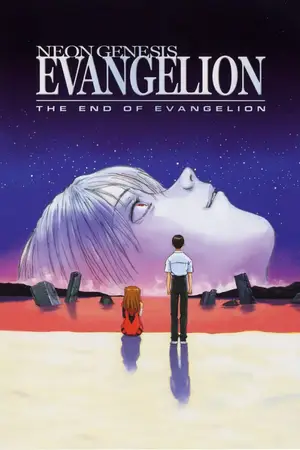
Neon Genesis Evangelion: The End of Evangelion (1997)
LLet's Talk About...April 10, 2025
Let's Talk About...April 10, 2025It’s a shame I never finished the TV series. While I’m familiar with the story and world-building, I can’t help but feel that my experience was somewhat diminished. That said, the sheer brilliance of its vision remains undeniable. Unlike "Ghost in the Shell" and other cyberpunk works, "Evangelion" abandons philosophical discourse in favor of a purely theological approach, crafting an entirely new mythos.

Neon Genesis Evangelion: Death & Rebirth (1997)
LLet's Talk About...April 10, 2025
Let's Talk About...April 10, 2025The film's biggest flaw is its inaccessibility for newcomers. Without prior knowledge of the TV series, viewers will find themselves utterly lost. Though there's a condensed chronological recap, it remains heavily geared toward existing fans. Essentially, it plays like a compilation of iconic moments, serving more as a nostalgic reflection than a standalone narrative.

Boys Don't Cry (1999)
LLet's Talk About...April 10, 2025
Let's Talk About...April 10, 2025Based on a true case from 1993, the film incorporates real evidence, including photographs and police recordings. It is an excruciatingly painful film to watch, made all the more harrowing by the fact that these events actually happened. Brandon did nothing wrong—he simply lived in a world that refused to accept him. Many moments in this film are gut-wrenching to the point of tears.

But I'm a Cheerleader (1999)
LLet's Talk About...April 10, 2025
Let's Talk About...April 10, 2025The satirical writing, bizarre cinematography, and surreal music make this an absolute delight. Megan’s transformation from self-doubt to confidence, and her final act of reclaiming her identity through cheerleading, is particularly powerful. She turns a traditionally objectified symbol into an emblem of autonomy and self-actualization.

In Praise of Love (2001)
LLet's Talk About...April 10, 2025
Let's Talk About...April 10, 2025Unlike some of his earlier works, Godard employs fewer jump cuts and rarely has characters break the fourth wall to remind viewers they are watching a film. Yet he never ceases to be innovative with the cinematography. When the film transitions into color, the ocean becomes a recurring motif. In one striking moment, a static image suddenly comes to life—the waves surge, transforming a still frame into something almost three-dimensional, like a painting springing into motion. Near the end, he overlays the sea onto the protagonist’s indoor setting, creating a stunning and philosophical visual juxtaposition.

Save the Last Dance (2001)
LLet's Talk About...April 10, 2025
Let's Talk About...April 10, 2025Sara’s final dance moved me to tears. Though somewhat raw, it embodies determination and a profound hope for life. This film encapsulates the essence of youth—freedom, ambition, passion, and love. It serves as a reminder that with enough perseverance and dedication, no obstacle is insurmountable.

Gemini (1999)
LLet's Talk About...April 10, 2025
Let's Talk About...April 10, 2025Adapted from a short story by Edogawa Ranpo, this marks Shinya Tsukamoto’s final film in the 20th century. It bears the stylistic hallmarks of his works from this era, with exaggerated color palettes shaping the film’s atmosphere. The red-lit rooms, the green-tinged well, and the purple riverside all signal impending crisis or ambiguous tension. The slum sequences break away from the period-piece aesthetic, reclaiming Tsukamoto’s signature style—handheld camerawork, metallic sound design, and flamboyant character appearances. A particularly intriguing touch is the decision to remove the characters’ eyebrows, rendering them even more unsettling and manic.
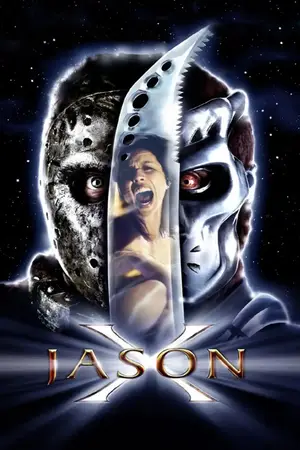
Jason X (2001)
LLet's Talk About...April 10, 2025
Let's Talk About...April 10, 2025At its core, it’s a formulaic, sensory-overload film—an exercise in horror tropes that, whether through its attempts at terror or excessive gore, often feels more absurd than genuinely scary. The predictability of its structure makes its impact rather limited, with little to offer in terms of nostalgia.

Code Unknown (2000)
LLet's Talk About...April 10, 2025
Let's Talk About...April 10, 2025Haneke once again crafts a fragmented ensemble narrative, entirely abandoning traditional editing techniques. There’s no causal or thematic connection between scenes—only a sequential presentation of events as they unfold across different locations. Watching it requires patience, as the audience must piece together the web of relationships while keeping track of events that are separated by long intervals.

The Gift (2000)
LLet's Talk About...April 10, 2025
Let's Talk About...April 10, 2025The film moves at a tightly controlled pace, with every moment building toward its unsettling revelations. The setting—Simon and Robyn’s ultra-modern glass house—creates an ever-present sense of vulnerability, as if someone is always watching. The lighting, color palette, and soundtrack are meticulously crafted, amplifying the film’s eerie undertones.

Halloween: Resurrection (2002)
LLet's Talk About...April 10, 2025
Let's Talk About...April 10, 2025The film’s editing is surprisingly smooth, balancing tension from the first-person POV with a clear third-person narrative. The plot is coherent enough, and as a slasher film, it delivers on bloodshed and chase sequences, making it a serviceable—if unremarkable—addition to the franchise.

Maelstrom (2000)
LLet's Talk About...April 10, 2025
Let's Talk About...April 10, 2025The soundtrack leans heavily on melancholic compositions, particularly in scenes tied to the protagonist’s guilt over the hit-and-run accident. However, the music is sometimes overused. A prime example is the prolonged sorrowful cello score during a sequence where the protagonist and love interest sort through her father’s belongings. During a moment that blends grief with lighthearted interactions, the unrelenting score makes it feel tonally off.
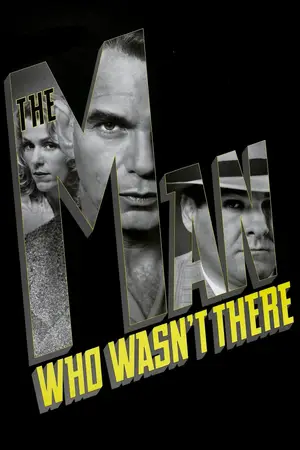
The Man Who Wasn't There (2001)
LLet's Talk About...April 10, 2025
Let's Talk About...April 10, 2025Shot in color but processed into black-and-white, the film achieves a richness in detail beyond traditional monochrome films. The Coens use this aesthetic choice both as a tribute to classic cinema and as a means to enhance the film’s bleak atmosphere. Had they pushed the experimental boundaries further—perhaps stripping away dialogue in favor of intertitles—it could have been even more chilling and detached.

Revolutionary Girl Utena: The Adolescence of Utena (1999)
LLet's Talk About...April 10, 2025
Let's Talk About...April 10, 2025Having not seen the TV series, I found the film’s story arc overly simplified. The sudden transformation of the Rose Bride felt abrupt, and the protagonist’s internal struggle between wanting to be both a princess and a prince wasn’t fully realized. Thematically, the film resonated more as a tale of self-actualization and liberation rather than a commentary on feminism.

Ali (2001)
LLet's Talk About...April 10, 2025
Let's Talk About...April 10, 2025Ali outside the ring feels more authentic than the legend inside it. He was brash and provocative, yet his fight against discrimination defined him. The film tries to capture all facets of his life but lacks a strong focal point, making the narrative feel disjointed. Still, the boxing sequences, particularly his signature “float like a butterfly” footwork, are mesmerizing highlights.

Nico and Dani (2000)
LLet's Talk About...April 10, 2025
Let's Talk About...April 10, 2025This is a story of sexual discovery, following two Spanish boys—Dani, who is gay, and Nico, who is not. Their friendship remains effortlessly natural, untouched by their differing sexual orientations. Rather than dwelling on sorrow or inner turmoil, the heartwarming film simply captures an experience—one of self-exploration and realization.

American Pie 2 (2001)
LLet's Talk About...April 10, 2025
Let's Talk About...April 10, 2025While the first film focused on the characters' sexual curiosity, this sequel shifts its attention to their pursuit and understanding of love, with Jim taking center stage. The humor is amped up, making it funnier than its predecessor, though the ending leans a little on the preachy side. Still, it delivers a satisfying happy ending and maintains aquality on par with the first film quite well.