Reviews

A Cop (1972)
H HERBERTO@0554April 27, 2025
Unlike his earlier films, which often romanticized camaraderie among criminals, Melville takes a more pessimistic approach here. There is little exploration of Alain Delon's inner conflict or emotional turmoil. He simply carries out his duties, often resorting to violence—a testament to his emotional detachment. Only in the final scene does his colleague’s actions subtly hint at the sorrow buried within him.

Woodstock (1970)
A Angelo_EspinozaApril 27, 2025
A landmark in documentary filmmaking. While not every band’s music resonates with me, Joan Baez’s performance is undeniably beautiful. Beyond capturing the chaos and euphoria of the festival, the film also reflects the yearning of an entire generation for meaning and freedom—while exposing the lack of organization and the logistical failures that came with it.
The Last Picture Show (1971)
A Alana_GilbertApril 26, 2025
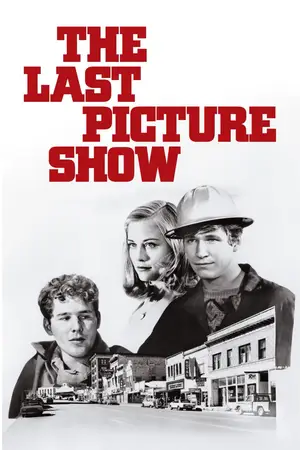
Country music runs through the film, infusing the story with a quiet melancholy. The film captures the sorrow of its era—Duane marching alone toward the Korean War, Sonny losing both his love and his best friend. The camerawork is simple but far from dull; instead, it wields remarkable power, portraying the reckless confusion of youth with unfiltered clarity.
Howl's Moving Castle (2004)
U User-1374134661April 26, 2025
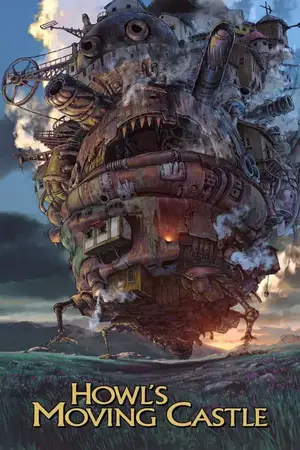
La pelucula deslumbra con su animación detallada, su universo encantador y personajes complejos. Más allá de la aventura, aborda temas como la guerra, la identidad y el balor interior. Es una obra poética y visualmente inolvidable ideal tanto para chicos como para adultos

Intentions of Murder (1964)
F FastAndActionApril 25, 2025
Like many of Imamura’s works, this film employs layered audio design to portray its protagonist’s inner world. Trains, street noise, and family commands merge to create a soundscape that mirrors her stifling domestic environment.
Band of Outsiders (1964)
FFastAndActionApril 25, 2025
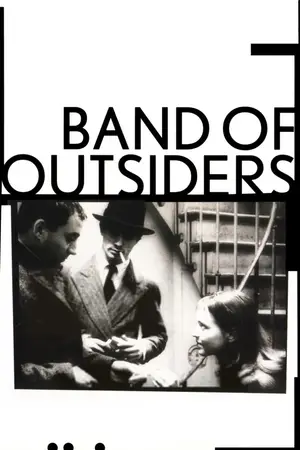
FastAndActionApril 25, 2025Godard closely follows André Bazin’s ideas on cinematic ontology here. Long takes and roaming camera work underscore a spontaneous, existential tone, while poking fun at traditional narrative cinema. He also emphasizes the narrative power of sound—voiceovers and audio dropouts become tools for psychological insight.

Scorpio Rising (1963)
FFastAndActionApril 25, 2025
FastAndActionApril 25, 2025The film is a stylized experiment, with only the faintest suggestion of homoeroticism. Psychedelic lighting and rock music create a mood rather than a narrative. Strange skulls, flashy motorcycles, and bare male torsos populate the screen—not as a narrative, but more of a showcase.

Second Wind (1966)
FFastAndActionApril 25, 2025
FastAndActionApril 25, 2025Only Jean-Pierre Melville could make a crime film feel this composed and elegant. There are no flashy effects, no disorienting edits—just a steady, linear narrative with a hypnotic depth. His protagonists are always loners, men who will die to protect their honor and dignity.

The Pornographers (1966)
FFastAndActionApril 25, 2025
FastAndActionApril 25, 2025The film’s surreal imagery heightens the absurdity of human behavior in a narrative that feels like an anthropological study of sex. Every character is driven by selfish desire, and the female body is constantly objectified, reflecting the grotesque indulgence of a male-dominated world. Shohei Imamura blends the human and the animal to expose a raw, irrational side of human nature.

The Chinese (1967)
FFastAndActionApril 25, 2025
FastAndActionApril 25, 2025Jean-Luc Godard’s politically charged film uses interview-style dialogue to depict the lives of young revolutionaries. Yet many characters, especially during the train conversation, come across as naïve and unformed—perhaps intentionally so. Godard seems to mock their radicalism while still acknowledging its sincerity. As he once said, “Art is not a reflection of reality, it is the reality of a reflection.” One year later, the May '68 uprisings would make that reflection real.

The Collector (1967)
FFastAndActionApril 25, 2025
FastAndActionApril 25, 2025The film’s fragmented shots—especially the opening sequence with its abrupt, almost slide-show-like stills and expressive POV close-ups—are masterfully used to convey narrative without exposition. The use of voiceover adds not clarity, but a layer of imaginative dissonance, creating a space where the story exists between the lines.
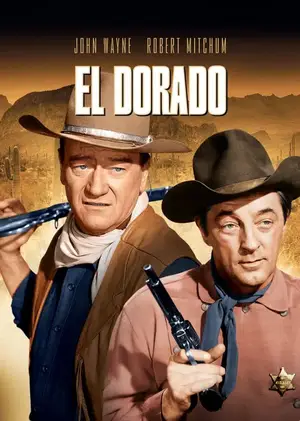
El Dorado (1966)
FFastAndActionApril 25, 2025
FastAndActionApril 25, 2025The dialogue is impressively sharp. In just five minutes, the opening exchange defines the two lead characters with remarkable clarity—a testament to the strength of the screenplay. I’ve never been particularly drawn to Westerns, but from The Good, the Bad and the Ugly to True Grit and now this, I’ve come to appreciate their appeal. The men are rugged and charismatic, the women bold and fearless.

Guess Who's Coming to Dinner (1967)
FFastAndActionApril 25, 2025
FastAndActionApril 25, 2025The script gives its actors room to shine, and the ensemble cast rises to the challenge. While the film leans into idealism, especially at the end, it’s a product of its time and a hopeful one at that. What moved me most was Katharine Hepburn’s tearful gaze at Spencer Tracy—a moment where love in real-life seeps through fiction and elevates everything.

A Man Vanishes (1967)
FFastAndActionApril 25, 2025
FastAndActionApril 25, 2025A documentary built around interviews and field investigation, "A Man Vanishes" gradually reconstructs the missing subject through testimonies, piecing together a fractured portrait. Some interviewees have their faces blurred, adding to the sense of mystery. But the audio is often out of sync or separated from the visuals, and the unfiltered, meandering conversations start to wear thin. In the final 20 minutes, a spiraling, repetitive exchange with the fiancée’s sister pushes my patience to the limit.

Calcutta (1969)
FFastAndActionApril 25, 2025
FastAndActionApril 25, 2025Louis Malle’s 1969 documentary "Calcutta" continues the cinematic tradition of street-level observation which started from the Lumière brothers to Dziga Vertov. Malle trains his camera on the city’s open spaces, capturing daily life with raw immediacy—faces, gestures, labor, ritual, politics, and poverty all laid bare in an unfiltered portrait of a teeming metropolis.

Le Gai Savoir (1969)
FFastAndActionApril 25, 2025
FastAndActionApril 25, 2025A an iconic film on political modernism in 1960s French cinema, "Le gai savoir" finds Jean-Luc Godard fusing radical politics with equally radical aesthetics. Influenced by the raw energy of Brazilian and post-revolution Cuban cinema, Godard dissects French society with a near-sociological eye, while simultaneously launching a sharp critique of American foreign policy.

Romeo and Juliet (1968)
FFastAndActionApril 25, 2025
FastAndActionApril 25, 2025This is a simple love story—one about time and life. I watched it years ago, but it left an indelible impression on me. Juliet, the terminally ill protagonist, clings to life with extraordinary passion, despite knowing there’s no cure for her. Her philosophy is summed up in a single line: "Since I can’t live well, I’ll make the best of a bad life." Of all the movie dialogues I’ve ever encountered, this is one of the few that has truly stayed with me.

One + One (1968)
FFastAndActionApril 25, 2025
FastAndActionApril 25, 2025Jean-Luc Godard's characters lack psychological depth, and his camera movements are mechanical. Yet, this is no insult; in fact, it is the highest praise. Godard’s "poetry" is not found in the beauty of the cinematic image but in montage itself. By this stage in his career, montage is no longer just about shot transitions—it is the film’s theme, its way of connecting sound and image, and its method of layering visual elements.

Boy (2010)
FFastAndActionApril 25, 2025
FastAndActionApril 25, 2025The film bluntly addresses post-war trauma. On the surface, it depicts a father’s physical war wounds and psychological scars, but on a deeper level, it reveals how such trauma is passed down through generations—becoming a sickness of the nation itself. One particularly striking moment is when the father beats his wife in front of a backdrop featuring the Japanese flag and an urn of ashes, symbolizing how the country, both during and after the war, discarded its people while they, in turn, clung to a hollow nationalistic ideology and redirected their suffering onto the weaker.