Reviews

Shadows (1958)
T toKoralíMay 19, 2025
As Martin Scorsese has often said, this film was a formative influence. Though Cassavetes came from Hollywood, "Shadows" is anything but mainstream—an early landmark of American independent cinema. Less carefree than the French New Wave, it fuses jazz, feminism, and the raw realities of racism in mid-century America.

Sign of the Lion (1962)
TtoKoralíMay 19, 2025
toKoralíMay 19, 2025This hardly feels like a typical Rohmer film. His work usually bursts with quick, unbroken stretches of dialogue, but here it's the piercing violin and near silence that linger. The protagonist—a bloated, aging man—is neither charismatic nor likable, yet his misfortunes weigh heavily. A great film, I believe, simply observes its characters without judgment, neither condemning nor exalting.

Floating Weeds (1959)
TtoKoralíMay 19, 2025
toKoralíMay 19, 2025Shot with serene compositions and quiet grace, the film carries a profound sense of resignation beneath its calm surface. The traveling actor, father to a boy who doesn’t know him, moves from town to town with his troupe, unable to form lasting connections. Though he tries to provide for his son—even hiding his identity—he cannot undo the damage of absence. Ultimately, he returns to the road, leaving behind a son who resents him and a life he can never fully join.

Late Autumn (1960)
TtoKoralíMay 19, 2025
toKoralíMay 19, 2025A reimagining of Late Spring, this version still bears Ozu’s signature precision in composition. The mother-daughter bond is simple and tender until it’s complicated by external expectations. Though the mother’s remarriage appears to dictate the daughter’s path, both women ultimately make choices true to themselves. The film celebrates a modern kind of familial honesty, where love follows no script.

The Good Girls (1960)
TtoKoralíMay 19, 2025
toKoralíMay 19, 2025Neither the dialogue nor the set pieces, including the much-debated swimming pool scene, fully land. For its time, some of the content might have felt bold or subversive, but much of the satire lacks restraint. The film’s reliance on sharp tonal contrasts ultimately dulls its critique.

The Steamroller and the Violin (1961)
TtoKoralíMay 19, 2025
toKoralíMay 19, 2025At just 43 minutes, this early Tarkovsky film is tightly composed yet rich with introspection. With sparse dialogue and neorealist influence, it leaves space for viewers to contemplate. Stylistically, it echoes Hungarian films like Merry-Go-Round—a quiet study in postwar melancholy, where trauma lingers just beneath a deceptively calm surface.

Night and Fog in Japan (1960)
TtoKoralíMay 19, 2025
toKoralíMay 19, 2025With its title referencing Alain Resnais’ anti-war film Night and Fog, Nagisa Ôshima’s Night and Fog in Japan delivers a searing political commentary cloaked in expressionist tones. Framed through the voice of a fugitive, the film revisits a turbulent era of student uprisings, exposing the brutality and disillusionment of a movement that once held promise.

The Little Soldier (1963)
TtoKoralíMay 19, 2025
toKoralíMay 19, 2025Made in the wake of Breathless, this is Jean-Luc Godard at his most confrontational. Because it addressed France’s covert operations in Algeria, the film was banned upon completion. Bruno, the protagonist, is a thinly veiled stand-in for Godard himself—a man caught between political ideals and apathy. Through him, Godard delivers a scathing critique of the duplicity and ambivalence at the heart of modern politics.

Cruel Story of Youth (1960)
TtoKoralíMay 19, 2025
toKoralíMay 19, 2025A radical departure from Ôshima’s earlier A Town of Love and Hope, this film bears the unmistakable influence of the French New Wave. In vivid color, Ôshima captures the allure of Japan’s urban streets—the neon-soaked promise of a new modernity. But beneath the gloss, student protests rage on in black and white, their voices drowned out by futility. That tension between aesthetic beauty and political impotence mirrors the doomed romance at the film’s core.

Zazie in the Metro (1960)
TtoKoralíMay 19, 2025
toKoralíMay 19, 2025Malle systematically dismantles any illusion of realism, both visually and aurally. Visually, the film’s rampant use of fast motion lends it comic flair while simultaneously disrupting temporal continuity. Frequent jump cuts fracture spatial logic as characters teleport from place to place. On the sound front, Malle innovates by layering dialogue, accelerating or even reversing audio—techniques that stretch conventional sound design and push the viewer further into a cartoon-like unreality.

Pigs and Battleships (1961)
TtoKoralíMay 19, 2025
toKoralíMay 19, 2025Imamura paints a chaotic postwar Japan full of squalid streets and morally compromised characters. His lens is unflinching, exposing the rawest human desires, yet he never loses his compassion for these people. They endure humiliation for a better future, even if tragedy is inevitable. For those at the bottom, there’s no way back—only the desperate, defiant push forward.

Le Doulos (1962)
TtoKoralíMay 19, 2025
toKoralíMay 19, 2025Based on a strong novel, the film holds up even as a pure crime puzzle. But beyond that, it distills Melville’s recurring obsessions—loyalty, betrayal, solitude, and fate—with razor-sharp precision. The final reveal and tragic conclusion hit hard, leaving behind the bitter taste of inevitable doom.

The End of Summer (1961)
TtoKoralíMay 19, 2025
toKoralíMay 19, 2025From neon signs to imported whisky and Coca-Cola, Ozu uses visual cues to reflect the tension between tradition and postwar modernity. One of his rare color films, The End of Summer also reveals a playful side of the director. Its final message—urging resilience and hope—is a quiet but powerful call for grace in the face of change.

The Parent Trap (1961)
TtoKoralíMay 19, 2025
toKoralíMay 19, 2025This is the original version of the 1998 Lindsay Lohan The Parent Trap, and while the plot remains largely the same, the remake gives the twin characters more distinct personalities. Lohan’s performance adds sparkle and emotional nuance that the earlier version lacks. The older film’s parents come off rougher—particularly the father, who lacks the gentler charisma. The ending, while aiming for reconciliation, feels emotionally rushed and less believable than the remake’s more layered resolution.

The Job (1961)
TtoKoralíMay 19, 2025
toKoralíMay 19, 2025A timeless musical classic, The Sound of Trumpets fuses story and song with seamless grace. Beyond its enchanting melodies, it explores family ties and national identity, eventually rising to a stirring political crescendo. The framing device of a singing contest bookends the narrative beautifully, embodying the era’s faith in truth, goodness, and beauty.
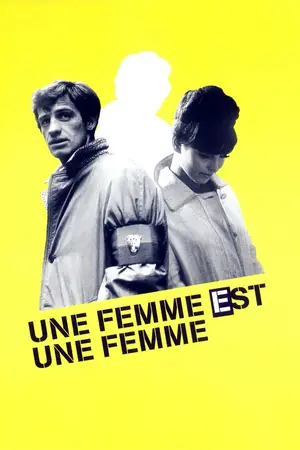
A Woman Is a Woman (1961)
TtoKoralíMay 19, 2025
toKoralíMay 19, 2025It’s unmistakably the work of a genius. The line between comedy and tragedy is blurred, as stage-like setups and deliberate Brechtian techniques prevent any descent into sentimentality. Yet beneath all the self-awareness lies a quiet melancholy. The dialogue between Jean-Paul Belmondo and the debt collector is one of many moments where Godard’s flair for wry, distinctly French wit shines through.

The Fiances (1963)
TtoKoralíMay 19, 2025
toKoralíMay 19, 2025The film opens with a dance, and within the span of ten minutes, we’re transported across time and memory through elegant montage and delicate sound-image disjunctions. Olmi balances an almost neorealist eye for social context with a tender fascination for the mundane. The film’s quiet focus on ordinary emotions—plain yet sincere—gives its characters unexpected depth.

Ivan's Childhood (1962)
TtoKoralíMay 19, 2025
toKoralíMay 19, 2025The dreamlike imagery collides with the stark brutality of war in ways both poetic and harrowing. In times of revolutionary conflict, humanity often reveals itself with painful clarity—through Ivan’s stubborn resolve, his stolen childhood, and moments of tenderness buried beneath prematurity. Tarkovsky’s debut already reflects a striking depth of thought, capturing both the ethereal and the painfully real.

Final Destination: Bloodlines (2025)
S StevenCsMoviesMay 19, 2025
After watching all five installments of the horror comedy franchise FINAL DESTINATION in the past week, I’m paranoid AF. I now understand why my generation has feared planes, trains, automobiles, tanning beds, logging trucks, rollercoasters, car races, bridges, and many more things since 2000. FINAL DESTINATION: BLOODLINES, the first installment in 14 years and the sixth one overall, has come out. College student Stefani (Kaitlyn Santa Juana) is failing because of a recurring nightmare of a disaster that sets this movie up to perfection. Looking for answers, she goes back home to her family and finds out that her nightmare actually happened to her estranged grandmother, who had a premonition of the dreamt disaster and saved a lot of lives that should’ve ended that day. Well, when you f*** with Death, things get messy. This franchise has been very formulaic in its…execution, so I appreciate how this one builds on the lore of Death and how it operates. Death is now crossing generations and bloodlines. Filmed here in Vancouver, the production team has fun building sets like a deadly game of Mouse Trap, having a chaotic but controlled domino effect that the franchise is known for. This movie doesn’t hold back on the creative and violent deaths. They are so entertaining and are so much fun to try to decipher. The legendary actor Tony Todd is back in this one, this sadly being his final on-screen performance after passing away last year. Being in a few of these movies before, the filmmakers here decided to give his character more of an impact and actual depth. From his dialogue in this movie, it felt like he knew that Death was coming for him soon, which made this scene surprisingly emotional. This movie actually deals with the theme of generational trauma, which is surprisingly and refreshingly deep for this franchise. It’s so rare when a sequel is the best one of a franchise, I can only think of this and SAW. The movie has clever song choices that make you smile. It has phenomenal gore effects blending both CGI and practical. Despite the easter eggs long-time fans will recognize, you don’t need to see the previous installments to get the full picture this movie is painting in blood. This is my favourite, successfully delivering what it needed to to rejuvenate the franchise. Critics have never really given this franchise a fair shake, but I’m so happy that has now changed. FINAL DESTINATION: BLOODLINES is brutal in the best ways, and I highly recommend it if you’re a fan of comedic horror. As for the franchise itself, I think it has successfully avoided Death yet again.

La Strada (1954)
A Ana_Paula_LopezMay 19, 2025
Masina delivers a performance of heartbreaking depth, blending childlike innocence with profound sorrow. In the final moments, her luminous eyes pierce through the film’s bleakness. Fellini weaves rich metaphors and religious symbolism throughout, using wide-angle lenses to create a vast, lonely world that reflects his characters’ inner turmoil. It’s a devastating portrait of vulnerability, framed in poetry and pain.