Reviews

Nosferatu the Vampyre (1979)
A Angelo_FordJuly 11, 2025
The film uses the enduring legend of vampires to challenge the blind faith in science and reason. During the era of New German Cinema, existentialism was all the rage in Europe. I think the director might be sharing his own existentialist perspective through his lens: with God gone and science taking over as modern belief, our once vibrant and sensible hearts slowly wither. That's when evil finds a way to creep in and corrupt us. Yes, God is dead, and vampires are still alive. Besides love, what else can we do?
Nosferatu the Vampyre (1979)
A Alea_HartJuly 11, 2025
After watching a vampire movie and stepping out of the dark theater, I always find sunlight very dazzling. Instinctively, I raise my hand to shield my eyes, then touch my neck, wondering if there’s a hidden scar. Maybe deep down, we all have a secret desire to become vampires. Even someone as grotesque as Klaus Kinski’s Nosferatu can stir an impulsive longing. Reclusiveness, immortality, and blood—these are pleasures those of us born under the sun will never truly understand.
Nosferatu the Vampyre (1979)
A Alea_ShepherdJuly 11, 2025
I love the 1922 version, and I love Isabelle Adjani. She’s always stunning. The director is a genius, infusing the vampire with such elegance and subtlety. That’s the true essence of a vampire—not just some gimmick for cheap thrills in a horror flick.

The Lady Without Camelias (1953)
W Will_PruittJuly 11, 2025
Michelangelo Antonioni is best known for his "trilogy on modernity and its discontents", but this film also holds great significance. It powerfully conveys how the environment can oppress human nature. The film carries a deeply depressing tone. After watching it, I felt that the protagonist's frustration and pain still linger with me till this today.
The Lady Without Camelias (1953)
B Brendan_MendezJuly 11, 2025
The life of the daughter of a poor family is dictated by money, fame, and power. Even when they finally make a name for themselves and find the courage to go after love, they end up heartbroken by cowardly men. It’s so tough being a woman.

Shoot 'Em Up (2007)
D Day_ousJuly 11, 2025
It's extremely sensational as an action movie.Maybe it has some flaws on the plot or something but who cares. It's just a stunt show and the story is not important. You can't expect something that is perfect. If it has any incredible aspect, it's worthy watching. So, enjoy it, you may never despond if you like action movies.

Wicked Little Letters (2023)
H Hermi@44July 11, 2025
What moved me most wasn’t just the story itself, but the camaraderie between the women. Their solidarity felt genuine, and the decision to show them in raw, unpolished form—free of heavy makeup or glamor—lent the film a rare kind of authenticity.

Commando (1985)
B Buster_PorterJuly 11, 2025
Made on a $10 million budget, the film grossed over $50 million, though it still lagged far behind the $300 million haul of "Rambo: First Blood Part II" released in the same year. That’s not surprising—Stallone already had massive momentum from the original "First Blood." Plus, "Commando" suffers from budgetary limitations, resulting in noticeable continuity errors and unpolished details.

The Saint (1997)
S Sexy ladyJuly 11, 2025
This is a tight, satisfying spy thriller—not as flashy as Mission: Impossible, but all the more effective for its simplicity. Some plot points verge on idealistic fantasy, but that’s part of the allure: this is how young people imagine their heroes.


Parthenope (2024)
A Alayna_NelsonJuly 11, 2025
Premiering at Cannes, Parthenope continues Sorrentino’s signature aestheticism and non-linear storytelling. Through fleeting episodes in the life of a young anthropologist from Naples, the film immerses the viewer in a dreamlike vision of Southern Italy—delicate, luminous, and utterly enchanting.

Through the Olive Trees (1994)
F FastAndActionJuly 10, 2025
Using fiction to reveal the truth—while many great directors from other countries are still "dancing with shackles," the great Abbas Kiarostami has broken through the limitations of film, reaching a state of mind that can express his ideas freely.
Through the Olive Trees (1994)
S SuperMovieJuly 10, 2025
Isn't this just harrassment under the olive tree?

When a Woman Ascends the Stairs (1960)
SSuperMovieJuly 10, 2025
SuperMovieJuly 10, 2025The director’s ambition is quite subtle, simply offering a quiet, caring gaze as the woman walks up the stairs.
When a Woman Ascends the Stairs (1960)
FFastAndActionJuly 10, 2025
FastAndActionJuly 10, 2025When the woman walked upstairs, the man couldn't help but notice her round hips, snow-white socks, slender waist, and the delicate curve of her neck. But all the woman saw was the narrow corridor ahead, leading into an uncertain, almost endless abyss.

Like You Know It All (2009)
FFastAndActionJuly 10, 2025
FastAndActionJuly 10, 2025I can't stand awkwardness, but I just can't bring myself to dislike Hong Sang-soo.
Like You Know It All (2009)
SSuperMovieJuly 10, 2025
SuperMovieJuly 10, 2025After watching more and more of Hong Sang-soo’s films, I sometimes wonder if I’ve developed a kind of kink with voyeurism. Which is why I can’t stop watching.
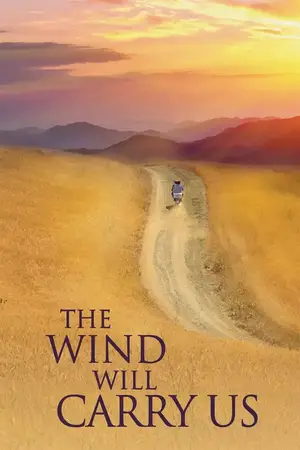
The Wind Will Carry Us (1999)
SSuperMovieJuly 10, 2025
SuperMovieJuly 10, 2025Abbas Kiarostami’s films often feel like real-life moments, but every detail—the arrangement of characters, the placement of the camera, every line spoken, every animal that appears, and even the path of a rolling apple—is meticulously crafted. In a way, this kind of careful design, so close to life yet so precise, might be the highest form of filmmaking.
The Wind Will Carry Us (1999)
FFastAndActionJuly 10, 2025
FastAndActionJuly 10, 2025Abbas Kiarostami really masters the art of repetition in his films. From the endless reshoots in Through the Olive Trees, to the constant calls for help in Taste of Cherry, to the many requests for directions in Life, and Nothing More, and even the countless phone calls atop the mountain in this movie. There's a sense of ritual in all of it, yet the expression remains simple.

In Front of Your Face (2021)
SSuperMovieJuly 10, 2025
SuperMovieJuly 10, 2025The director really captures something divine in everyday life, subtly touching on aging, illness, and death in a way that almost makes you believe in the power of the soul, only to have it all dissolved in an instant. But outside the movie, it’s clear that nothing here is a dream. Hong Sang-soo truly keeps getting better and better.