
David Lean
Cast · Director · Writer
- Born
- March 25, 1908 · Croydon, Surrey, England, UK
- Died
- April 16, 1991
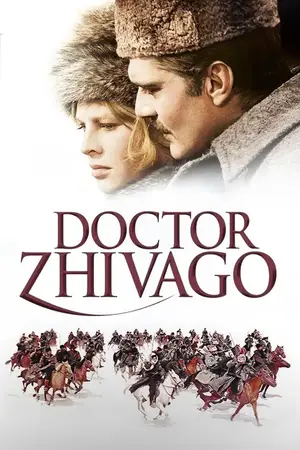
An important British filmmaker, David Lean was born in Croydon on March 25, 1908 and brought up in a strict Quaker family (ironically, as a child he wasn't allowed to go to the movies). During the 1920s, he briefly considered the possibility of becoming an accountant like his father before finding a job at Gaumont British Studios in 1927. He worked as tea boy, clapper boy, messenger, then cutting room assistant. By 1935, he had become chief editor of Gaumont British News until in 1939 when he began to edit feature films, notably for Anthony Asquith, Paul Czinner and Michael Powell. Amongst films he worked on were Pygmalion (1938), Major Barbara (1941) and One of Our Aircraft Is Missing (1942). By the end of the 1930s, Lean's reputation as an editor was very well established. In 1942, Noël Coward gave Lean the chance to co-direct with him the war film In Which We Serve (1942). Shortly after, with the encouragement of Coward, Lean, cinematographer Ronald Neame and producer 'Anthony Havelock-Allan' launched a production company called Cineguild. For that firm Lean first directed adaptations of three plays by Coward: the chronicle This Happy Breed (1944), the humorous ghost story Blithe Spirit (1945) and, most notably, the sentimental drama Brief Encounter (1945). Originally a box-office failure in England, "Brief Encounter" was presented at the very first Cannes film festival (1946), where it won almost unanimous praises as well as a Grand Prize. From Coward, Lean switched to Charles Dickens, directing two well-regarded adaptations: Great Expectations (1946) and Oliver Twist (1948). The latter, starring Alec Guinness in his first major movie role, was criticized by some, however, for potential anti-Semitic inflections. The last two films made under the Cineguild banner were The Passionate Friends (1949), a romance from a novel by H.G. Wells, and the true crime story Madeleine (1950). Neither had a significant impact on critics or audiences. The Cineguild partnership came to an end after a dispute between Lean and Neame. Lean's first post-Cineguild production was the aviation drama The Sound Barrier (1952), a great box-office success in England and his most spectacular movie so far. He followed with two sophisticated comedies based on theatrical plays: Hobson's Choice (1954) and the Anglo-American co-production Summertime (1955). Both were well received and "Hobson's Choice" won the Golden Bear at the 1954 Berlin film festival. Lean's next movie was pivotal in his career, as it was the first of those grand-scale epics he would become renowned for. The Bridge on the River Kwai (1957) was produced by Sam Spiegel from a novel by 'Pierre Boulle', adapted by blacklisted writers Michael Wilson and Carl Foreman. Shot in Ceylon under extremely difficult conditions, the film was an international success and triumphed at the Oscars, winning seven awards, most notably best film and director. Lean and Spiegel followed with an even more ambitious film, Lawrence of Arabia (1962), based on "Seven Pillars of Wisdom", the autobiography of T.E. Lawrence. Starring relative newcomer Peter O'Toole, this film was the first collaboration between Lean and writer Robert Bolt, cinematographer Freddie Young and composer Maurice Jarre. The shooting itself took place in Spain, Morocco and Jordan over a period of 20 months. Initial reviews were mixed and the film was trimmed down shortly after its world première and cut even more during a 1971 re-release. Like its predecessor, it won seven Oscars, once again including best film and director. The same team of Lean, Bolt, Young and Jarre next worked on an adaptation of Boris Pasternak's novel "Dr. Zhivago" for producer Carlo Ponti. Doctor Zhivago (1965) was shot in Spain and Finland, standing in for revolutionary Russia and, despite divided critics, was hugely successful, as was Jarre's musical score. The film won five Oscars out of ten nominations, but the statuettes for film and director went to The Sound of Music (1965). Lean's next movie, the sentimental drama Ryan's Daughter (1970), did not reach the same heights. The original screenplay by Robert Bolt was produced by old associate Anthony Havelock-Allan, and Lean once again secured the collaboration of Freddie Young and Maurice Jarre. The shooting in Ireland lasted about a year, much longer than expected. The film won two Oscars; but, for the most part, critical reaction was tepid, sometimes downright derisive, and the general public didn't really respond to the movie. This relative lack of success seems to have inhibited Lean's creativity for a while. But towards the end of the 1970s, he started to work again with Robert Bolt on an ambitious two-part movie about the Bounty mutiny. The project fell apart and was eventually recuperated by Dino De Laurentiis. Lean was then approached by producers John Brabourne and Richard Goodwin to adapt E.M. Forster's novel "A Passage to India", a book Lean had been interested in for more than 20 years. For the first time in his career; Lean wrote the adaptation alone, basing himself partly on Santha Rama Rau's stage version of the book. Lean also acted as his own editor. A Passage to India (1984) opened to mostly favourable reviews and performed quite well at the box-office. It was a strong Oscar contender, scoring 11 nominations. It settled for two wins, losing the trophy battle to Milos Forman's Amadeus (1984). Lean spent the last few years of his life preparing an adaptation of Joseph Conrad's meditative adventure novel "Nostromo". He also participated briefly in Richard Harris' restoration of "Lawrence of Arabia" in 1988. In 1990, Lean received the American Film Institute's Life Achievement award. He died of cancer on April 16, 1991 at age 83, shortly before the shooting of "Nostromo" was about to begin. Lean was known on sets for his extreme perfectionism and autocratic behavior, an attitude that sometimes alienated his cast or crew. Though his cinematic approach, classic and refined, clearly belongs to a bygone era, his films have aged rather well and his influence can still be found in movies like The English Patient (1996) and Titanic (1997). In 1999, the British Film Institute compiled a list of the 100 favorite British films of the 20th century. Five by David Lean appeared in the top 30, three of them in the top five.
Articles about this
See all (8) ›
The Master and The Invisible Man: A Primer on PTA and Pynchon


Why Can't Columbia Pictures Produce A Lawrence of Arabia-like Masterpiece Anymore?

Lawrence da Arábia - A Odisseia do cinema

"Lawrence de Arabia": porque lo épico radica en el interior del ser humano


David Lean y el espeso suelo de la moralidad

La violencia y el salvajismo de la masculinidad y la vertiginosa modernidad en Rocco y sus Hermanos de Luchino Visconti

Known for



Filmography
See all › Omar Sharif, le don juan du monde oriental2021
 Omar Sharif - Aus dem Leben eines Nomaden2020
 The Art of Directing: David Lean2019
 What She Said: The Art of Pauline Kael2018
 Robert Mitchum, le mauvais garçon d'Hollywood2018
 Nostromo: El sueño imposible de David Lean2017
 The Lure of the Desert: Martin Scorsese on Lawrence of Arabia2013
 Doctor Zhivago: A Celebration2010
 David Lean and His Dedicated Maniacs2009
 David Lean in Close-Up2009
 The Ultimate Film2004
 The Making of 'Lawrence of Arabia'2003