Warfare (2025)★ 7.4/10
- Action
- Drama
- War
Directed by: Alex Garland, Ray Mendoza
Written by: Ray Mendoza, Alex Garland
In 2006 Iraq, a team of Navy SEALs faces a compromised mission in hostile territory.
Articles about this
See all (26) ›
My Top 10 Movies of 2025
L
Lucas.December 9, 2025
13
‘Warfare’: Refusing to Look Away from the Void
J
JamieLJune 30, 2025
1
Warfare: Dancing in the Dark
T
The Sunshine ManJune 4, 2025
2
So You Think War Is a Game? Watch Warfare
S
seamouseMay 19, 2025
2
Civil Warfare: The Beautiful Bleakness of Alex Garland's Anti-War Duology
M
Matthew Alan SchmidtMay 13, 2025
11
A Busy Month at the Movies
A
Adrian Andrade Ma.May 2, 2025
3Cast & crew
See all ›





Videos
See all ›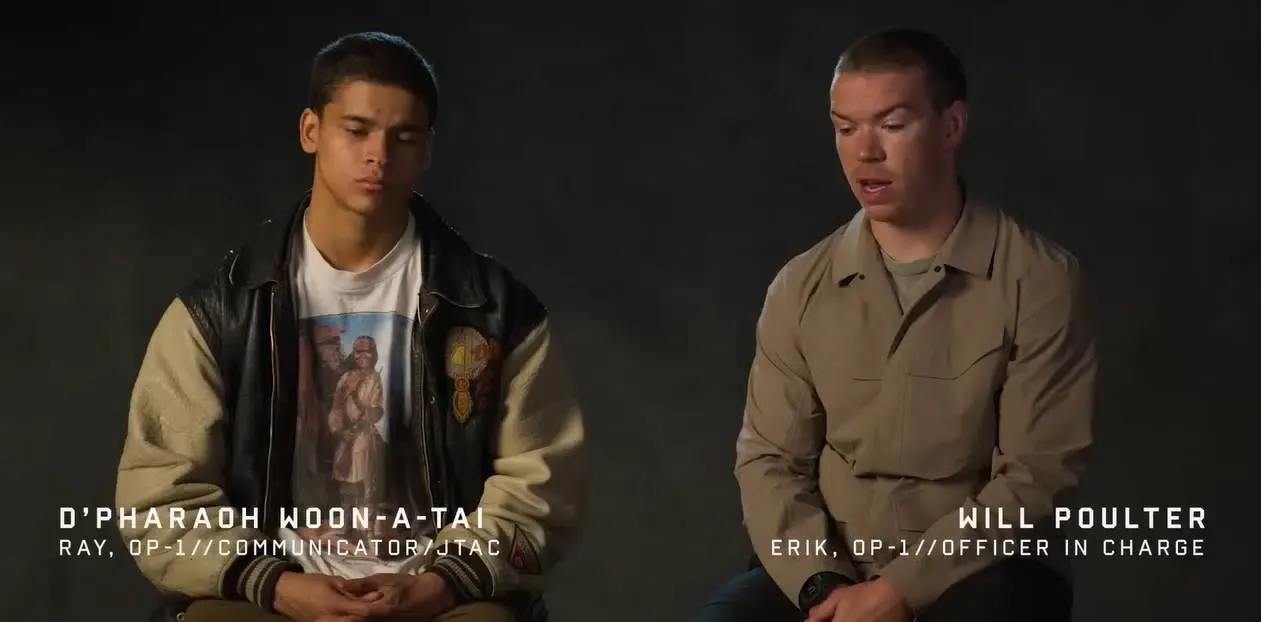

Awards · 0 wins, 1 nominations
See all ›- NomineeBAFTA Awards 2026BAFTA Film Award · Best Sound
Reviews
LLucas.May 30, 2025
Lucas.May 30, 2025Very intense, but a cool and fresh take on the war movie genre. Worth watching, if you can stomach a lot of screaming and a lot of gore.
F Frantz CasillasMay 25, 2025
This is not entertainment in any sanitized form—this is orchestrated trauma. A cinematic ambush— each second spent anticipating the cataclysm promised by silence. And astonishingly, it is exhilarating.
A spectacle of sustained apprehension, Warfare turns the cinema into a chamber of shared breathlessness. In the hollow black womb of Dolby’s acoustic cathedral, sound doesn't accompany image—it becomes a ligature around the throat. Anticipation isn’t mood; it’s oxygen—scarce, hoarded, and violently taxed. From the first frame, you’re not watching—you’re conscripted, thrust into a suffocating dread where bullets thread silence with malevolent clarity and every window is a constant thrum of potential calamity.
Director and crew masterfully conjure claustrophobia: corridors are arteries choked with tension, doorways thresholds to annihilation. The tension doesn’t build—it tightens, steadily, sadistically. Warfare enthralls precisely because it tortures. The sensory onslaught repels the faint-hearted (indeed, some audience members abandoned ship, fleeing its sonic and visual brutality), but those who remain do so at the ecstatic precipice of visceral cinema.
Dolby Atmos, often ornamental elsewhere, achieves sanctification here. The soundscape is a biblical tempest of metal shredding flesh and screams, a divine cacophony that rattles marrow. Limbs are torn, blood pools with startling indifference. Obliterating comfort and leaving nerves raw, ragged, and pleading for mercy. Few films have harnessed Dolby to such ruthless ends. You don’t spectate—you flinch, you brace, you endure.
The cast dissolves into their roles with terrifying authenticity. Performances don’t play—they haunt. Eyes flicker with animal alertness, breaths hitch with the instinctive calculus of imminent death. These aren’t characters; they’re conduits for memory, for trauma still warm. What results is cinematic necromancy: actors possessed by history, by fear, by futility.
But strip away its adrenaline-laced virtuosity, and Warfare's heart beats disturbingly hollow. What begins as a gripping ordeal gradually reveals itself as narratively inert—a chronicle of pointless torment, expertly orchestrated yet fundamentally aimless. American soldiers infiltrate a civilian home, commandeer lives, and entrench themselves like parasites, stunned when righteous hostility erupts. What should have been the engine of drama—why they’re there, what they want—is simply... not there. Instead, the film charts a descent into chaos so exquisitely rendered it dares you to forget it’s hollow. Heroism blurs into hubris. Duty curdles into absurdity. We’re not watching a war story—we’re watching war itself, dislocated from purpose, from strategy, from soul. It is intrusion turned into opera, spectacle unburdened by substance. Warfare isn’t a story. It’s an event. A beautifully brutal nothing.
The lack of exposition doesn’t feel like commentary. It feels like avoidance. The moral ambiguity is clear enough—oppressors mistaking themselves for protectors—but Warfare never interrogates that ambiguity. It never digs. Instead, it stuns, recoils, and leaves the aftermath to fester. And by doing so, it permits the full scope of its implications to remain unspoken, hovering like smoke.
As dawn bleeds into the frame, the film refuses catharsis. The aftermath is distant, glimpsed only in silence and shadow. Perspective lingers where pain accumulated, but without delivering moral resolution or narrative comfort. The camera’s final position suggests a shift, a quiet indictment, perhaps even a reckoning, the villains have left, and the film dares to suggest, that the villains wore American uniforms—but it never says so outright. It's a bitter reversal—one that could have been devastating had the film leaned into its implications instead of merely gesturing toward them. The ambiguity is the point. Warfare ends as it begins: immersed in dread, offering no clear exit.
Even its structure betrays its thinness. Strip away the closing montage, and Warfare resembles not a film, but an extended set-piece. A relentless, stunning sequence without arc. A cinematic ambush that leaves no thematic aftershock.
A sonic seizure. A trance of terror. A breathtaking, nauseating ballet of control and collapse. But its brilliance, unmoored from meaning, is frustrating. It seduces utterly and abandons just as completely.
Ultimately, Warfare is both transcendently cinematic and maddeningly hollow. A suffocating plunge through anxiety and volatile fear, it captures with scalpel-sharp clarity the collapse of meaning under the weight of violence, yet fails to transcend its own nihilistic spectacle. It is essential, intoxicating, unforgettable viewing, but it stops where it should speak— leaving only the residue of impact, unshaped, unclaimed. A masterful siege upon the senses, and yet—by virtue of its narrative anemia—one that leaves behind only the echo of its own brutal virtuosity.
A Alayna_McCormickMay 18, 2025
While American war films often champion the lone hero, this one emphasizes collective effort. There are no superheroes here—just soldiers relying on each other to make it through. The film effectively portrays teamwork, communication, and disciplined response to orders, making it a rare example of cinematic collectivism in a genre dominated by individualism.
B Blythe_JensenMay 15, 2025
Unlike most war films, "Warfare" feels like a stripped-down fragment of a larger story—focused and brutally realistic. The plot centers on a squad under attack and trying to escape, with no backstory or exposition. Tight pacing, documentary-style visuals, and immersive sound design lend the film an urgent, lifelike intensity. It doesn’t moralize or glorify the military—it simply shows what survival looks like in real combat.
S StevenCsMoviesApril 23, 2025
Almost all of us can only imagine the horrors of war. Last year, director Alex Garland showed us war from the perspective of journalists in CIVIL WAR, which was great. Now, he is back again, this time codirecting and cowriting with Iraq war veteran Ray Mendoza, who was his military supervisor last year. WARFARE features a platoon of soldiers in an incident of war in Iraq in 2006, namely, Mendoza’s own platoon. They have extremely talented actors including D’Pharaoh Woon-A-Tai as Ray, Will Poulter as Erik, Joseph Quinn as Sam, Charles Melton as Jake, Cosmo Jarvis as Elliot, and Michael Gandolfini as McDonald. All give top-tier performances. This is definitely one of those A24 movies that might not do well in the box office but is a one-of-a-kind experience. This is the most intense anxiety-inducing movie I’ve ever seen. It’s visceral, dirty, disorientating, and just feels real. Having no music, it relies on some of the best sound design I’ve ever heard. The gunfire is loud and everywhere. The explosions rock you to the core. This and the smooth handheld camera work makes for complete immersion. My boots were on the ground. This was made to be seen in the theaters. The filmmakers aren’t interested in the typical Hollywood format. It has no character development, no background as to what these soldiers are doing there. You get as much context as they do, relying on their radio communications and what’s going on around them. It expects you to pick up on details like the military terminologies and equipment they use. It goes through each character’s reactions as it unfolds, whether it’s becoming shellshocked, being in unimaginable pain, or just being reckless. You can be the most prepared person in the world, you still won’t know how you’ll react in a warzone. The first half has a slow build, but it’s just establishing where you are and who’ll you’re with. This is the kind of movie A24 should be supporting. No other studio would’ve touched this one. It doesn’t shy away from anything. From a narrative perspective, it could’ve been better, but I’m going to forgive them this time because this is literally based on their recollection of what happened. Garland had said he stepped back a little directorially to give Mendoza the chance to tell his story, while Mendoza successfully resisted the temptation to make himself the hero. No politics, just survival. I understand this could be triggering for some people, but I still would implore you to go support this unique experience on a big screen with big sound. Remember, there are no winners in WARFARE.
J Jose BarrigaOctober 25, 2025
Inmersiva y a ratos interesante, pero con un propósito moral un poco incierto. El cine de este señor jamás me ha emocionado.
F FilmArteOctober 11, 2025
El director británico Alex Garland vuelve a meterse al barro de la guerra, tal como lo hizo en la última temporada con su película Civil War, esta vez bajo la compañía en la dirección y guion de Ray Mendoza, incluso se mete en las memorias de este último quien fue soldado de los Estados Unidos que en esta ocasión relata sus experiencias en el campo de batalla y las lleva a la pantalla grande a cargo de quien en el año pasado realizó uno de los largometrajes más impactantes del propio género, aquí, quizás elevando a la máxima potencias esas amplitudes técnicas mostradas y que por lo tanto, ya que lo técnico y el propio género presta y amerita, es evidente que el cineasta hace comparar así mismas ambas obras suyas.
Técnicamente lo ya mostrado por Garland en Civil War, en esta oportunidad se eleva a la máxima potencia en todos los sentidos, desde lo sonoro genera un impacto mucho más duro y potente, el juego entre los sonidos y los silencios e inclusos esas inmersiones psicológicas en los pensamientos de sus personajes le son funcionales a ese ascenso técnico en cuanto a lo que oímos, visualmente es mucho más sangrienta y más en primera persona, estamos plenamente en contacto con las bombas, con los disparos y con la muerte en un sentido mucho más directo esta vez debido al lugar desde donde se nos permite experimentarla.
La película prácticamente se hace muy amena y pasa con agilidad, puesto que no necesitaremos demasiado contexto de introducción y que definitivamente nos sitúa allí donde acontecen los hechos, tiene mucha habilidad para desenvolverse el mayor tiempo en una sola locación y generar allí esa energía de tensión y adrenalina propia de los conflictos armados, pocas veces sale de esa única locación con igualdad de éxito, cosa que no se le nota demasiado que haya pasajes en las que se vaya debilitando incluso, estando en el mismo lugar una y otra vez.
Mi problema con Warfare es que no he encontrado un personaje o un mensajero con el que empatizar a través de su reflexión, que la guerra es mala, innecesaria y dolorosa para la raza humana, lo sabemos, pero en esta ocasión que sea vista a la través de las experiencias de soldados que efectivamente están en esas circunstancias porque lo son, no me ha permitido meterme emocionalmente para con ellos, ya que poco se puede ver de que alguna persona allí no esté combatiendo por sus ideales y su propia voluntad y el hecho de no encontrar como base a alguien que haya sido empujado de alguna manera a vivenciarla de primera mano.
Warfare, Tiempos de Guerra, es implacable en sus elementos técnicos, si, en tal sentido era esperable del mismo director puesto que, arriesga a meterse de nuevo al género bélico por segundo año consecutivo y al menos lo esperado era que tuviese una superioridad estética y sonora que lo consigue, inmersiva en ese sentido si, pero no emocionalmente, no me ha chocado y no me sentí adentro espiritualmente de algo que en todo momento sentí como una maravilla visual si, pero distante y un tanto fría, esta vez omite la figura de que el mensajero no se encuentre en el medio de la disputa y es allí donde no me ha permitido entrar con precisión moralmente.
Calificación: 6.5
E Ella D.September 24, 2025
Excelente, el filme se siente real como si uno estuviera allí!
F Facundo LésnerJuly 26, 2025
Una película estresante, cautivadora y sobre todo realista.
Me sentí siempre que estaba ahi con los marines, terrible, grandes actuaciones y una dirección muy buena.
Me sentí siempre que estaba ahi con los marines, terrible, grandes actuaciones y una dirección muy buena.
L Louis reyJuly 11, 2025
Warfare: Tiempo de Guerra es una sugestiva y visualmente impactante película que combina acción futurista con un profundo cuestionamiento ético. La dirección logra equilibrar escenas de alta tensión con momentos de introspección, llevando al espectador a reflexionar sobre hacia dónde se dirige la humanidad en su afán de avanzar tecnológicamente en el campo militar. Las actuaciones son sólidas, y el diseño visual realza cada escena, haciendo que cada enfrentamiento sea una experiencia visceral.
La película no solo entretiene, sino que también plantea preguntas importantes acerca de los límites morales en el uso de la tecnología en la guerra. Es recomendable para quienes disfrutan del género de ciencia ficción con un trasfondo filosófico y para quienes interese la evolución del conflicto bélico en la era digital.
La película no solo entretiene, sino que también plantea preguntas importantes acerca de los límites morales en el uso de la tecnología en la guerra. Es recomendable para quienes disfrutan del género de ciencia ficción con un trasfondo filosófico y para quienes interese la evolución del conflicto bélico en la era digital.
J Jose de Jesús MuñozJuly 1, 2025
Buena
U User-1405019753June 12, 2025
una buena pelicula de guerra moderna