Reviews

Dressed to Kill (1980)
T toKoralíFebruary 18, 2025
Brian De Palma showcases his absolute mastery of cinematic technique here. The elevator scene and the climactic bathroom sequence are executed with such precision—both in pacing and music—that they stand as textbook examples of suspense filmmaking. The film’s visual language is arguably the most extreme homage to Hitchcock’s "Psycho," transforming its story into a labyrinth of deception and intrigue.

Tropical Malady (2004)
TtoKoralíFebruary 18, 2025
toKoralíFebruary 18, 2025Of the two protagonists, the rural boy is the more fully realized character. He works at an ice factory, steals glances at pretty girls on the bus, enjoys music, and sings along—yet he is also illiterate and somewhat insecure about his place in the city. He even dons a military uniform to appear stronger and more imposing. On the surface, he’s an ordinary young man from the countryside, but beneath it all, he possesses a soul that is uniquely attuned to nature.
A Different Man (2024)
P PixneyWandererFebruary 18, 2025
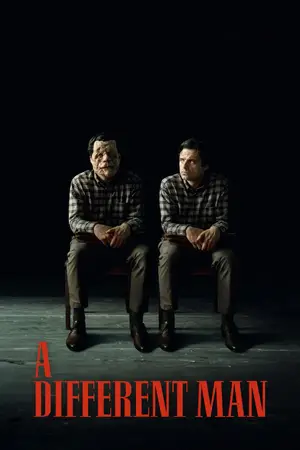
The film boasts a striking concept, blending suspense with body horror to pose existential questions about identity and self-acceptance. However, its second half falters, relying on underdeveloped character arcs and romantic clichés. Despite stellar performances, the shallow exploration of appearance and identity issues causes the film to squander its potential to be more thought-provoking.

Mad God (2021)
O Owen_DuncanFebruary 18, 2025
In an era when CGI can achieve virtually anything, it’s astonishing to see a stop-motion animated film deliver such an intense audiovisual impact. This work is a testament to the extraordinary skill and creativity of its animators, and its significance spans the entire history of cinema. The fact that it even exists is a feat in itself. As for what it ultimately aims to express—perhaps it’s best left to the viewer’s own experience.

A Real Pain (2024)
E emilioFebruary 17, 2025
While Benji and David’s performances resonate emotionally with the audiences, the film fails to do so. The dinner table scene, where David reflects on his grandmother’s suicide, is poignant, but disjointed editing and uninspired music dampen the overall impact. The Holocaust segment, surprisingly, lacks the emotional depth it deserves.

After the Storm (2016)
L Letíciaz_SabatellaFebruary 17, 2025
Many consider "After the Storm" a spiritual sibling to "Still Walking"—and on the surface, that comparison holds. Both films share similar family dynamics and details in daily lives. Yet their thematic focus differs: "Still Walking" reflects on how children’s regrets always follow behind their parents’ passing, whereas "After the Storm" contemplates how broken families maintain intimacy and how disillusioned individuals navigate life’s disappointments.

Manor House (2020)
A Alecia_KellerFebruary 17, 2025
The dialogue is not only excessively long and dense but also incredibly esoteric, making it nearly impossible for the eyes—let alone the mind—to keep up. The actors, however, deliver an astonishing performance, maintaining relentless speed and precision while engaging in over three hours of intense philosophical, religious, and political discussions—all while eating.

Ghostbusters II (1989)
C Cale_MosesFebruary 17, 2025
The comedy’s slapstick moments inject humor into an otherwise conventional story. While the both hero-villain conflict and big showdowns between humans and ghosts lack intensity, the impressive cinematography, post-production, and wildly creative screenplay deliver a delightful, quirky, and imaginative take on the traditional small-town hero narrative.

eXistenZ (1999)
A Alison_KeyFebruary 17, 2025
While many films explore similar themes, only Cronenberg could make it this unsettling. In many ways, "eXistenZ" feels like a continuation of 1983’s "Videodrome," both examining the invasive power of media and its control over human consciousness. However, where "Videodrome" dealt with hallucinations, "eXistenZ" focuses on the virtual world replacing reality.

Dheepan (2015)
B Brad_OliverFebruary 17, 2025
At first glance, the film seems like it might focus on war and politics, but its lens ultimately turns to the streets of Paris. Through the perspective of foreign immigrants, it explores France’s underbelly—its marginalized communities and criminal networks. Aside from the gripping revenge sequence at the end, the film lacks innovation in both style and substance, falling short of other Palme d’Or contenders.

Nobody's Hero (2022)
A Aleen_HarmonFebruary 17, 2025
Alain Guiraudie continues the tradition of French dramas, blending natural staging with profound subtext. The narrative often interweaves interruptions, whether from unexpected characters or subtle changes in the environment, to disrupt and enrich interactions. For instance, during the heated debate about sheltering Selim, the dimming hallway lights subtly mirror the progression of their discussion.


All Hands on Deck (2020)
A Andre_HoodFebruary 17, 2025
Surprisingly enjoyable, the film maintains a lighthearted tone with relatable humor. Its portrayal of everyday moments and genuine emotions resonates deeply. I especially loved how it captured the natural beauty of southern France, adding a scenic charm to the story.

Introduction (2021)
E Ellard2February 17, 2025
With its loosely structured narrative and ample room for interpretation, the film feels subdued yet profoundly introspective. The protagonist’s backstory with his family adds depth to his emotional struggles, highlighting his dependency and vulnerability. Post-breakup, he remains emotionally stagnant, mirroring his inability to express his feelings openly.

The Day After (2017)
H Henry_GardnerFebruary 17, 2025
The discussion of faith between the leads was particularly intriguing, as such topics are rare in the director’s works. However, it’s not a critique of contemporary Korean religion; instead, the theme serves as a vehicle to delve into the female protagonist’s true nature.
I'm Still Here (2024)
S StevenCsMoviesFebruary 17, 2025
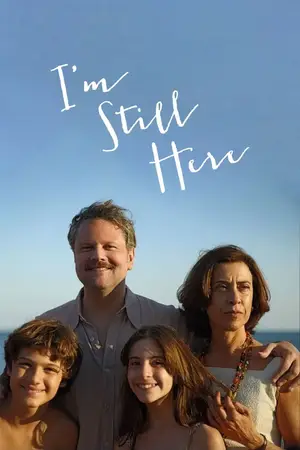
I’m no expert in history, especially of other countries, but there’s a movie that focuses on a truly dark period of time, I’M STILL HERE. Based on the memoir of the same name and spoken in Portuguese with English subtitles, it takes place in 1970’s Rio de Janeiro, which is under military dictatorship. For the Paiva family of 7, it’s a beautiful relaxing day at the beach. The mother Eunice (Fernanda Torres) has fleeting moments of uneasiness when seeing more and more of the military in the backdrop of this idyllic location. Having no prior historical knowledge of these events, even I was waiting for the other shoe to drop. When it eventually does, Eunice does everything in her power to protect her family. This movie doesn’t rely on big melodramatic speeches to get its very powerful message out. It’s in the stifling of emotion a mother has to do to protect her kids. It’s in the iron willpower of not giving up. It’s in the amazing script where every interaction feels authentic. Fernanda Torres deserves every award. It’s tough competition, but she has a good chance for Best Actress Academy Award. This is a very tense movie, but it shines a light at what was hidden at first. Go see this movie for its overwhelming message that despite all of the atrocities committed during that time, I’M STILL HERE.

Benedetta (2021)
A andrewdsFebruary 17, 2025
The elderly abbess is an exceptionally well-crafted character. She is not inherently evil but merely a pragmatic ruler trying to maintain stability. Her pursuit of vengeance against Benedetta stems from the loss of her own daughter. By the end, she seems to realize that it wasn’t just Benedetta who played a role in her daughter’s downfall but also herself and the entire religious institution that thrives on deception. Her final walk into the flames is less an act of destruction and more a quest for redemption.

France (2021)
U User-1117137183February 17, 2025
Through the protagonist’s arrogant and superficial demeanor, the film critiques the media’s obsession with sensationalism, even in war zones, highlighting a blatant disregard for human life. Outside her career, the story unveils a somber personal journey. What appears to be a transitional phase in her life gradually reveals her resignation to life’s harsh realities, ultimately leading her to embrace the present and find solace in acceptance.
A Serious Man (2009)
A Ariel_GloverFebruary 17, 2025
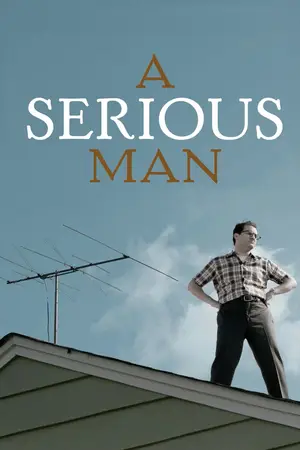
This isn’t a film for general audiences. It demands patience and quiet contemplation, as it portrays an utterly ordinary life devoid of conventional drama. Just when you think things are improving, they don’t; when disaster seems inevitable, it never quite arrives either.

Mr. Smith Goes to Washington (1939)
C Clyde_FryeFebruary 17, 2025
The film’s biggest criticism often lies in its overly idealistic conclusion. Smith collapses from exhaustion, and Senator Paine, overcome with guilt, dramatically confesses his corruption in front of the entire chamber. This resolution is frequently dismissed as naïve, yet it also exemplifies Capra’s signature brand of idealism—an almost dreamlike vision that defines his narrative style.