Reviews

The Children Are Watching Us (1943)
S Stanley_McgeeFebruary 27, 2025
Vittorio De Sica’s early work impressively portrays post-war Italian society through a child’s perspective. The story unfolds with remarkable tension, even without relying on heavy or painful themes. Neighbors, family, friends, and tourists all contribute to creating a complete social backdrop, which helps illuminate the mother’s predicament in the narrative.

Dogtooth (2009)
A Adeline_LeachFebruary 27, 2025
On the surface, the Greek film portrays a grotesquely isolated family. A little research revealed Greece’s history of military dictatorship, which only ended in 1975, which is why this democratic nation can depict authoritarianism with such amazing instensity.

Mind Game (2004)
A Aron_NolanFebruary 27, 2025
Masaaki Yuasa’s boundless creativity elevates animation to its fullest potential. His dynamic direction and intricate framing are cinematic marvels. The absurd yet thoughtful script, paired with rapid editing, makes the film’s open-ended conclusion particularly memorable. It highlights how small choices can alter one’s fate.

The Girl Who Leapt Through Time (2006)
B Becky_LiFebruary 27, 2025
Time-travel narratives are prone to plot holes, and this film is no exception. However, it effectively captures the innocence of first love. Mamoru Hosoda tells a familiar story but in his own distinct way, paying meticulous attention to the characters’ actions and the audiovisual details.

Days of Being Wild (1990)
G gelokiFebruary 27, 2025
A nostalgic urban film, "Days of Being Wild" uses its depiction of disoriented youth in the 1960s to mirror Hong Kongers' anxieties before the 1997 handover. Colonial rule left many Hong Kongers culturally and historically adrift, burdened with a deep sense of rootlessness.
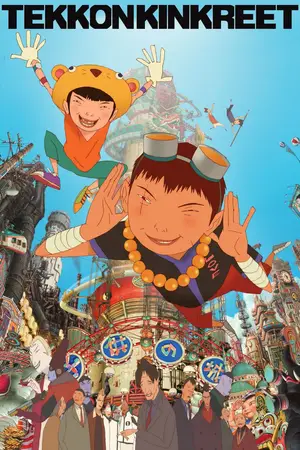
Tekkonkinkreet (2006)
A Alexa_PetersFebruary 27, 2025
Initially, I questioned if live-action might suit the story better. However, I realized that the boundless freedom of animation best captures the characters’ madness and despair. The film’s bright yet unsettlingly cold aesthetic, coupled with its raw animation style, brings out the narrative’s charm.

The Garden of Words (2013)
0 00palFebruary 27, 2025
Makoto Shinkai’s animation is visually flawless—nearly untouchable. However, his character development remains a weak spot, often feeling awkward or out of sync. The hyper-realistic backgrounds contrast sharply with the simple character designs, making the latter feel jarring.

5 Centimeters Per Second (2007)
M Melvin_BryanFebruary 27, 2025
After the breakup, the female protagonist moves forward naturally. Meanwhile, the male lead—who chose to end the relationship—remains emotionally stuck on that snowy night when he was 13. I disliked Takaki for his passive nostalgia. In a technologically advanced world, finding an old friend is simple, but he does nothing, instead dragging the audience into his melancholy.

A Man Escaped (1956)
B Beau_ConleyFebruary 27, 2025
The story of a death-row prisoner, Fontaine, and his harrowing escape in the hours before his execution, is riveting. Bresson’s minimalist cinematography and inner monologues place the protagonist at the narrative’s core with the environment shaped around him.

The Hurt Locker (2008)
A Ashly_NelsonFebruary 27, 2025
Kathryn Bigelow became the first female director to win an Oscar with this war drama. Its loosely structured narrative, told from the perspective of a sergeant addicted to bomb-defusing, paints a brutal and absurd picture of survival in the chaos of the Iraq war. Handheld documentary-style camerawork, rapid cuts, and subjective shots create a constant atmosphere of peril, with standout moments like the kite scene and the supermarket cereal aisle.

Red Desert (1964)
B Brent_MeyersFebruary 27, 2025
The film opens with the deafening noise of factory assembly lines overpowering human voices, immediately creating a sense of unease. Sporadic bursts of electronic noises and grating friction push this discomfort to its peak. Natural sounds are used later but juxtaposed against imagery of industrial pollution, creating a unique visual-audio dissonance. Spatial separation is highlighted through small rooms and character positioning, illustrating the theme of “otherness.”

Blow-Up (1966)
A Andy_NewmanFebruary 27, 2025
Antonioni’s modern European cityscapes are bleak, portraying spiritual desolation amid urbanization. His female characters, adrift and emotionally numb, reflect a longing for love and escape—yet they inevitably succumb to their lives' cold indifference. As expected from Antonioni, the film is a contemplation on an irredeemable world.

The Passenger (1975)
W Wml0617February 27, 2025
Antonioni crafts a deliberate tale of a man swapping identities to escape his past. Beyond existential musings, the protagonist’s search for freedom plays out against ever-shifting cityscapes. The final long take’s irony is poignant: after breaking free from one cage, he finds no way out.

Happy Together (1997)
S SUSANA_Susana3February 27, 2025
This academically revered film delves into queerness, psychoanalysis, postcolonialism, and intertextuality. Its experimental approach to framing, color, and editing constantly reveals new dimensions.

Pickpocket (1959)
B Blair_PopeFebruary 27, 2025
Though not a crime thriller in the conventional sense, the film’s meticulous depiction of theft keeps tension high. Every pickpocketing scene is exciting, but the heart of the story is its philosophical exploration: How should youth navigate life and love? Can we ever judge others?

Sound of the Mountain (1954)
A Anita_MorganFebruary 27, 2025
The protagonist chooses her own destiny, avoiding the fates of her sister-in-law and lover. She is both traditional and independent, and this quality adds depth to her character.

Diary of a Country Priest (1951)
T TomAbearFebruary 27, 2025
“All is grace,” the priest’s final words, encapsulate the humility and gratitude central to faith. No matter the suffering or misfortune, true believers find solace in spiritual fulfillment.

Mystery Train (1989)
D Duane_HartFebruary 27, 2025
Steve Buscemi’s subtle omnipresence permeates through the film—starting as a background figure and evolving into a central character—reveals the film’s intricate storytelling. Its multi-perspective narrative weaves together three interconnected but distinct tales, creating a richly layered experience.

Being John Malkovich (1999)
A Aspen_WarrenFebruary 27, 2025
Charlie Kaufman’s genius is evident in this dark comedy, packed with metaphors and wild imagination. The recurring theme of control—those who manipulate and those manipulated—mirrors real-life power dynamics. Even the cramped seventh-and-a-half floor reflects the suffocating nature of life’s limitations.

Cure (1997)
A Alexander_WalkerFebruary 27, 2025
The film's restrained narrative and minimalist approach—eschewing both a soundtrack and any climax—leave viewers subtly influenced by the director’s visual language. The desolate atmosphere and urban ennui evoked by lingering shots are palpable. X’s seemingly hypnotic influence reveals each character’s inner darkness and frustrations. The director’s knowledge in psychology and sociology shines, enabling him to craft a crime thriller that chills to the bone.