Need More Aunt Gladys? Try Baby Jane!
Characters
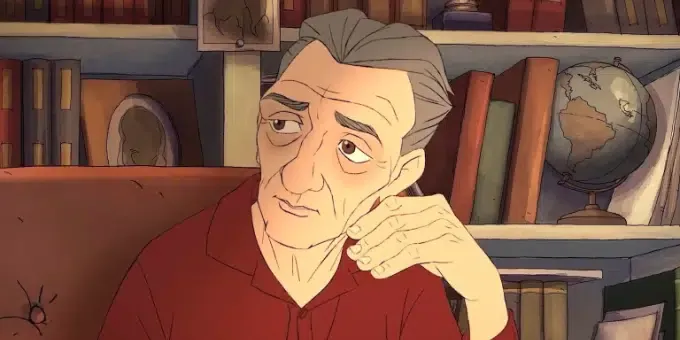
Last year, no character captured my imagination like Aunt Gladys in Weapons. Played by Amy Madigan, this psycho-biddy (as the subgenre is called) is a technicolour nightmare. She caused chills down my spine. I'm not the only one who felt this way: Madigan's transformational performance earned her a second Oscar nomination.

In a horror landscape overrun with deranged mothers, killer toys, cults and vampires, Aunt Gladys felt like a breath of demonically fresh air. She made Weapons a cultural moment. Her look, voice and motive made her unique, and her limited screen time left the audience wanting more. Finding another Aunt Gladys in today's horrors proved difficult, so I had to go into the past.

Late night last weekend, I was watching TCM. To my surprise, Amy Madigan was the guest programmer. Dave Karger talked with her about Weapons, Aunt Gladys and the actor's creative inspiration. They connected her performance to the film that they were about to show, What Ever Happened to Baby Jane? Madigan revealled that her and director Zach Cregger used this film's titular character as an inspiration for Aunt Gladys. They had my curiosity, but now they had my attention.

As What Ever Happened to Baby Jane? is over 60 years old, let me provide some context. The film follows Baby Jane (Bette Davis), a former child star who has since become a stuck-in-the-past alcoholic — think Gloria Swanson in Sunset Boulevard but somehow more unhinged (is that reference too dated?). She lives with her paraplegic sister, Blanche (Joan Crawford), who was also a movie star until her career was sidelined by a car accident. Jane is supposed to take care of her sister, but resentment, inebriation and bitterness cause her to treat her sister more like a prisoner than a patient.
The first and most obvious similarity between Baby Jane and Aunt Gladys is their makeup. The look of Aunt Gladys is punctuated by her makeup overuse. It's meant to make her look younger, but it somehow makes her look older. Same goes for Baby Jane, whose face is caked like a mime in an effort to restore her long-faded youth. The distorted appearance of these aged women reflects the theme of age distortion within both films.

Jane and Gladys are obsessed with recapturing their youth. Aunt Gladys possesses children to maintain what little bit of youth she has left. Baby Jane holds on to who she once was with desperate claws. Both women struggle to accept their mortality and this is what causes their most treacherous behaviour.
Because of her backstory, it's clear that Baby Jane has a bad case of arrested development. I mean, even an old lady referring to herself as "baby" says a lot. The power she wielded as a kid never left her memory, although her fans, her looks, her youth all abandoned her long ago. This bitterness is one of the reasons why she treats her sister so poorly.

We don't really get a Gladys backstory in Weapons. However, that didn't really affect my viewing. Villains can often thrive under a blanket of ambiguity. Leaving Gladys with murky motivations gave us an inconclusive portrait of a woman whose life has sent her to the depths of witchcraft and sorcery. This is where that rumoured Aunt Gladys prequel movie will thrive. I wouldn't be surprised if the What Ever Happened to Baby Jane? inspiration continues in a second Weapons instalment.

In her conversation on TCM, Madigan noted Davis's ability to "flip back and forth" as an inspiration for Gladys. This code switching, as the kids call it, is a noticeable similarity between these two psycho-biddies. Both Gladys and Jane have a face that they present to the public and a dark, psychotic side that stays hidden. In Weapons, there is the scene at the school where Gladys acts how she suspects others expect her to behave. This performative normalcy is echoed in Jane, who acts well-to-do when she goes to the bank, even if her motives in that scene are sinister.
Outside, they act as normal as possible, but behind closed doors, when the mask can drop, that's when we really see who these women are. This motif of horror staying within the house worked in 1962 and it works today. We might not possess children or abuse our sister, but we all keep our secrets, the side that humiliates us, hidden behind closed doors while we maintain a front of civility for the outside world. Through this universal truth, What Ever Happened to Baby Jane? and Weapons connect with their audiences on a dark, uncomfortable level.

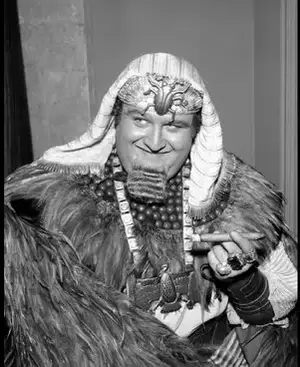
While the theme of in-house horror is consistent through time, others are more reflective of the films separate eras. In a more noir fashion, Baby Jane is unsuspectingly manipulated into believing her comeback is possible through the washed-up piano player Edwin (Victor Buono). Aunt Gladys receives the charity of her nephew, who lets her stay with his family, and she uses that opportunity to restore herself through witchcraft. Baby Jane's manipulation by a third character reflects a more paranoid outlook on human motivations that feels at home in Cold War America. The charity of Gladys's nephew reflects a modern do-good society, but flips our inclination to help others on its head and causes that charity to bring about a nightmare.

Cregger chose to give Gladys supernatural powers, but Jane's villainy is based in reality (even if some of the character decisions stretch the limits of realism and enter the arena of camp). It's in this realistic approach that I prefer Jane over Gladys. The film's groundedness gives her actions an added layer of awfulness. Watching Gladys take control of unsuspecting children is horrible, but I found it more disturbing to watch a woman abuse her own sister.
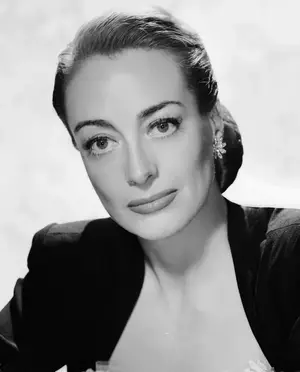
That might be because her sister, Blanche, was the real show stealer. This article is a comparison of Jane and Gladys, and you know that I love to stay on topic, but since I won't write about this film again, I'm detouring to say: Joan Crawford is the real reason you should go back to watch What Ever Happened to Baby Jane? Look at how her face transforms in the first scene in her room. She goes from sternness that exposes her wrinkles to jubilance that makes her look like a kid again (perfectly reflecting the theme of the film). In the climactic sequence, despite being near-death, Crawford wows with her look and her ability. Her performance leans into camp, and it's all the better for it.

What I'm trying to say is, if you are looking for another Aunt Gladys fix, you'll find it in What Ever Happened to Baby Jane? I admit, it's a slower movie and the pacing in Weapons is much better, but, if you can stick with it, you'll be rewarded with a bizarre character study and a bone-chilling climactic sequence. Come for Baby Jane, stay for Blanche, and all the while consider how one movie can influence another. I wonder if we'll see any more psycho-biddies in 2026.



Comments 4