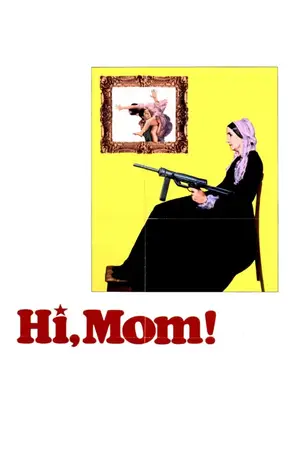
Looking for Purpose. Hi, Mom!
Sociocultural
Movie club is tomorrow!!! With the rules of the club, we are bound to end up in some pretty wild places. The main rule is that the picker of the movie has to pick a movie that they haven't seen before. So, with Jenn the Editor making the pick this month, she decided on a little-known Robert De Niro movie called Hi, Mom! Had she seen this movie prior to picking, would she still have picked it? We'll never know.

Directed by Brian De Palma, this movie was released before De Niro started getting famous through his Martin Scorsese collaborations. Still, within Hi, Mom!, I noticed clear similarities between themes in this film and some of De Niro's most iconic roles of the 1970s.
I'll be the first to say it, Hi, Mom! is a challenging watch. It was De Palma's last indie feature before he started making movies for the big studios. As such, there's a clear voice in this movie, one that is not beholden to anybody.
What I saw in this movie was a search for purpose. Rubin (De Niro) returns home from the Vietnam War to the most ramshackle apartment you can imagine. The landlord is trying to make him pay more than what was advertised. There's no respect, no thankfulness for the horrors Rubin endured for his country.

Rubin takes to filming the people that live across the street from him, in an effort to sell these videos to an adult-movie producer. Why he chooses this path, I'm not sure. He clearly has a passion for the camera, and he goes to great lengths to make his voyeuristic videos as exciting as possible.
When his videos don't work out as planned, Rubin looks for something else to fill his time. He auditions for a role in an experimental, artistic experience called Be Black, Baby! We were introduced to this troupe earlier in the movie, when they went around town asking strangers if they knew anything about the experience of being Black in America. Their tone was confrontational, bordering on militaristic. However, their next social experiment is much more aggressive.

In our current day and age, this movie is bound to ruffle some feathers. I think that's its purpose. However, in the past 10 years with all the discussion around blackface, this movie feels especially jarring.
What they try and do with blackface is quite interesting. The next Be Black, Baby! experiment is more like a house of horrors than an actual work of art. A select group of white Americans enter the apartment building and, floor by floor, their journey gets more terrifying. The people running the experiment have the audience put shoe polish on their face in a very decrepit attempt at blackface. Then, when they go up a flight of stairs, they realize that the organizers are in whiteface. They then treat the audience members like they're Black and that they are white. It's an attempt to expose this very small group of people to the unnoticed experiences of being Black in America. These experiences include robbery, rape, and police injustice.

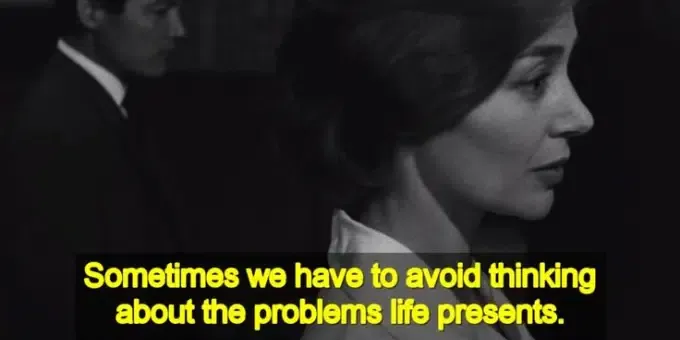
This whole sequence takes up a good portion of the movie and, at times, it is very difficult to watch. De Palma goes to great lengths to blur the line between documentary reality and fictional cinema. For example, when the Be Black troupe are first on the street asking random people questions about their understanding of the Black American experience, the footage seems real. So, when they go into the apartment of horror, these white people seem like untrained actors. It really feels like they're in the moment. This is accentuated by dropping the colour footage of the majority of the movie and making these scenes black and white, which gives them even more of a documentary feel.
Why Rubin decides to get involved with this troupe, I think, goes back to his search for purpose. As stated, his voyeuristic adult films didn't work as planned. And it's not like he spends the movie lamenting the trials and tribulations of Black Americans. He never even really considers it. Rubin's story and the Be Black story are pretty separate, until Rubin decides to audition for the role of cop. I don't think Rubin really cared about what this art troupe was trying to accomplish, I think he was just looking for something to do.

Once the apartment-of-horror art installation is completed, Rubin is very excited. The audience loved it and Rubin now wants to get even more involved in this intense, militaristic style of social justice.
The ending of the movie was at once the most silly and the most curious. Rubin decides to plan out his next move for social change. Meanwhile, the Be Black troupe decide to immediately take their message further toward militaristic radicalism. In the most perplexing part of an already perplexing movie, they go into a different apartment building and start banging on doors, demanding that white America understands the Black experience. They end up getting mowed down by a gatling gun.
Meanwhile, Rubin strategizes his next move. He decides to plant a few sticks of dynamite in the laundry room of an apartment building. This explosion takes the whole building down, and it was his effort to have his voice heard. The explosion leads to a television reporter reporting on the scene and even interviewing Rubin, who uses his time to talk about the horrors of the Vietnam War. He wants people to understand his experience, because nobody seems to care.

When the credits rolled, I was pretty floored. So much had happened and so little seemed to have any effect. As such, I concluded that what I'd watched was Rubin's search for a place in his home country after that same country's war halfway across the world robbed him of his innocence and, to an extent, his sanity.
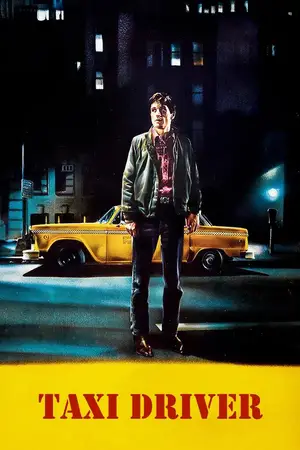
I think Hi, Mom! rounds out a trilogy for De Niro of post-Vietnam disillusionment. Hi, Mom! was released in 1970. In 1976, he starred in Taxi Driver, which has some striking similarities to Hi, Mom! Both follow a Vietnam vet who lives an increasingly isolated life and who slowly descends toward irrevocable actions of violence. Then, in 1978, he starred in The Deer Hunter, another movie about PTSD and how hard it is to move on after the horrors of war. These three movies, similar yet different, provide a valuable insight on the psyche of American men who had served in the dreadful Vietnam War and how that war, basically, ruined their lives.
Although challenging and confronting difficult topics, Hi, Mom! is also very funny. It's a sadistic and troublesome type of humour, but whether it was the absurdity of the situation or the constant needling of white America's impulse to admire anything that's foreign to them, Hi, Mom! is full of wit. I'm sure this movie won't be for everyone, but I really enjoyed this singular vision of America in a time of crisis. Thanks to Jenn for picking this hidden gem.

Watch the full movie here on YouTube.




Comments 5