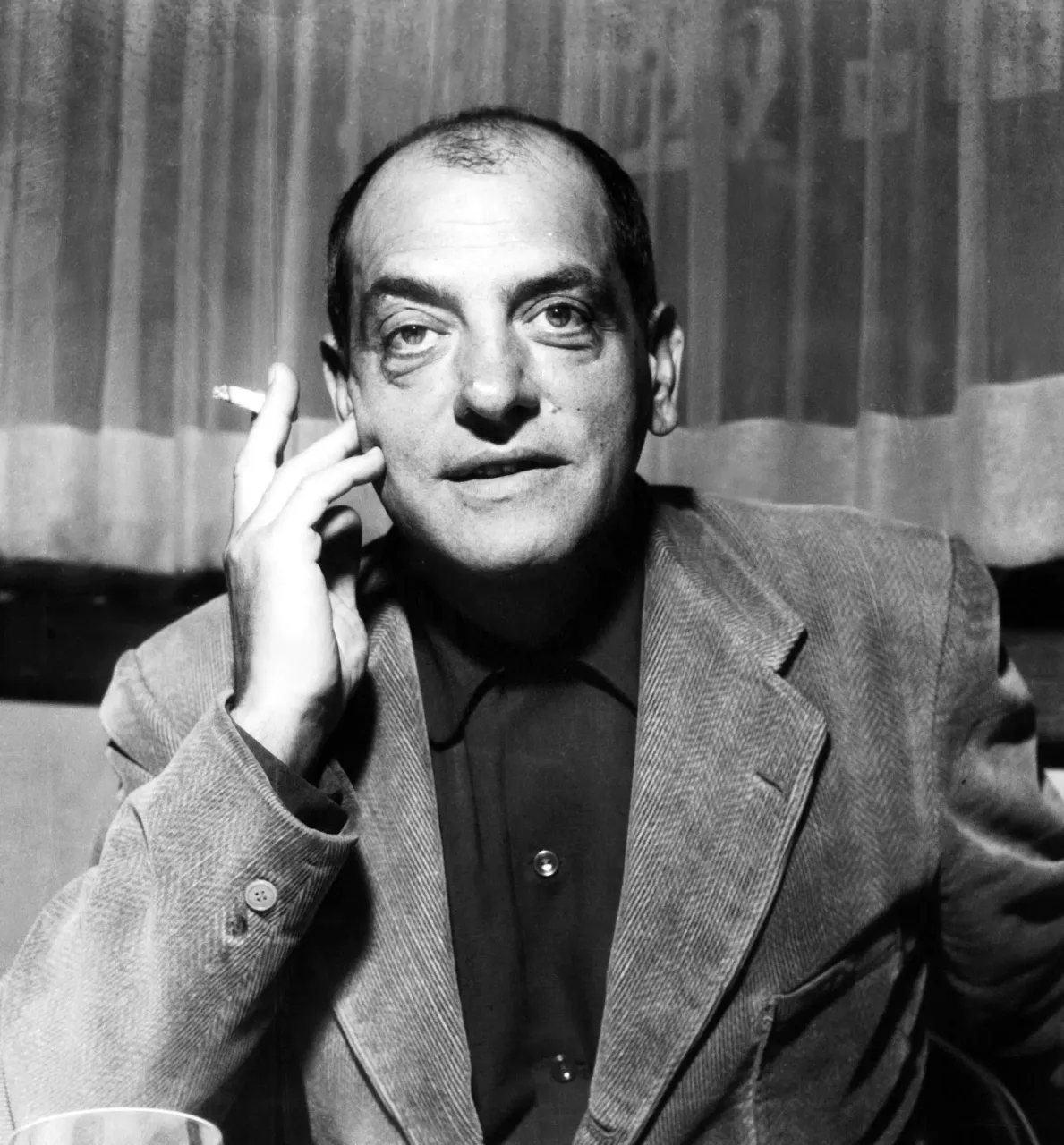
Luis Buñuel
Cast · Writer · Director
- Born
- February 22, 1900 · Calanda, Aragon, Spain
- Died
- July 29, 1983
- Birth name
- Luis Buñuel Portolés
The father of cinematic Surrealism and one of the most original directors in the history of the film medium, Luis Buñuel was given a strict Jesuit education (which sowed the seeds of his obsession with both religion and subversive behavior), and subsequently moved to Madrid to study at the university there, where his close friends included Salvador Dalí and Federico García Lorca. After moving to Paris, Buñuel did a variety of film-related odd jobs in Paris, including working as an assistant to director Jean Epstein. With financial assistance from his mother and creative assistance from Dalí, he made his first film, the 17-minute Un chien andalou (1929), in 1929, and immediately catapulted himself into film history thanks to its shocking imagery (much of which - like the sliced eyeball at the beginning - still packs a punch even today). It made a deep impression on the Surrealist Group, who welcomed Buñuel into their ranks. The following year, sponsored by wealthy art patrons, he made his first feature, the scabrous witty and violent L'Age d'Or (1930), which mercilessly attacked the church and the middle classes, themes that would preoccupy Buñuel for the rest of his career. That career, though, seemed almost over by the mid-1930s, as he found work increasingly hard to come by and after the Spanish Civil War he emigrated to the US where he worked for the Museum of Modern Art and as a film dubber for Warner Bros. Moving to Mexico in the late 1940s, he teamed up with producer Óscar Dancigers and after a couple of unmemorable efforts shot back to international attention with the lacerating study of Mexican street urchins in The Young and the Damned (1950), winning him the Best Director award at the Cannes Film Festival. But despite this new-found acclaim, Buñuel spent much of the next decade working on a variety of ultra-low-budget films, few of which made much impact outside Spanish-speaking countries (though many of them are well worth seeking out). But in 1961, General Franco, anxious to be seen to be supporting Spanish culture invited Buñuel back to his native country - and Bunuel promptly bit the hand that fed him by making Viridiana (1961), which was banned in Spain on the grounds of blasphemy, though it won the Palme d'Or at the Cannes Film Festival. This inaugurated Buñuel's last great period when, in collaboration with producer Serge Silberman and writer Jean-Claude Carrière he made seven extraordinary late masterpieces, starting with Diary of a Chambermaid (1964). Although far glossier and more expensive, and often featuring major stars such as Jeanne Moreau and Catherine Deneuve, the films showed that even in old age Buñuel had lost none of his youthful vigour. After saying that every one of his films from Belle de Jour (1967) onwards would be his last, he finally kept his promise with That Obscure Object of Desire (1977), after which he wrote a memorable (if factually dubious) autobiography, in which he said he'd be happy to burn all the prints of all his films * a classic Surrealist gesture if ever there was one.
Awards
- WinnerAriel Awards, Mexico 1978Special Recognition · Special Recognition
- NomineeAcademy Awards, USA 1978Oscar · Best Writing, Screenplay Based on Material from Another MediumThat Obscure Object of Desire
- WinnerBAFTA Awards 1974BAFTA Film Award · Best ScreenplayThe Discreet Charm of the Bourgeoisie
- NomineeBAFTA Awards 1974BAFTA Film Award · Best DirectionThe Discreet Charm of the Bourgeoisie
- NomineeBAFTA Awards 1974BAFTA Film Award · Best Sound TrackThe Discreet Charm of the Bourgeoisie
- NomineeAcademy Awards, USA 1973Oscar · Best Writing, Story and Screenplay Based on Factual Material or Material Not Previously Published or ProducedThe Discreet Charm of the Bourgeoisie
- WinnerVenice Film Festival 1967Golden Lion · Golden LionBelle de Jour
- NomineeVenice Film Festival 1965Golden Lion · Golden LionSimon of the Desert
- NomineeCannes Film Festival 1962Palme d'Or · Palme d'OrThe Exterminating Angel
- WinnerCannes Film Festival 1961Palme d'Or · Palme d'OrViridiana
- NomineeCannes Film Festival 1960Palme d'Or · Palme d'OrThe Young One
- NomineeCannes Film Festival 1959Palme d'Or · Palme d'OrNazarin
- WinnerAriel Awards, Mexico 1956Golden Ariel · Best Picture (Mejor Película)Robinson Crusoe
- WinnerAriel Awards, Mexico 1956Silver Ariel · Best Direction (Mejor Dirección)Robinson Crusoe
- WinnerAriel Awards, Mexico 1956Silver Ariel · Best Screenplay (Mejor Adaptación)Robinson Crusoe
- NomineeAriel Awards, Mexico 1956Golden Ariel · Best Picture (Mejor Película)The Criminal Life of Archibaldo de la Cruz
- NomineeAriel Awards, Mexico 1956Silver Ariel · Best Direction (Mejor Dirección)The Criminal Life of Archibaldo de la Cruz
- NomineeAriel Awards, Mexico 1956Silver Ariel · Best Screenplay (Mejor Adaptación)The Criminal Life of Archibaldo de la Cruz
- NomineeVenice Film Festival 1954Golden Lion · Golden LionRobinson Crusoe
- NomineeVenice Film Festival 1954Golden Lion · Golden LionThe River and Death
- NomineeAriel Awards, Mexico 1953Silver Ariel · Best Direction (Mejor Dirección)Mexican Bus Ride
- NomineeAriel Awards, Mexico 1953Golden Ariel · Golden ArielMexican Bus Ride
- WinnerAriel Awards, Mexico 1951Silver Ariel · Best Original Story (Mejor Argumento Original)The Young and the Damned
- WinnerAriel Awards, Mexico 1951Silver Ariel · Best Direction (Mejor Dirección)The Young and the Damned
- WinnerAriel Awards, Mexico 1951Silver Ariel · Best Screenplay (Mejor Adaptación)The Young and the Damned
- WinnerAriel Awards, Mexico 1951Golden Ariel · Best Picture (Mejor Película)The Young and the Damned