
Friedrich Nietzsche
Writer · Cast
- Born
- October 15, 1844 · Röcken, Province of Saxony, Prussia [now Saxony-Anhalt, Germany]
- Died
- August 25, 1900
- Birth name
- Friedrich Wilhelm Nietzsche
Friedrich Nietzsche was raised having five women around him - his mother, grandmother, two aunts and a sister, all living together. His father, a Lutheran pastor, died when Nietzsche was 5 years old. After a Catholic school he studied music and Greco-Roman culture at the famous Schulpfora from 1858-1864, continued at the universities of Bonn, Leipzig and Basel, where he was a professor of classic philology for 12 years. His influences were: classic history, Charles Darwin's theory of evolution, philosopher Arthur Schopenhauer, writer Fyodor Dostoevsky and Jesus Christ, whom he called "Superman". His main books are "The Gay Science", "Thus Spoke Zarathustra", "Beyond Good and Evil", "Twilight of the Idols" and the radical "Antichrist". Nietzsche analyzed foundations of values and morality through transformations of human nature and society. His contention that traditional values, religion and God, are not working in the modernized world, led to his conceptual statement: "God is dead." In replacement of God comes his concept of a superman - a rational, secure and highly independent individual. He lists Jesus, Socrates, Leonardo da Vinci, Shakespeare, Goethe and Napoleon as models or prototypes of a superman. His idealistic superman was often misinterpreted as a role for a dictator in a totalitarian society. Nitzsche's goal for this concept was mainly individualistic because of his despise of any crowd and attention to him. He considered any crowd as a main source of lies and manipulations. According to Nietzsche it is the independence that allows a superman to be truly original and creative. His sarcastic humor and contradictory ideas, often misunderstood in metaphysical context, caused misinterpretations of his personality and his works. His nihilism resulted from frustrations in search of meaning. For self-liberation Nietzsche terminated his German citizenship and remained a stateless person for the rest of his life. He distanced himself from Richard Wagner being repelled by the banality of the Bayreuth shows and the baseness of the crowd. He suffered from migraine headaches and from shortsightedness to the degree of blindness that caused his retirement from University of Basel. After he saw a brutal beating of a horse on a street, Nitzsche had a mental breakdown at age 44, and he retreated into solitude as a self-defense from crowds and manipulations. He lived with his mother and sister until his death of pneumonia in 1900. Most researchers regard his breakdown as irrelevant to his works. He received postmortem recognition by existentialists and by 20th century postmodern philosophers. Nietzsche's idea of a day in a life repeating itself again, and again, and again was written at the end of the Book IV of "The Gay Science" (1887). It is used in the film 'Groundhog Day (1993)'. Nietzsche listed laughter and humor as vital qualities of being a superman. He only failed to add a superwoman on his list of models to make it really serious.
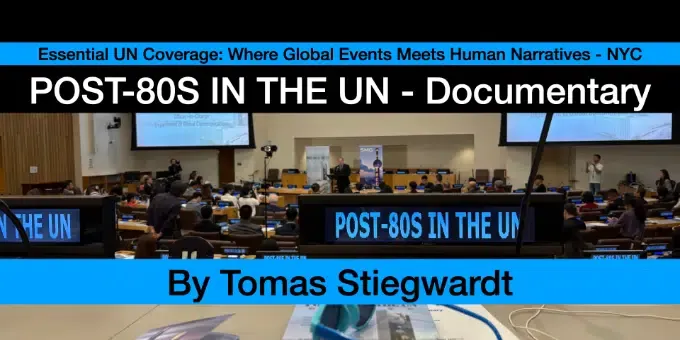
The Reality That Burns: Premiere of Post-80s in the UN at the United Nations Headquarters


BACKROOMS: Sin salida… me parece que es divisoria

La espeluznante metamorfosis de Frankenstein, el despertar del diablo… y el adefesio cinematográfico de G. del Toro

Sangre, sudor e inconformidades. ¿Por qué Fight Club anticipó la masculinidad -y sociedad- contemporánea?

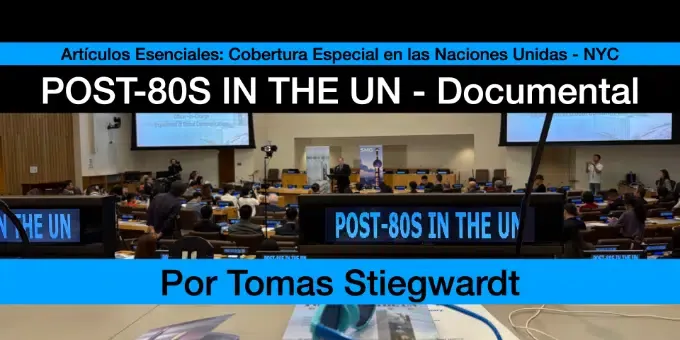
La realidad que arde: estreno de Post-80s UN en la sede de Naciones Unida

LA INTELIGENCIA ARTIFICIAL Y EL CINE. CAPITULO LXXXVII: SANDMAN EL FINAL

La inteligencia artificial y el cine: Capitulo LXII: Xanadu

Bowie, el artista adelantado a su época en el documental experimental de Moonage Daydream


Nosferatu, y la libertad como un imposible
Blue Velvet. Lynch: simulacro, erotismo, poder y transgresión
Okupas: lo apolíneo y lo dionisíaco. El héroe trágico posmoderno

El Club de la Pelea: la película más sobrevalorada de la historia


Poor Things: la vida después de la muerte de dios. Tres lecturas filosóficas

La inteligencia artificial y el cine. Capitulo XXIV: Sueños, caos y arte generativo

Django sin-cadenas, el verdadero superhombre de Nietzsche

Kafka y el Club de la Metamorfosis

Más allá de los dos minutos infinitos, la paradoja del tiempo y la libertad

LA FILOSOFÍA, EL CINE Y LA PARADOJA DE LOS VILLANOS: Parte 1