A corazón abierto (2004)★ 7.6/10
Something the Lord Made
- Drama
- Biografía
Dirección: Joseph Sargent
Guion: Peter Silverman, Robert Caswell
Una dramatización de la relación entre los pioneros de la cirugía cardíaca Alfred Blalock y Vivien Thomas.
Artículos sobre esto

Reparto y equipo
Ver todo › Cliff McMullenLodel Williams
 Yasiin BeyVivien Thomas
 Luray CooperCharles Manlove
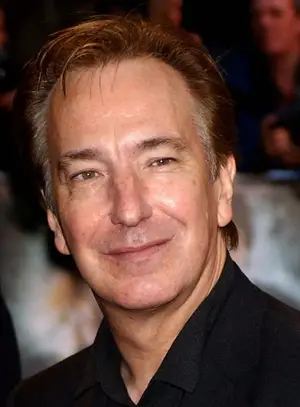 Alan RickmanDr. Alfred Blalock
 Gabrielle UnionClara Thomas
 Irene ZieglerFrancis Grebel
 Charles S. DuttonWilliam ThomasClayton LeBouefHarold Thomas
 John EmmanuelMan at BankHarold J. Abell Sr.Man #1Michael E. RussellBank OfficerHenri EdmondsMary Thomas
Premios · 3 premios, 8 nominaciones
Ver todo ›- NominadoGolden Globes, USA 2005Golden Globe · Mejor miniserie o telefilme
- NominadoGolden Globes, USA 2005Golden Globe · Mejor actor de miniserie o telefilme
- GanadorPrimetime Emmy Awards 2004Primetime Emmy · Mejor fotografía en una miniserie o película
- GanadorPrimetime Emmy Awards 2004Primetime Emmy · Mejor montaje en una miniserie, una película o un especial monocámara
- GanadorPrimetime Emmy Awards 2004Primetime Emmy · Mejor telefilme
Reseñas
L Lee Rosal12 de noviembre de 2025
Seu formato não é nada demais, faz bastante o estilo das cinebiografias de meados dos anos 2000, porém, a história de Vivien Thomas vale a pena ser conferida e acredito que muitos chegaram até ela através do filme, justamente por ser um assunto tão especifico. Infelizmente uma questão muitas vezes repetida, as que são conhecidas, as que ainda iremos conhecer e as que jamais encontrarão a luz, mais uma vez, infelizmente.
H han li31 de mayo de 2023
Contiene spoilers
"Something the Lord Made" is a restrained and calm movie, even making people feel a little bored at first sight. We always have a more tolerant mind about a film "based on real events." Whether it is bizarre, prosaic, or absurd is unimportant. After all, it happened.
"Something the Lord Made," tells the story of Alfred Blalock(By Alan Rickman), a white doctor, and his black partner, Vivien Thomas(By Mos Def), who broke racial boundaries and collaborated to pioneer heart surgery and become pioneers in cardiac surgery. Doctor Blalock, an ambitious surgeon, discovered Thomas's talent in medicine and gradually began teaching him. Together, they conquered the tetralogy of Fallot, a congenital heart disease. However, Blalock did not disclose Thomas's contribution to the public after the successful operation, even without saying "thank you." Nevertheless, in the following decades, the two maintained a delicate friendship. Eventually, Thomas became the first black medical technology director at Johns Hopkins Hospital.
The film can be interpreted from two aspects. The more obvious one is that several doctors worked together to become pioneers in cardiac surgery. In the 60s of the 19th century, it was widely believed that the heart was created by God and connected to God. Surgery on the human heart is impossible. After Blalock's promotion to chief professor of surgery at Johns Hopkins University, one of his colleagues, an excellent pediatrician, invited him to lead the team to conquer Fallotian tetralogy, also known as blue babies.
The film shows the whole process of Blalock's team's work: design surgical protocols, find solutions, correct errors, and finally finish the cross-era surgery, which is supposed to be God made. The technology they created was also named the Blalock-Taussig shunt. Vivien made a clip for the surgery, later known as Blalock clips. hat exactly is "lord made "? God created the world, but the doctors played with death, completed one "impossible" after another, and conquered one disease after another. So is it not also a "lord made"? Like the conversation in the church between the parents of a child who decides to undergo surgery. "Perhaps it is God's will that our baby girl leaves us so little." "What if it is God's will that the child undergoes surgery and be saved?"
The second topic I want to share is more meaningful. And that's made this film more extraordinary. The movie's subtle "friendship" between Blalock and Vivien is provoking. The two met at the height of racial discrimination in the United States. As a white man, Blalock was a very ambivalent individual on the issue of race—he was not an outright racist like most people at the time: he did not care to share a "white exclusive" washroom with Vivien. He also fights for higher wages for Vivien. But on the other hand, Blalock habitually acquiesced that Vivien would not appear in his articles or group photo. He also kept silent when he overheard his colleagues slandering Vivien's skin color.
When we look back from the present, many seemingly incomprehensible acts of discrimination once existed and profoundly affected everyone at that time. Even now, the United States is far from achieving racial equality. As it was then, most people are unaware that racial discrimination persists in all aspects of life. In "Stamped from the Beginning," a book about racial discrimination in the United States, racial differences have a more extended history than the United States. We have been told that ignorant and hateful people produce racist ideas, and these racists develop these heinous policies. Is that the case? From a historical perspective, this is quite the opposite; it is racist policies that lead to racist ideas, which lead to ignorance and hatred. Such procedures usually stem from economic, political, and cultural interests. Politicians defend existing policies to gain higher positions and more support; capitalists ignore racial discrimination to reduce human costs; the vast majority of ordinary people, after a long period of subtle indoctrination, also tacitly accept that some discriminatory behaviors are "normal."
This theory may explain Blalock's behavior, whether supporting Vivien or not. His final goal is his career and his medical ambition. However, without Vivien's help, he may lose a capable assistant, so he is willing to fight for better treatment to maintain Vivien's service.
But, on the other hand, Vivien does not bring him more prestige after he successfully conquers the disease, and he stops fighting for Vivien. Blalock is a utilitarian man, while Vivien is a great man. he overcame all the obstacles just for his dream of medicine. Luckily, what he did finally got paid off.
In fact, in a way, history and the present remain strikingly similar. Racism persists, more hidden and less visible, Thankfully, there are always some people who are doing something that seems "impossible,." This may be a real "lord made" by men.