The Ring and the Aesthetics of Decay
General Reviews
How lighting choices help tell a story.
This weekend I rewatched the American version of The Ring (2002). And what caught my attention the most was the film’s colour grading, which is awful.
At times, I found myself wondering about the green “spots” on the characters’ skin and hair, since they weren’t makeup, nor could they be a lighting “mistake.” Obviously, the ugliness of the colour grading was meticulously planned and executed, and it went beyond a simple aesthetic choice. In other words, it’s not only part of the narrative but also directly connects all the characters and their destinies. Of course, this is nothing new in cinema, but the way it was done here didn’t strike me as obvious just from watching the movie casually on a Sunday afternoon.
So, I decided to do a little more research on the subject. For those who don’t remember the story very well, the film is about a curse that spreads like a virus, represented by the videotape that, when watched, infects the viewer, who then has seven days to live. The director wanted the film’s visual style to convey the same sense of disease. The color palette features shades of mold and decay (though you won’t find those terms in the Pantone chart). The green isn’t natural; it’s a mossy green, reminiscent of stagnant water, sludge, and rot. Elements directly linked to Samara and the damp where she was killed. The stains on the characters become more evident as the 7 days pass, leading us to understand that as their time runs out, they rot away, just like a decomposing body.
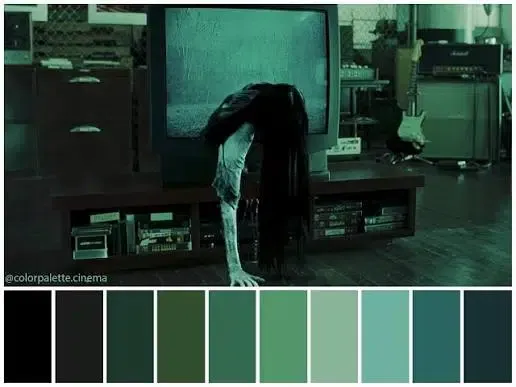
Instagram @colorpalette.cinema - The Ring, 2002.
The film’s aesthetic also aimed to simulate a worn-out VHS tape. On old analog tapes, when the film signal deteriorated or lost its white balance, the image suffered from color bleeding, resulting in what??? Green spots in shadow areas and on skin tones. The actors also wore pale makeup, and the set lights were filtered through green and cyan gels. This is also quite interesting, since the coloring was basically all done “by hand”; none of these greenish tints are a direct result of post-production; the film was shot that way to begin with. In post-production, a chemical and digital processing was carried out to further remove the warm tones (reds and yellows) from the actors’ skin, causing any shadows on their faces to take on an even more greenish, resembling bruises, dirt, or diseased skin.
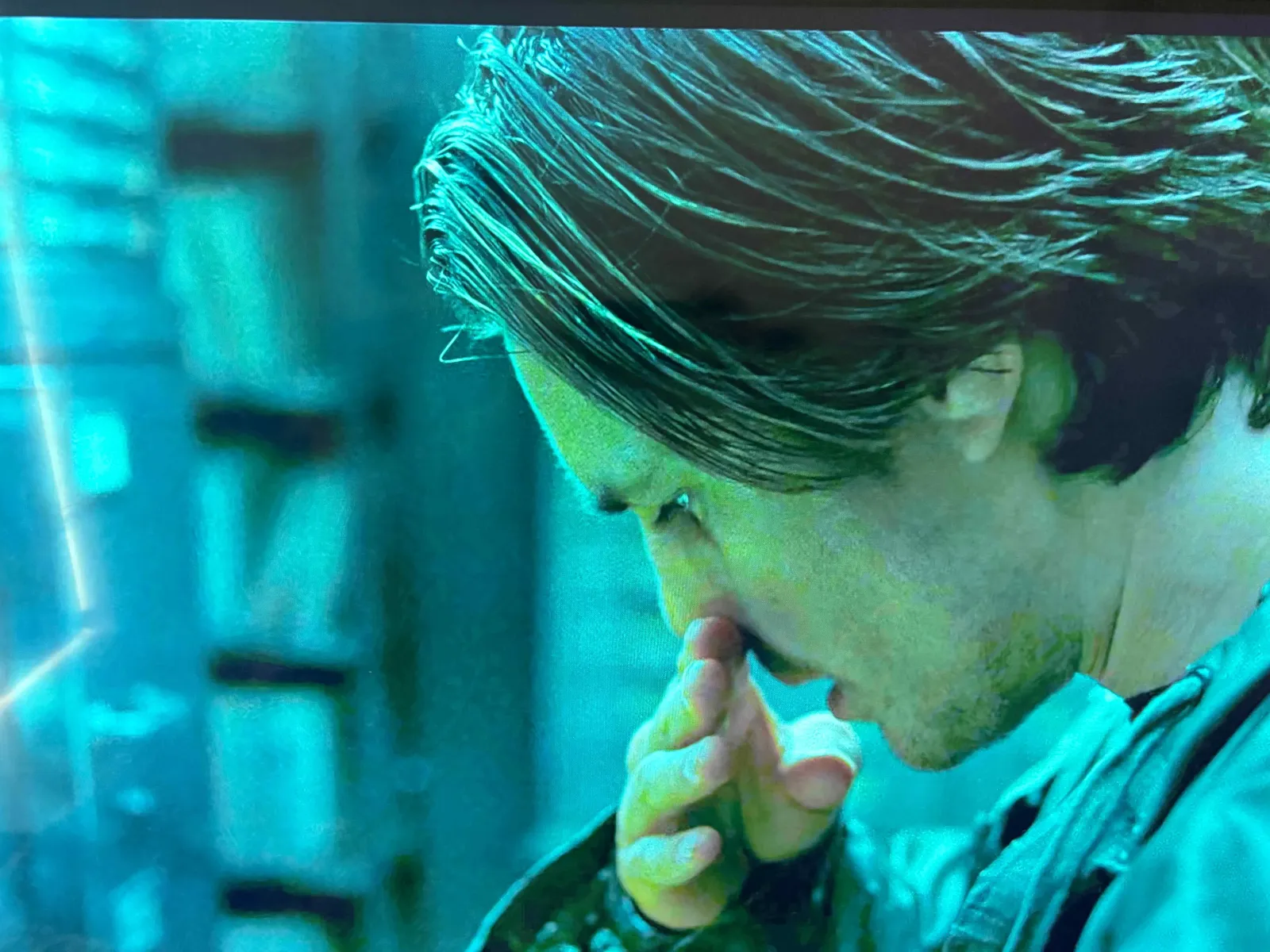
The Ring, 2002.
The cinematographer for The Ring, Bojan Bazelli, also explains that he did not use contour lighting or smoke in the scenes, something quite common in films of this genre. And that his lighting consisted primarily of a single soft light source with deep shadows and natural underexposure. Without the background lighting to separate the cast from the background, the greenish light “bleed” onto the actors, creating this blotchy effect.
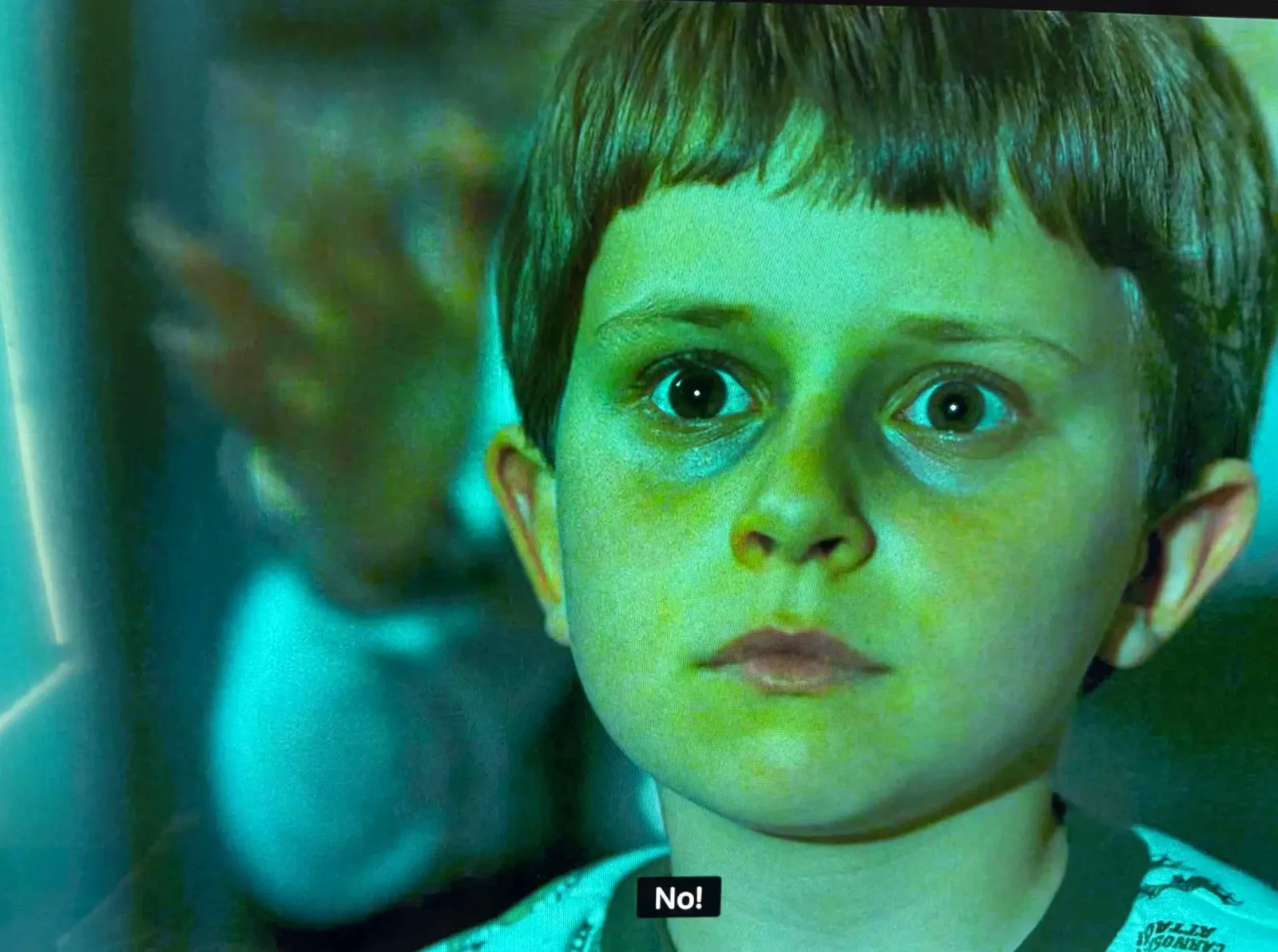
The Ring, 2002.
Bazelli also mentioned in interviews at the time that he and the director, Gore Verbinski, were aiming for a style they called “unpolished realism,” and that the intention was not to make the film look pretty, but to immediately convey the sense that something was wrong even before any truly terrifying scenes took place. And I think they really nailed it.
This aesthetic reminded me of another production I saw recently: the Netflix series The Haunting of Hill House. Its yellowish hue also bothered me quite a bit. And although the two productions have no direct connection, it’s undeniable that the latter was influenced by the former. The Ring redefined the visual style of Western horror in the early 2000s, introducing a dark, musty, and cold aesthetic inherited from Japanese horror that became a source of inspiration for horror directors of subsequent generations. In Hill House, green and yellowish tones are present mainly in scenes inside the mansion and in the timeline showing the present-day lives of the now-adult characters, indicating the decay of the abandoned house and the deterioration of the siblings’ minds. Like Bojan, Michael Fimognari also desaturated skin tones in Hill House so that the characters appear drained by the mansion, with deep dark circles under their eyes and a pale, greenish palette.
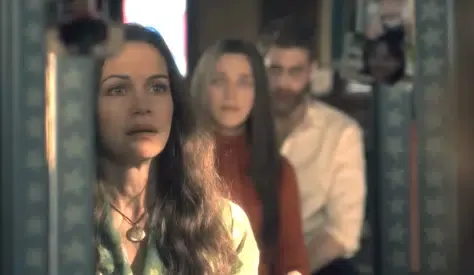
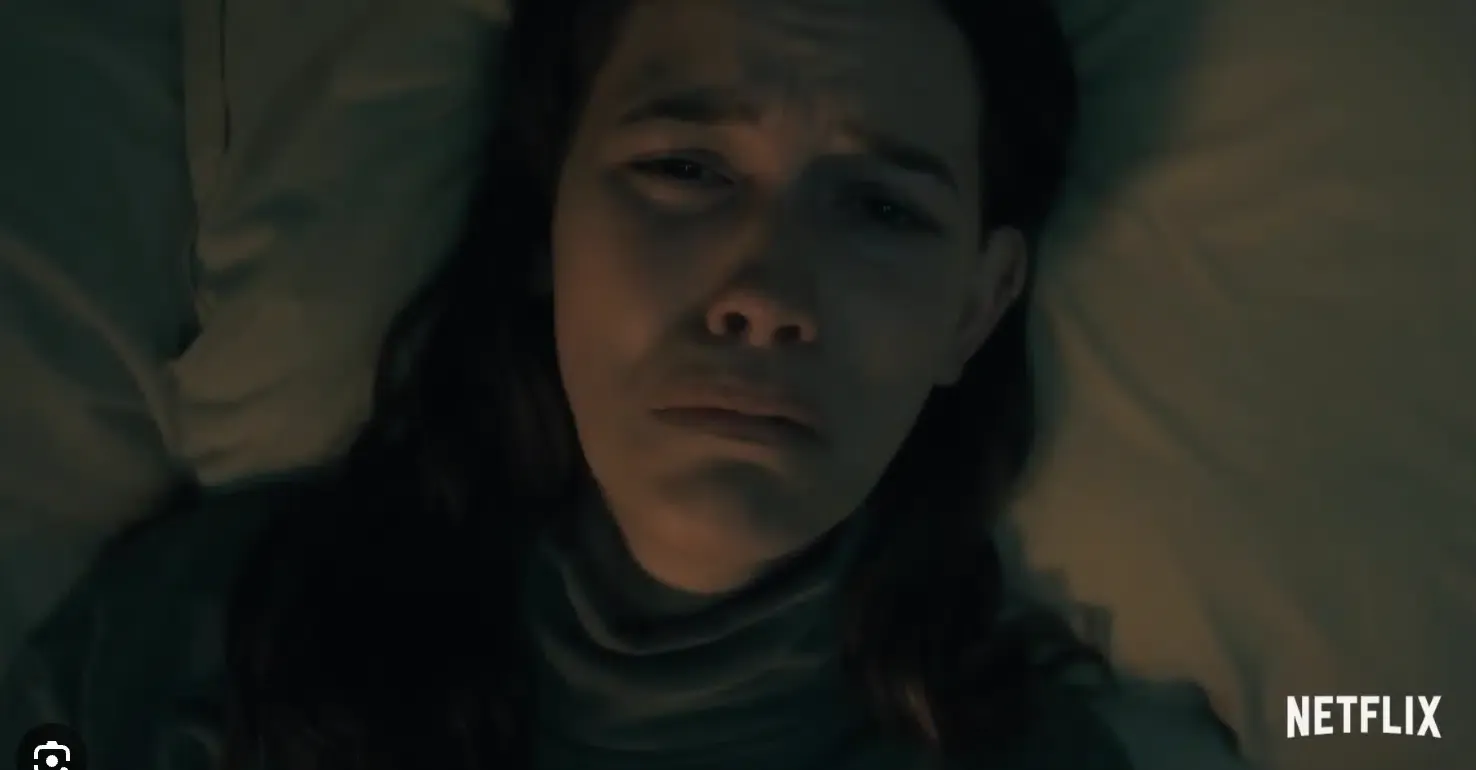
The Haunting of Hill House, 2018. Netflix
You can watch The Ring on Prime Video and Apple TV.

Comments 0
No comments yet.