Folk Horror: Fear Doesn’t Have to Hide in the Dark
General Reviews
The fear of darkness predates cinema. It is an instinct ingrained in our brains: night is when predators lurk, when we cannot see what threatens us. Turning this fear into a visual language became one of cinema’s earliest great artistic tools.
Italian painter Michelangelo Caravaggio was one of the pioneers in turning darkness into a narrative tool. In The Beheading of Saint John the Baptist (1608), darkness plays an active role: it hides what we do not want to see, frames violence within a specific part of the painting, and forces us to look towards the light and what is happening within it. He uses darkness to choose what to show and what not to, forcing the viewer to focus on what remains illuminated.

In 1922, German Expressionism brought these artistic elements to the screen. Nosferatu, by F. W. Murnau, is one of the best examples: darkness, which conceals and suggests, combined with the viewer's imagination, becomes a powerful catalyst for terror. The shadow of Count Orlok climbing the stairs uses the same principle that Caravaggio employed centuries earlier: darkness as an accomplice to fear, as a space that conceals so that our minds can complete the horror.

What happens when terror hides in broad daylight?
This is one of the premises of folk horror, a genre that breaks away from the idea that darkness is the only possible setting for terror, instead placing it in rural environments and isolated communities, all bathed in colour and the unsettling light of the sun. Its greatest weapon is normality: it places us beneath the morning sun to make us feel safe, only to then present us with the most unsettling situations for us to witness.
The term “folk horror” was first used in 1970 to define Piers Haggard’s film Blood on Satan's Claw, but its roots go back to earlier years.
One of its earliest predecessors is Witchfinder General (1968), by Michael Reeves. Set in seventeenth-century rural England, it portrays the witch hunts with a brutality and violence that could place it closer to traditional horror than folk horror. However, its relationship with folk horror lies in the presence of several of the genre's key elements: the rural setting, superstition, and an outsider figure entering an isolated community.
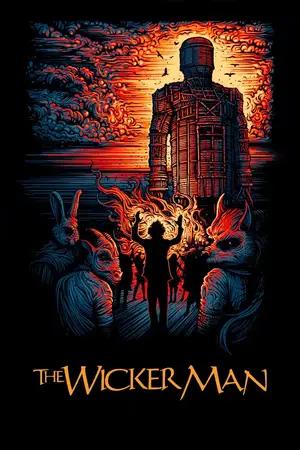
In 1973, Robin Hardy's “The Wicker Man” further defined folk horror as we know it today. The island of Summerisle is presented to us through vibrant colours and constant sunshine, a setting that does not need night to fall before it begins to make us uncomfortable. Its inhabitants are not hostile, nor are they presented as a threat. We do not see their rituals as an extension of evil, but rather as a celebration.

Contemporary Folk Horror and Human Behaviour
If classic folk horror placed terror within communities and rituals that felt foreign to us, contemporary folk horror has also brought it into the most intimate parts of human experience. In Midsommar and Lamb, nature and ritual remain present, but terror emerges as a response to human emotions and needs.
Midsommar and the Terror That Embraces
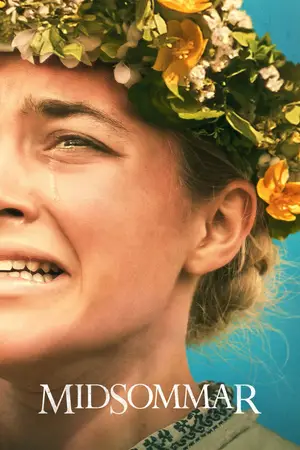
In Ari Aster's Midsommar (2019), we meet Dani and Christian, a couple who, along with Christian's friends, travel to a Swedish village to take part in a ritual that takes place every ninety years. Dani arrives there after having traumatically lost her entire family while being trapped in a relationship where she is neither understood nor supported. Perhaps, then, the film's true source of fear lies in coming to understand why Dani chooses to stay in that place.
The horror goes beyond the rituals or the community itself: through Dani, Ari Aster reflects a human need as basic as the need to belong and takes it to a terrifying extreme, one in which belonging to this community feels like a relief compared to the life Dani once had.
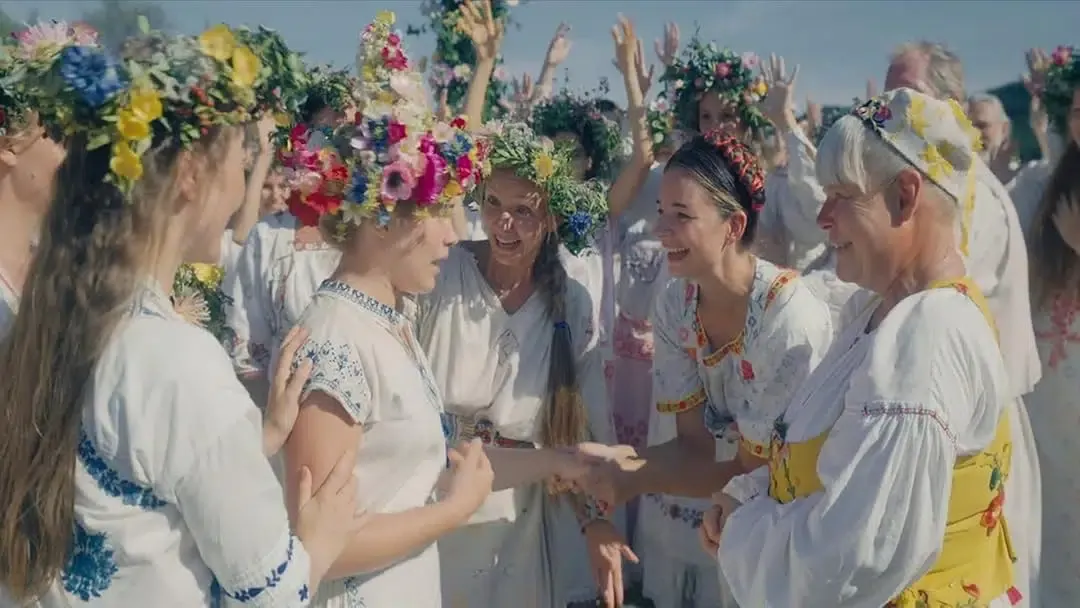
The film achieves this while maintaining a colour palette centred around yellow, blue, and red. Yellow is associated with death and its acceptance among the Hårga. Yellow flowers appear along the path leading to their community, and the sacred temple is painted in the same colour. Blue symbolises the community; with only a few exceptions, everyone wears blue embroidery, while red represents leadership.
Lamb and Terror as Response to Emptiness
Lamb (2022), by Valdimar Jóhannsson, tells the story of Maria and Ingvar, a couple living on a remote farm in Iceland. They appear to live a routine life until the birth of a lamb suddenly changes everything. In Ada, this new creature, they see what they need to see: they dress her, prepare a crib for her, and create an illusion of the family they did not have until then. They seek to fill a void and, in doing so, take something that does not belong to them—a decision that will eventually have consequences.
The film once again uses folk horror as its narrative thread to explore human nature and our relationship with desire and denial.
Unlike Midsommar, where folk horror is constructed through light, colour, and a flourishing natural world, Lamb presents us with a more intimate and domestic story. There are few characters, empty spaces, and a much more muted colour palette. Nature is presented as something immense in comparison to the human figure, not as a community to join. It is not something that accompanies humanity, but rather a greater force that makes its claim when necessary.

Although Midsommar and Lamb portray terror in different ways, both demonstrate that fear does not necessarily depend on darkness. In the former, light, colour, and abundance ensure that what is sinister is always right before our eyes, while in Lamb, the muted palette and emptiness make the landscape feel silent and unsettling. Yet both share an approach to constructing terror through the image itself and through the act of seeing.
For years, we have associated fear with darkness and the use of black, but cinema has shown us that we do not need to hide what terrifies us in order to create fear. There is nothing more unsettling than wanting to look away while the sun forces us to keep watching, as colours foreshadow stories and endings. Fear does not have to be black; it simply has to know how to use colour.


Comments 0
No comments yet.