SCREAM IS ABSOLUTE CINEMA!
General Reviews
The screenwriter is a goldsmith whose talent for creating cinematic gems is often undervalued. The masses who gather in a movie theater more easily identify the actor or the director than the screenwriter. However, the true architect, the backbone of any feature film, is the screenwriter. Their fingers mold the clay of the characters, the settings, the virtues, the sins; their hands hammer the scenes together, fleshing out the bones of the plot. Whether we like a character or not, as popular wisdom says, we can't stand them, that's not the work of the actor or the director: it's the work, whether you like it or not, of the screenwriter.
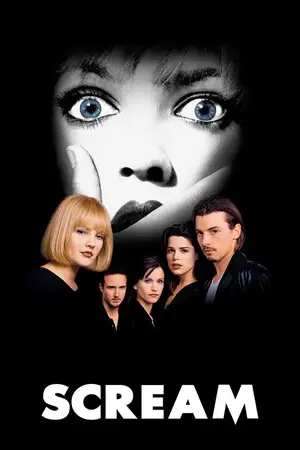
I'm here to defend the beautiful work of the screenwriter. I really enjoy my role as devil's advocate. And what better way to illustrate this than to bring up the screenwriter of the film that breathed new life into the dying veins of horror cinema back in the late 20th century? I'm referring to the film series of:

and its creator, Kevin Williamson . The story behind this film is fascinating for one simple reason: because Williamson was a defeated, melancholic man, crushed by the harsh reality of being an American screenwriter mired in anonymity, held back by the foul, stinking foot of Hollywood. Until he sowed the first word that would give rise to that cinematic tree which, even today, thirty years later, continues to provide shade to scholars and lovers of the seventh art.
Desperation, anguish, uncertainty—these were the three doors that creaked most loudly in the depths of this screenwriter's heart, who could find no way out of his situation: he had no money to pay the rent, the bills, or the car. Something had to be done urgently, something had to be written, anything, soon, something that would at least help alleviate that financial burden for a few months.
But what should he write about? What could inspire him? His latest screenplay had been a flop, failing to attract the attention of critics, always so unmoved by criticism. His existence seemed destined to fade into oblivion and disillusionment.
Was there any path left open?

THE ORIGIN
Rain lashes the leaves of the solitary tree that stands guard over a house shrouded in shadows in Gainesville, Florida. The umbrella is riddled with holes and, therefore, has failed to keep young Williamson's head wet. As he inserts the key into the lock, he hears a moan in the treetop—the wailing of the specters that the storm unleashed within the clouds is awakening. He drops the umbrella on the doorstep, its tears beginning to form a small pool on the ground.
Damn it! I'm a mess.
The cold pierces his skin and rakes his bones. He's tired and fed up, and to make matters worse, he's ravenous, and there's only milk in the refrigerator! He goes into the living room. He takes off his muddy shoes, his pants, his shirt, and dries himself. Then he grabs the remote control, throws himself onto the sofa, and turns on the television.
August 24, 1990, Danny Rolling murders, rapes, and decapitates the bodies of five college freshmen.
Williamson has just tuned in to a channel broadcasting a documentary about the infamous Gainesville Ripper. The voiceover describes in graphic detail the killer's modus operandi: wielding a KA-BAR knife, he broke into the apartments shared by four of the students in the middle of the night and, one by one, savagely stabbed them to death.
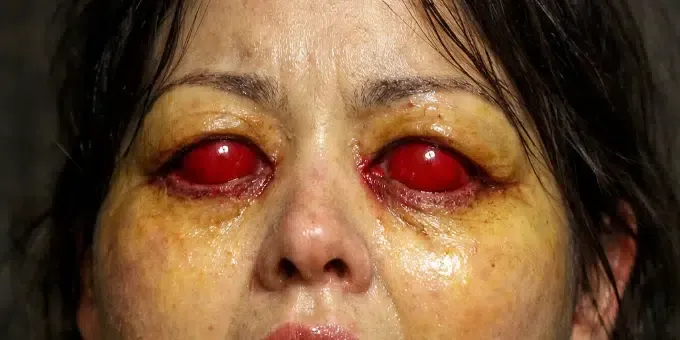
 Suddenly, as the television plays out the macabre scene in which the Ripper covers Sonja Larson's mouth (whose eyelids have just been ripped off) with tape that stifles her screams, a gust of wind pushes open the curtain of the window no more than half a meter away from the screenwriter. The gust freezes Williamson's face, and he jumps up and watches intently. With the back of his hand, he wipes the beads of sweat that the fright caused to spring from his pores and exclaims: "How could I not have closed that window!" And he hesitates: "Did I close it?"
Meanwhile, on screen, the actress playing Larson tries to defend herself, lashing out at the attacker and scratching; Despite this, he receives two, three, four, five, six stab wounds to the chest that shatter his sternum, while also stopping the beating of his youthful heart and causing the electric light bulbs that just a few hours before illuminated each of the passageways of his gaze to explode.
 Williamson peeks outside, looks to the right and left, up and down, but sees not the slightest trace of humanity. Only rain and swaying branches. Nor does he see, when he turns his head back inside the house, the slightest trace of humanity in the actor playing the Ripper, who is now gagging Christina Powell and tying her wrists behind her back.

He turns off the television without a second thought when the narrator of the documentary says that with the next victim, that is, with Christa Hoyt, who was only eighteen years old, he was even more vicious, tying her up, desecrating her body, stabbing her in the back and, finally, uncovering her body from the neck to the pelvis, like the forensic doctor who performs an autopsy or the butcher who cuts open the belly of a pig.

But he doesn't turn it off without first experiencing a churning of his guts that forces him to spit out the abysmal repugnance that the murderer produces in him: damned specter of hell! At the same time, he has just hit the nail on the head for what will be the film that launches him to stardom.
WHEN A STRANGER CALLS
The essence of the future horror script is already laid out, its central theme: a voracious and cruel serial killer who shows no mercy and destroys everything in his path. But where to go next? Or rather, where to begin? Relatively simple: with a house.
Wait! Not so fast! Home, the house, what does it mean in a person's life? According to psychoanalysts, the house is the equivalent of what the mother's womb is to the baby, the matrix, the placenta. A space of pure physical, psychological, personal retreat. The temple. The inner sanctum. The sacred precinct of our dreams, our passions, our ideas, our sensations, and our thoughts.
Home sweet home…
So the common folk often say. Indeed, nothing is more comforting for body and soul than setting foot in home after a day filled with comings and goings, frantic activity, aimless wandering, and suffering from migraine headaches capable of pulling down eyebrows and fracturing skulls.
How I long to reach that sacred sanctuary to completely forget the foul and repulsive world!
Our home is our placenta. The analog version of that disc-shaped organ that forms in the uterus from the seventh week of pregnancy and of which the umbilical cord is a part. The placenta acts as the fetal lung, fetal kidney, fetal intestine, fetal liver, and fetal endocrine gland. Thanks to the umbilical cord, the unborn child acquires the necessary nutrients to avoid the painful obligation of performing acrobatics on the tightrope that hangs over the abysses of life and death.
Consequently, it is a common assertion among many psychoanalytic experts that there is no more extreme act of violence than uprooting a baby from that paradise; moreover, the baby does not want to be uprooted from its paradisiacal land. That is why it cries as if it had been pricked with a needle. And, therefore, these illustrious Freudians maintain, this abrupt uplift will soon become the primary cause of countless symptoms and psychological traumas that the individual will develop in the years following birth.
Let us reflect on this for a few seconds.
Ready?
Perfect. I ask you: what event can make any human being urinate more easily than the abrupt intrusion of foreign hands into our home? What fear could be more primal than the sudden invasion of our private sphere by creepy hands that come for us, and not exactly to do us any good?
None!
Kevin Williamson struck gold.
What better cinematic opening than the imminent threat of a psychopath about to plunge his filthy hands into our placenta to slit our throats? However, it's not enough. We need to add an extra ingredient to spice things up. We already have two pillars for the horror plot: a serial killer and a house. We already have a more concrete idea: a serial killer breaks into someone's house. But we need a trigger, a method, a way. That is: how does the killer break into that home? What does he use to toy with the victim? How does he play with the victim? Why does he play with the victim?
 Something everyone has in their home: a telephone. From something as commonplace in our lives as a telephone, Kevin Williams creates not only the atmosphere but also the narrative tension of the film. Yes. The stranger enters the house, initially, through the telephone, which indirectly brings him into the living room and hallways. The unease arises from the uncertainty of NOT KNOWING WHO IS CALLING.
WHO IS CALLING?
This question of who is calling is the backbone of the first scene. However, it doesn't come from nowhere. It has its antecedents in another rather curious horror film:

WHEN A STRANGER CALLS, a 1979 film. Its opening is notable for the macabre and somber elements of its aesthetic. Kevin Williamson confesses to having been inspired by the beginning of this film to create Drew Barrymore - Barrymore's iconic death scene. In When a Stranger Calls, the main character, Jill Johnson (Carol Kane), babysits children in a solitary and gloomy mansion when she suddenly begins receiving calls from someone. Just like in Scream. The tension in this 1979 film builds from the perpetual anonymity of the person on the other end of the line, who becomes increasingly aggressive, rude, and sexually charged. Then comes the revelation that, in one way or another, had been hanging in the air, something we had been waiting for but hadn't yet confirmed: the stranger calling is hiding inside the house itself. He has invaded the very heart of the home. And he has caused imminent harm. But this isn't revealed until the twentieth minute, after an endless series of calls, silences, curt exchanges between caller and caller, threats, and intimidating phone calls. The disaster is only revealed when it's already too late.

This ever-increasing uncertainty, which provokes growing panic in Jil Johnson and triggers a particular unease in the viewers, is the great nerve that Kevin Williamson incorporates into his screenplay. The presence of the stranger remains veiled, invisible; and yet, it can be smelled in the air. Perceived in the stale atmosphere. The triad is as follows:
NIGHT-HOUSE-TELEPHONE
The premise is simple: in the middle of the night, a telephone rings inside a manor house.
The inability to understand who is calling, or why, or for what purpose, is the foundation of the terror: a closed door with something monstrous inside. The camera's mission is to show us what's inside, without showing it to us directly. To suggest that there is something inside and make us believe that it will reveal it. And how will it reveal it to us? From what angle? From what perspective? From what shot? Through what contrast?


The distinctive ringing of a telephone—ringggg, ringggg, ringggg—is not gratuitous; it serves a purpose: to assault the ears and spread anxiety. Something as insignificant as the sound of a telephone becomes desperate, oppressive, when taken to the extreme. Who isn't overwhelmed by constant calls from an unknown number, over and over again? Of course, we can block them now, but 25 years ago and even earlier, it was necessary to cut the cord. And by cutting the cord, isolation from the world was almost absolute. The feeling of helplessness that pervades the protagonist is an epidemic that spreads to the viewer through their retinas.
We have multiple cinematic elements in constant motion, symbiotic and even parasitic. The telephone sets the rhythm; it is the tuning fork. The diastole and systole of the complex narrative through the image. The thread that connects the image, that sutures any visual fracture, is the telephone and the voice that, through it, infiltrates the organism, its circulatory system, the central nervous system of the house.


The opening of both films places us at the epicenter of a question we don't usually ask ourselves, but which undoubtedly resides in the roots of our unconscious. Or in the ruins of our subconscious. Only when something or someone throws stones into our psychic well do the ripples force us to confront this question. The stones stir up the settled mud and muddy the well of thought: that's when the question permeates us. That question is this: what would happen if a psychopath wielding a butcher's knife burst into our temple to set it on fire?

In “When a Stranger Calls” the murderer has been inside the home the whole time, hidden, watching.

In "Scream," the killer is always on the outside, but that doesn't matter, because he's already anticipated it, he's already identified the Achilles' heel. That is, he already knows where and how he's going to get in. He'll force his way in, charging like a bull. In "When a Stranger Calls," the killer's identity is revealed to us at the end of the first twenty minutes of the film when the police officer she contacts for help orders the victim to leave the house immediately, since the dangerous individual who is stalking her is staying there. And he's calling her from one of the rooms. Indeed: from the room where the children she's supposed to be watching are sleeping!

However, and this is the shift that sets one film apart from the other, the antagonist in SCREAM, the perpetrator and mastermind behind the events, remains hidden from us throughout the entire film. The killer remains an unsolved puzzle until the very last minute. This mystery is an incentive for us, as viewers, to maintain a state of constant alertness. We constantly ask ourselves: who is the killer? And we deploy our reflective faculties, as if using a hook, with the intention of catching the monster behind the camera.
GHOSTFACE
One night
death will knock
at your door,
one night death
will ask you for an answer.
One night death
will come with its spectral mask,
with its scythe held high
to shatter the portrait
that groans behind the mirror.
It will knock on the door
and will not have your eyes,
but it will have your tears.
Wretched Reaper!,
how eager you are for the world
you scatter,
how in your despair
you burn,
and wander searching for souls.
Wretched manta ray!,
Whom do you deceive?
Putreous death mask!,
do not enter here because you will not find
my soul,
only fragments
and dead cells.


They say the origin of the iconic Scream killer mask is rooted in the painting "The Scream" by Norwegian painter and printmaker Edvard Munch. However, the mask was actually sold as a Father Death costume and was designed by Brigitte Sleiertin-Linden for Halloween shops. It was later discovered by filmmaker Marianne Maddalena, who transformed it into a legend.
The killer in "When a Stranger Calls" says to the nanny, when she asks him:
"What do you want from me?"
To which the voice on the other end of the phone replies:
"To bathe in your blood."
That phrase, "to bathe in your blood," is truly unsettling; it's a disturbing statement, revealing an unhealthy and unrestrained appetite for death. Killing is NOT ALWAYS justified. It's not art for art's sake. A person kills another for the love of killing. It's not a crime influenced by the fury of the moment, nor by a sudden demonic possession, nor by revenge, nor by psychosis or delirium, but by the pleasure derived from piercing another's flesh, seeing it bleed, feeling it trickle through their fingers as it oozes from the wound, smelling it as they smear it against their nostrils, and, of course, tasting it. It's cruel. However, it's true: to bathe in your blood is why someone might kill you.
But in SCREAM, this pleasure in death is mixed with a motive: revenge. And yet, above all else, murder for pleasure, crime as a product of mental disorder, seems to prevail. Here we identify another key influence that Williamson added to his cinematic formula. Ghostface kills for pleasure and for revenge. Killing for pleasure also means killing for fun. Revenge, for its part, can be fun. For Ghostface, revenge is sweet and fun. Sweetly fun. Funnily sweet.

Now, beyond killing for pleasure, Ghostface seems to be a kind of embodiment of Death. It's a symbol, a metaphor for the arrival of darkness in our lives. That's why the lines: one night death will come… And I consider this to be the most significant achievement of this film. The disguise: the robe, the mask, contribute nothing more than to personifying that arrival of the fatal hour. The fatal hour, whose black vulture wings, morphologically mixed with bat wings, beat above our heads with putrid emanations.


Beyond the satire of the horror genre, the sophisticated and ingenious mockery of slasher tropes, the epiphany of death is of bizarre importance; its philosophical treatment through images is a philosophy incarnate. Kevin Williamson, in his capacity as a chaotic, aimless, melancholic, and hopeless screenwriter, channeled his inner necrosis into SCREAM, transforming the fundamental question of all existence—what is death?—into a cinematic novel worthy of the finest pens of literary horror. Death opens its jaws, and its teeth can observe, reflected in the knife's edge, the unsuspecting viewer whose heart races a thousand beats per second.

Williamson's writing perfectly demonstrates that it is possible to meditate, even to delve into the depths of any philosophical abyss, through a film. It shows that the screenplay is like a Socratic tongue: a viper's tongue, venomous, painful, terrifying, swelling any area of the social and cultural body it pierces. What does the screenwriter of this classic show us, if not a society paralyzed by entertainment, stunned by morbid curiosity, absorbed by fierce and relentless consumerism, desensitized by the industry's gore, and battered by the pornographic shamelessness of a booming internet?
In short... the terrifying magic of SCREAM is an inexhaustible source, born from an artist who, though defeated, persevered and was able to bring to the screen the most vile beasts of the late 20th century and immortalize them for all time. Hence, his superb work with this screenplay deserves the honorary title of "absolute cinema."







Comments 1