Let's return to the stars
General Reviews
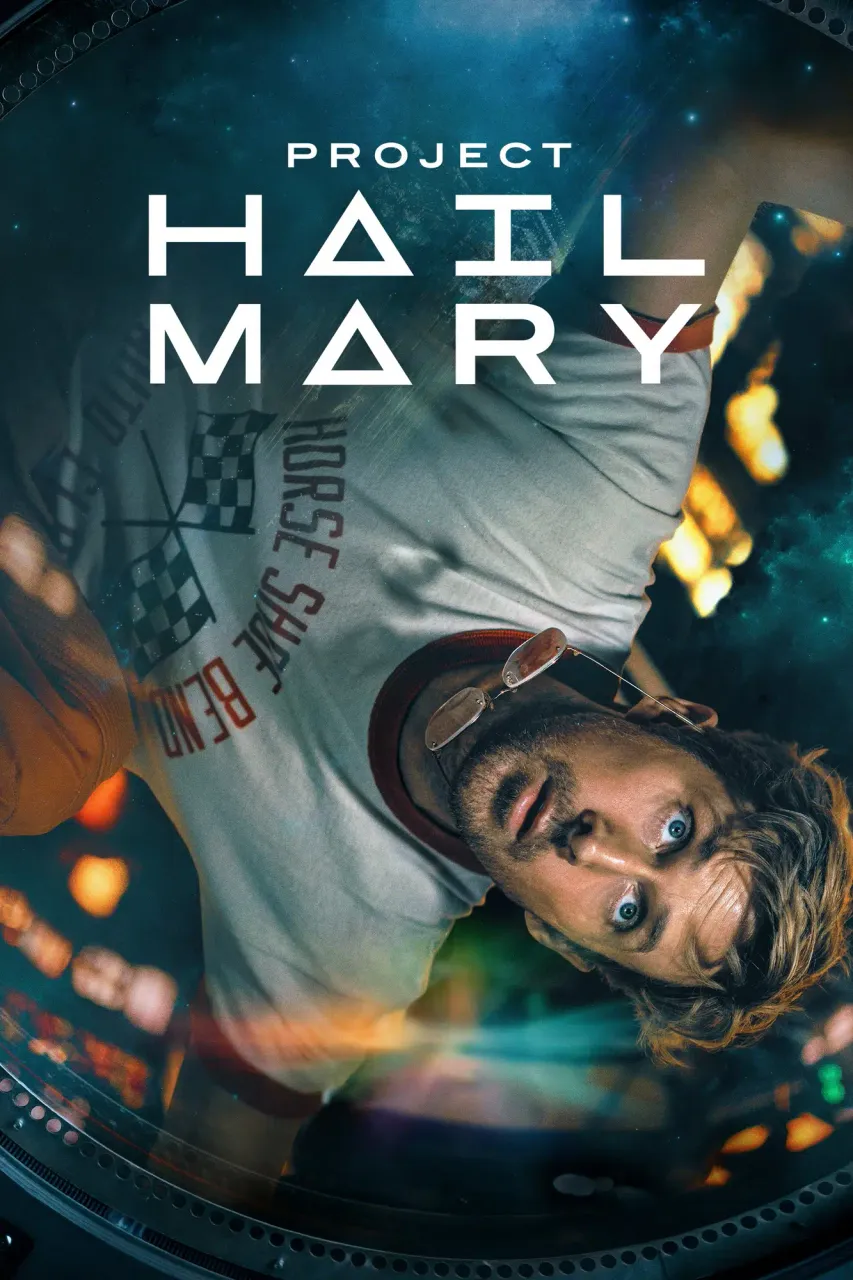
I can’t say anything about this film that isn't too personal, so this technically can’t be considered a film review.
For such a long time, I’ve been a city person living under either daylight or neon lights, so that even seeing the faintest hint of stars or northern lights can amaze me to a great extent. I had almost forgotten how, once in my adolescence, I had imagined what the outer space might look like so profoundly.
I used to really enjoy my physics classes, and oftentimes I would joke that if I weren’t to study film, I probably would go into physics. And I remember one time in my secondary school when my tutor was sidetracking too far from the textbook and started talking about how the multiverse might be plausible. He said that if we imagine space as a parallelogram, then when two points are folded together so that they can meet and touch, two spacetime dimensions can be combined into one. I’m sorry if I’m making any of that up, but astrophysics, at that time, had already worked its way into my thoughts.
Despite our grand visions of the galaxy and outer space, few sci-fi works within the decade have struck me as Project Hail Mary did. I suppose modern-day audiences have grown too used to a demythologized version of the cosmos —people grew up watching spacecraft on-screen spin and dart, firing beams of light, turning the vast, boundless void into something like a World War II battlefield. On the contrary, romantic is the best word I can find to describe Project Hail Mary. It almost visualizes exactly the kind of universe I imagined as a child: sacred, serene, enveloping, and sublime. It still lingers, as mysterious as it can be, holding all living beings within it.
When Grace leaves his spacecraft to collect the “star-eaters,” he finds himself right in the midst of a red torrent. Tiny, glimmering particles flicker as if suspended in the depths of the sea. From afar, they seem to gather into silk-like currents. There’s just nothing more I can say about that scene.
He says, “I’m having the moment.” I guess I am, too.
Romanticism is pushing itself to the extreme.
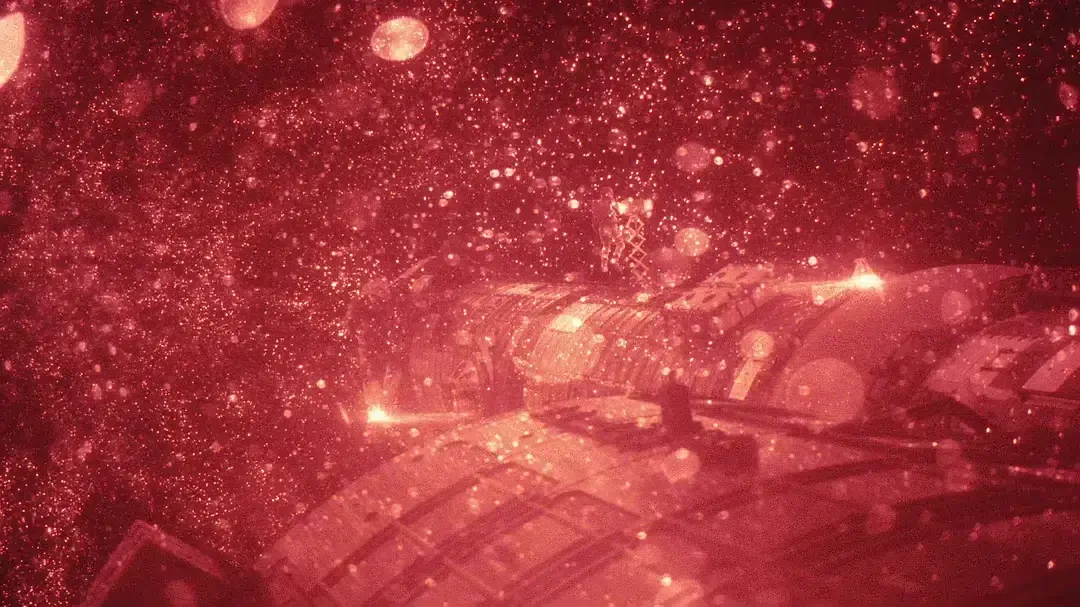
Including the scene mentioned above, several of the camera’s gazes into outer space do not come from Grace’s perspective. The audience’s gaze is not identified with any diegetic being within the film world. Our vision seems almost randomly exiled into the cosmos itself, as though we were a drifting particle. In these moments, I wonder whether the film is awakening something inscribed in us — a response to the cosmos that feels almost ancient.
In the original novel, there’s a quote that goes: “I commend you to the stars.”
I keep returning to it. When I was younger, people would often say that those we love become stars after they leave us, watching over us from somewhere above. I probably would not believe that literally, but I have always found it to be one of the softest and gentlest blessings. Do we all, in some sense, return to the stars after death? We, as bodies made of millions and trillions of molecules, are born from the sighs of the stars and the galaxy, and in the end return to the chaos, to anything from anywhere.

Comments 3