Castle in the Sky
General Reviews
I get kind of bummed out when I finally see a movie that I'm really looking forward to. It can live up to the hype, but, once you've seen it, you've seen it. The first watch is the best and most fleeting. Marty Supreme lived in my mind for over a year until I finally watched it on Boxing Day.
This movie is a moment. It is simply wonderful, hitting the beats that you want from a film while boldly moving the medium forward. It is cinematic voice at the highest level; a young master putting heat into his filmography. With the help of a dedicated star, this film is the closest Hollywood has come to connecting with the youth in 2025.

Marty Mauser is so good at table tennis that he could become the face of the sport in America. This potential for a lucrative position is all the motivation that Mouse needs to pursue this passion. Others do not see the appeal. Although Marty only needs a manageable amount of money, he often resorts to his own cunning for cash.
In these early stages of the film, I was in love with Marty. Played by Timothée Chalamet, he opens the movie by having sex with Odessa A'zion, being adored by his boss despite clearly working less than the others and looking great with his shirt off. This is a hero, one that is sure to form the personalities of many young men in 2026 (mine included). However, in my desire to mimic Marty Mouser, I'm unsure where the idolatry ends, as it's blurred where the hero becomes the antagonist.
What is submersed in this film is a young man who is afraid of growing up. Marty is 24 (of course) and that is a prime age for feeling intimidated by life's fate. Quite early in the film, it becomes clear that A'zion's Rachel is pregnant and that becomes the smart subtext behind Marty's decisions. He's running to avoid a terrifying responsibility.

Marty's goals are almost exclusively meant to satisfy himself. This causes dissatisfaction to others, largely due to Mouse's methods. Aging celebrity Kay (Gwyneth Paltrow) wouldn't mind if Marty asked for some money, but his choice to rob her necklace in order to pawn it causes a great deal of distrust. There aren't many bridges that Marty doesn't burn.
It takes a while, but the 24-year-old, self-proclaimed phenom starts to realize that his dream doesn't amount to much. The sport's potential becomes clouded by real-world experiences and American indifference. He'll stop at nothing to earn renown playing table tennis, but very few people care as much as he does. The few that do are his enemies.

As this film is largely a series of Marty's misadventures, director Josh Safdie keeps things captivating by providing each character with individual motivations. It plays into the theme of Marty's individuality and how selfishness exists in all of us, while adding unpredictability to each decision made. I feel that side characters sometimes exist only to advance the protagonist's plot, but Safdie avoids that here and, in fact, many of the side characters only serve to hinder Marty's goals. It provides insight on the spirit of destiny that creates a person's journey through the fallibility of others.
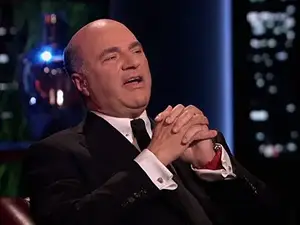
I don't think it's unfair to say that Milton Rockwell (Kevin O'Leary) has a reason for disliking Marty. Aside from sleeping with his wife, he's also an arrogant, little prick. That does not put him in the right when he blindsides Marty with the punishment of having to kiss a farm animal. It's this bad decision that helps shape the destruction (and rebirth) of Marty's dream.

It's not like Marty is completely absolved in the film's climax. His motivations are perverse, just like Milton's. To crave a victory over a national hero like Koto Endo while in that hero's home country, and while playing in an unsanctioned and statistically meaningless match, left me with an empty feeling in my stomach. The people who were nuclear bombed by Marty's country seven years prior would have appreciated winning a friendly match more than the ping-pong-playing New Yorker looking for redemption.
That's Marty Mauser: He must prove to himself that he can win. This could come from his dad not being around, his tense relationship with his mother or his unknown experiences as a teenager during World War II. Whatever the case, his relentless pursuit for this relatively tiny goal provides some of the background irony for a movie that isn't short on laughs. Through humour, anecdotes and twists, the film wonders how much fulfilment is gained through personal satisfaction.

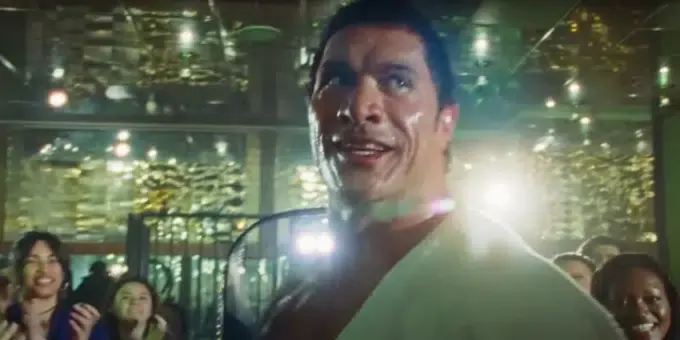
I think Marty understands the details of this concept near the end of the film, when he looks out on that crowd of Japanese people, American GIs, and corporate elites. I read on Marty Chalamet's face an understanding that fulfilling his dream had not eclipsed the potential he had imagined. The protagonist's bitterness is thinly veiled, as all that is left for him is his reality. Everybody wants to change the world, but nobody can do it on their own.
Nobody wants to admit that the castle in the sky is only that. That is to say, not every dream comes to fruition because not every dream is meant to materialize. Marty had to redeem himself against Koto, but even redemption holds little merit when you nearly sacrifice your identity in the process. Marty needs his redemption, but he's struggles to accept who he's become to achieve it.

In what I interpreted as a funny, tongue-in-cheek finale, Safdie ends the film with Marty holding his newborn baby in his arms. This reminded me of the cliche horror story of people who use a baby to patch together their broken life. Although it's a happy ending on paper, it's hard not to wonder if Marty can change, become even remotely selfless and create the stable family that the baby will need. We are left unsure if it was ping pong that drove Marty to such lengths or if it is just who he irrevocably is.
Marty may tell most of the characters in the film that he loves them, but his actions leave us wondering how much those words mean to him. If he does love these people, then his view of love is skewed and based on how much a person can help him. If he doesn't mean it, then his word is meaningless and he is untrustworthy. I hope, for the baby's sake, that he doesn't know what love really is at 24, and that the experiences of the film and the future for Marty Mauser will provide him with a deeper understanding.

As for me, my life will go on. I will wait patiently for 2026 and the string of A24 films that await us. Chalamet will once again disappear until it's time to release Dune: Part Three when he'll fly into Camp Flog Gnaw on a sand worm. Like the old saying goes, I shouldn't cry because Marty Supreme is over; I should smile because it happened. Few movies give us cultural moments like this one, and even fewer deliver on the potential promised.








Comments 4