Take Me Home, Country Roads and Studio Ghibli's Whisper of the Heart
Recommendations
From the moment I press play, it punches me in the face:

COUNTRY ROAAAAAAD
And just like that, I'm taken home.
Directed by Yoshifumi Kondo (his only film before an untimely death at age 47) Whisper of the Heart has been a Studio Ghibli dark horse in recent years, seemingly gaining more and more cult popularity over time. Released in between films by the two founding members - Isao Takahata's tanuki parable Pom Poko and the Hayao MIyazaki epic Princess Mononoke - it certainly feels different from the Ghibli movies that precede it. Taking place in contemporary West Tokyo (Tama New Town, to be precise) with almost no fantasy elements whatsoever, it was something of a departure, marking a break from the supernatural whimsy and Japan nostalgia the studio had become known for with their earlier hits.
And the use of Olivia Newton John's cover of John Denver's immortal ‘Take Me Home, Country Roads’ as an opening number tells you all of this from the outset. Through that idiosyncratic burst of song, Kondo too makes his mark, and what follows is a gorgeous bildungsroman complete with cats on trains, dusty antiques, and a mystery that leads to romance - all against the backdrop of what our hero protagonist lovingly but lamentingly calls the ‘concrete roads’ of her hometown.
But if you're viewing for the first time…it's pretty strange, right? The last thing you expect to be hit with when you're watching a Ghibli movie is an Australian woman's cover of an American country hit from the early 70s, even if the beautifully painted backdrops are depicting 90s Tokyo instead of a mystical forest or quasi-European metropolis. You're absolutely right to think so, I definitely did, but it's from this complete mismatch of the audible and the visual that the main thesis of the film is born, and the desire for escapism that comes from watching most Ghibli films is brought into the text itself.

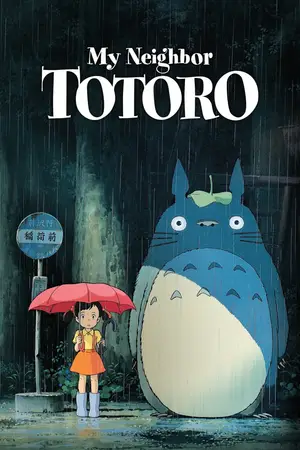
The use of ‘Country Roads’ definitely doesn't stop at the opening credits though, or the closing credits with their Japanese language version of the song for that matter. It's integral to the plot and thematic resonance of the film: a longing for a mythical home, one that likely doesn't exist in the physical world, only in the realm of songs and stories. It's a feeling that lots of Studio Ghibli movies dredge up - who among us hasn't wanted to nap on Totoro's belly or drink hot chocolate with Kiki in Osono's bakery - but this is the rare occasion where the characters of the film have this feeling too.
Shizuku Tsukishima is a fifteen year old girl studying for her high school entrance exams; a high pressure period of time for any Japanese teenager, but especially if you'd rather spend your time in fantasy books than textbooks and can't seem to focus on classwork if your life depended on it. She doesn't live in a charming attic room above a bakery, a moving castle, or a mysterious bathhouse - herself, her parents, and now her older sister (returning to save for a place of her own) are crammed into a two bed apartment that's brimming with old books and course materials from her mother's grad school studies. She barely has time to dedicate to her hobbies amid the chaos, let alone time for a grand, movie worthy adventure, and yet we're still following her on her much more low key quest to find the identity of Seiji Amasawa, the boy who somehow borrows every library book she picks out immediately before she does.

From this starting point, the film's plot remains quiet and episodic, but that thread of Country Roads keeps everything thematically tied up. The first time we hear the song diegetically (that is, within the world of the film itself) is when Shizuku presents some first drafts of lyrics to her friend Yuuko - these are to be used for her middle school graduation ceremony, and as well as a wistful, more serious rewrite, she also shows her a joke version she's written with the title ‘Concrete Roads’:
West Tokyo, Mount Tama/ My home town's a concrete road
The two laugh at Shizuku's cynical reworking, and for me this moment always worked on a couple of levels. For one, it's relatable: many of us don't live somewhere perfectly beautiful, and no where is ever as perfect as described in a song like Country Roads. But as she's saying it, it's hard not to notice that Shizuku is literally inside a Ghibli film. Her surroundings may be concrete, but they're so lovingly rendered by longtime studio artists like Kazuo Oga that you almost want to grab her and shake her!
But this is exactly the point, and by the end of the film, her appreciation of her hometown and the mundane beauty that surrounds her - now reinvigorated for her by her love interest in the overwhelming light of the crack of dawn - is undeniable.

Before this though, we get the crowning moment of the movie - I recently showed this to a class including several men much older than me, and while they found it saccharine, it still puts a smile on my face consistently like few other movie scenes can. In the basement of an antique store Shizuku found while following a cat she saw on a train, she is shown a collection of violins, handmade by the mysterious boy whose grandfather owns the shop. He has seen her lyrics earlier in the movie, and though he mocked them back then, he now encourages her to sing with his accompaniment. She's clearly nervous, blushing and standing pin straight as she looks in any direction other than him, but her amateur performance of her latest iteration of Country Road is irresistibly charming, especially when the grandpa and his friends sneak in and join with their own instruments.
It's a scene that makes me well up with joy, and one that seems to confirm to Shizuku, at least momentarily, what the audience has known for the whole movie: she's already home, and it can be as wonderful as the mythical land of West Virginia seems in John Denver's classic.

For a studio who are all about crafting experiences that we could hardly imagine, let alone in our own lives, such a mundane movie seems counterintuitive. Sure, we get a brief fantasy segment when Shizuku imagines herself with the Cat Baron - the deuteragonist of The Cat Returns, a movie I'm sure that Shizuku penned herself - but while that made the film's poster, it's not the heart of the story that's being told. Shizuku's life is transformed by the nurturing of her creative spirit, and with it, a renewed love for the world that immediately surrounds her. When you're stuck in your own sleepy corner of the world, that can be more meaningful than any forest spirit or grand adventure.
I should also say that this is a much more personal take on an idea fleshed out in an academic article, currently in print with Mechademia. I go into more detail, but it's only through the format of a blog that I could truly impart my love for this movie and it's bizarre yet perfect central soundtrack choice.









Comments 3