21 Jump Street's Best Joke
General Reviews
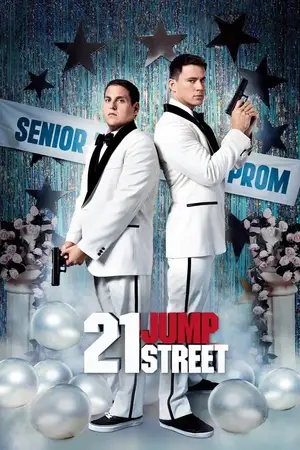
21 Jump Street’s prologue comes in the form of an extended flashback. In the mid 2000’s, Morton Schmidt (Jonah Hill), is a sensitive teenaged nerd. Greg Jenko, (Channing Tatum), is an ultra-cool, aggro jock, and one of Schmidt’s chief tormentors.
Years later, the pair have been reunited at police academy, and are given an unusual assignment. To stop the spread of a new synthetic drug, they must pose as students at a local high school.
Thirteen years after it hit theaters, 21 Jump Street is mostly remembered for its meta elements. The film, a reboot of a hit 80’s TV show, cleverly used the format to parody a slew of lifeless TV revivals. But at fourteen years old, this wasn’t my main takeaway. I have seen the film exactly once, but this viewing was, in some small way, a revelation.
When Schmidt and Jenko return to high school, they quickly default back into their teenage selves. Schmidt is frightened to return to the worst period of his life, while Jenko relishes the opportunity to be a hero jock. On their first day, Jenko follows his high school playbook and picks a fight. He punches a kid and mockingly calls him gay, but this doesn't play as well in 2012. It turns out the kid actually is gay, and Jenko quickly becomes a social pariah. The principal (Jake Johnson), explains to him that times have changed:
“I’m one more black gay kid getting punched away from a nervous breakdown.” He memorably says.
But it’s not just that societal mores have shifted. The entire social structure of high school has been turned upside down. It is no longer cool for Jenko to be a meatheaded bully. Instead, Schmidt is embraced for his sensitive, thoughtful approach to his teenaged friends' problems.
I couldn’t believe my eyes. I’d witnessed this exact thing in my own high school. Now it was in a movie? I expressed this to my dad, and I’ll always remember what he said:
“Yeah…it’s an actual observation.”
The subtext was in his tone: how rare!
The film was full of other, smaller observations about Gen Z. In one scene, exposition about the film’s central drug is doled out in the form of a video from an ill-fated Youtuber (Johnny Simmons).This may not seem noteworthy now, but at the time I was impressed with how well the movie aped the style of 2012-era Youtube. Whoever made this had actually seen a Youtube video before!
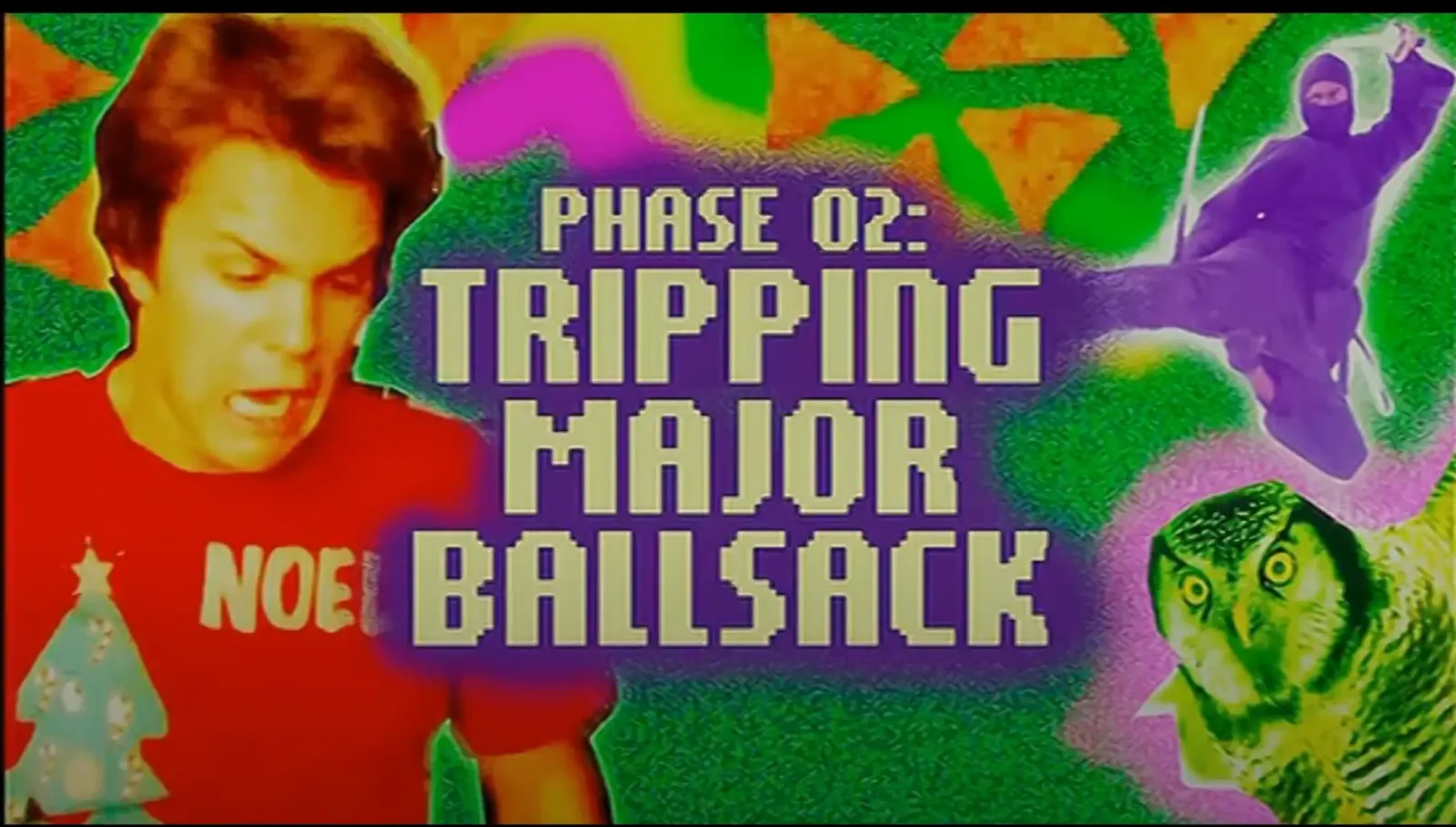
Further evidence: the presence of weirdo vlogger Daxflame, not a particularly mainstream name even on the internet. A few years earlier, a friend had sent me one of Dax’s videos, a funny rant from a teenager complaining about a bad day. Dax was painfully awkward, and it took me several videos to realize that he was playing a character. He had to be. The jokes were too well written, the punchlines too perfectly delivered. This only gave me more respect for Dax. At a very young age, he had built a full narrative world out of vlogs in his bedroom. Even I could see he was a talented actor. Someone else must have thought so, because here he was on the big screen, stealing scenes from Channing Tatum!

This attention to generational detail extended to the production design. The bedroom of Schmidt’s love interest Molly (Brie Larson), looked strikingly like the bedrooms of my female friends. In the background of her scenes, you could see indie girl hallmarks like string lights, ukuleles, and photo booth polaroid's. Again, that may not seem notable now, but it was the first time I had seen these things in a film. Whoever made this must have done their research. Wait, who did make this?

The answer, it turned out, was Phil Lord and Chris Miller.
I had seen, and liked, the duo’s previous collaboration; Cloudy With a Chance of Meatballs. But 21 Jump Street was when I became aware of Lord and Miller as a team. As I continued to follow their careers, I admired how much Lord and Miller remained plugged into youth culture. They seemed concerned with what young people were thinking, and how popular media failed to reflect that.
Their first series, the short lived Clone High, was a parody of overwrought teen dramas like Dawson’s Creek and The OC. Cloudy with a Chance of Meatballs included meta commentary on the sexist writing of female characters. The Lego Movie pushed back on a then-popular trend of films about biological “chosen ones.” Spider-Man: Into the Spider-Verse (which the pair produced and Lord co-wrote), synthesized cultural youth influences into a story about the importance of pop representation.
I’m slightly less enamored with L&M these days. This is partially due to a strange (and quite funny) tantrum Lord threw on Twitter, angry that I Am Cuba was included on the Criterion Channel. Through this, he inadvertently revealed that his grandfather was a Cuban plantation owner. I’m not sure that’s enough to hold against the guy, but it disrupted my image of Lord as someone plugged into modern times. Ditto some of the cop apologia in the second Spider-Verse. All of this is coupled with a growing sense that as I grow up I may end up leaving L&M’s work behind. That being said, I’ll always be grateful for Jump Street.
The movie was eye opening in a few ways, including the way I viewed comedy. By this age, it had been explained to me that some older comedies were culturally significant. That they held up a mirror to society and reflected changing values. 21 Jump Street was the first time I saw myself in that mirror. I realized that I had lived long enough to witness a cultural shift in real time, and it helped me accept how that shift had impacted me.
Like Schmidt, I had entered high school scared and distrustful of my peers. I had my group of friends, but I had been trained by pop culture to know that I would be bullied and shunned by the mainstream. Slowly though, that illusion was melting away. Around the end of ninth grade and the start of tenth, I started to come out of my shell. I took a better look at my fellow students and found that, for the most part, they were alright. People seemed to like me, and I started to like them too. I followed my friends to parties, and eventually started getting invited. Despite all I had been told by movies, girls were actually interested in me.
I’m not going to pretend that all of this was because of 21 Jump Street, or even that it played a significant role. What I will say is that a dumb comedy can help you notice the shifting sands beneath your feet. Or at the very least, make you appreciate what’s in front of you. Call that the power of observation.




Comments 4