Nausicaä of the Valley of the Wind — The key for Studio Ghibli
General Reviews
Now, anime is as worldwide popular as any western animated title (maybe even more popular). We owe that to talented creators; one of those creative minds is Hayao Miyazaki. He's known as one of the most influential and visionary directors of all time, not only inside Japan or regarding animation. His biggest legacy as a filmmaker is Studio Ghibli. Since its founding in 1985, this studio's films have been crucial for the anime industry. Nevertheless, there’s one movie that came up before this studio existed, but some fans (like me) consider it as part of this studio’s filmography. Since Studio Ghibli is now 40 years old, I think it's a good time to remember its films. In this article, I'll analyse why this first movie worked so well and how it became crucial for the future movies.

In a post-apocalyptic world caused by climate change, a young warrior princess must end a war to save her people.
First let's talk about the animation. Miyazaki had been developing his drawing for years, working on TV series like Heidi and Lupin III, which led him to debut as director with Lupin III: The Castle of Cagliostro (a cult classic). In all those titles, he learnt to make his drawings feel real through the details on the sceneries, but he also learnt to differentiate himself from other artists. He puts huge importance on the characters' emotions; even in a simple facial expression, there are a lot of feelings.

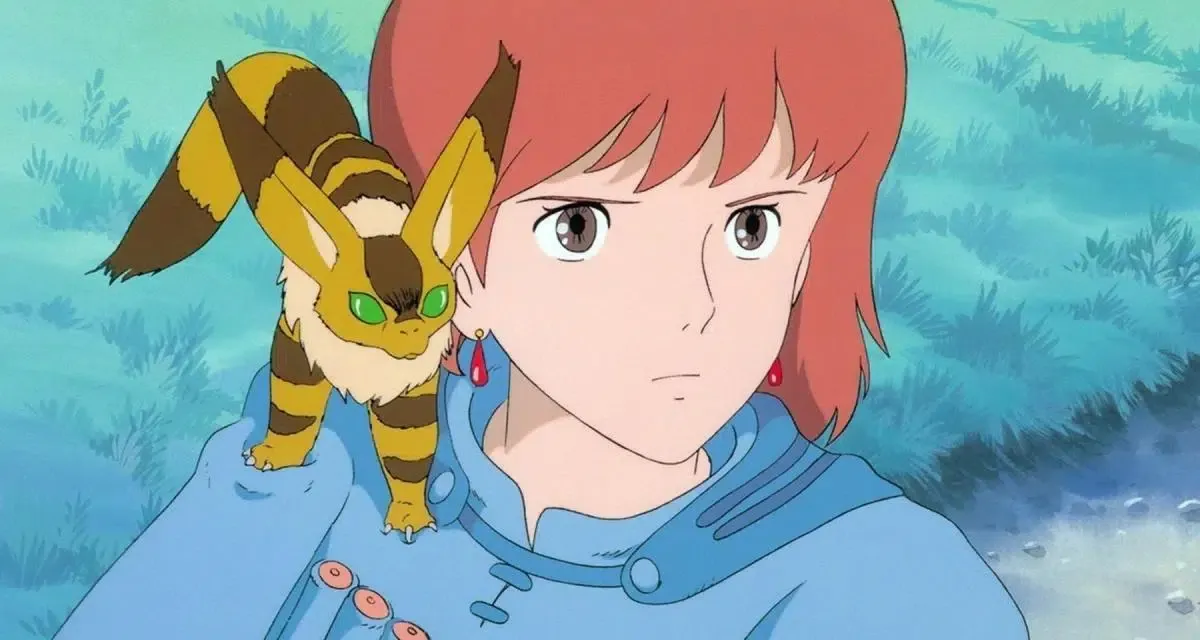
If you are familiar with other popular sci-fi stories, you may have noticed how important the world-building is; if your world doesn’t have an interesting lore or an eye-catching visual proposal, the audience won’t care about it. Luckily, this one is amazing. Nausicaä's world has some remnants from the old time before the apocalypse, with big airships and war machines, but their designs are filled with extra details, like not very realistic designs, in order to add a small sense of fantasy.
This mixture of sci-fi and fantasy is also seen in the creatures. The whole flora and fauna have mutated into something strange and fascinating. Just like worlds like Arrakis from the Dune universe, Nausicaä's world may be scary to live in but is also wonderful if you look closely.
The anti-war commentary is as obvious as the environmental speech, and they both complete each other. Nature evolved in order to survive and even heal the planet, while humanity is still fighting each other and with nature itself over the last pieces of a dead era. The message may sound simple for most of the viewers, so, in order to add more complexity, Miyazaki uses fear as the main catalyst for the conflict. Men are afraid of each other and this dangerous new world. They are people trying to defend themselves, others trying to take over everything to protect their home, and others who will risk everything to do the right thing. This movie does more than just preach about peace and environmental consciousness.
The last piece for understanding this movie is the protagonist. Nausicaä has strong ideals which are put on strike throughout this adventure that will make her understand her world is more complex than she thought. If this was an American feature, maybe the film would have ended with Nausicaä defeating the antagonist queen and becoming a new leader. But Miyazaki has a different point of view; Nausicaä is willing to give her life to show the way of peace. This conclusion is not naive at all. She goes through many situations when she has to use violence or sees friends getting hurt, but she still believes in love as the solution.
After I saw this film, I got absolutely fascinated. Then, I decided to watch every Ghibli animated feature. Even if I haven’t finished that task yet, I can identify some of the most important trademarks of Studio Ghibli in this first feature: strong and caring female characters, casualties related to war, commentaries about our responsibility with the environment, highly detailed drawn nature, fantasy and/or science fiction, airships, loyal partners and emotional growth. Sure, not every Ghibli film has all of those key points, but that’s something we'll see in future analysis.
When this film was released, the manga hadn’t ended yet; Miyazaki wouldn’t finish the story until 1994. Anyway, Nausicaä of the Valley of the Wind turned out to be one of his most important projects. He introduced himself as a creator with a personal voice and style which would resonate around the world. With this movie, he and his friend Isao Takahata had just earned the reputation, the resources and the contacts they needed in order to found Studio Ghibli. A new era for Japanese animation had just begun.










Comments 10