1923: An Odyssey Toward Love—and America’s Gate of Humiliation
General Reviews
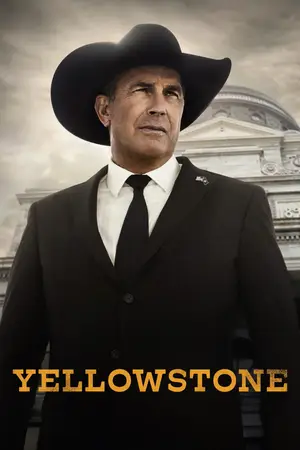
1923, one of the prequel spin-offs of Yellowstone, has concluded. While it’s far from a masterpiece, at least it didn’t suffer the same disastrous ending as the original show.
In Episode 6 of Season 2, around the 25-minute mark, we see Alexandra—a woman from England’s upper class who betrayed her family for true love and traveled to America in search of her husband—rescued in Chicago by a kind British couple after enduring numerous ordeals. This compassionate pair decides to help her once more by embarking on a road trip to take this headstrong woman to her husband’s home in Montana. The husband remarks, “I don’t have a plane, but I do have a car, and I also have the ability to drive the machine. I can think of very little I wouldn’t do to be some small part of this odyssey, that you find yourself on.”

Yes—Odyssey. That’s the word that has echoed in my mind ever since Season 2 began. This arduous journey of lovers forced apart actually started midway through Season 1, when Spencer Dutton receives a letter from his aunt informing him that the family ranch is under serious threat. Without hesitation, he sets out from the remote savannahs of East Africa with his newly beloved fiancée Alexandra, determined to find a way back home to Montana.
Today, such an anxious homecoming would be far simpler. After receiving the message in Serengeti National Park, the couple could drive a little over eight hours to Nairobi, hop on an intercontinental flight via Doha and Seattle, and arrive in Montana in under 27 hours. Add another three or four hours’ drive, and they’d be standing at their doorstep—armed with superhero powers and a Congressional Medal of Honor—ready to vanquish their enemies. Travel expenses? For a couple with vast family wealth, that shouldn’t be an issue.
Even a hundred years ago, their so-called “honeymoon-turned-homecoming” journey wasn’t necessarily the grueling, overblown expedition shown in the series. After all, Jules Verne had already imagined an Around the World in 80 Days adventure back in 1872. And anyone who’s read West with the Night, a memoir of a female pilot in 1930s Kenya, would know that for the wealthy British and American elites living in East Africa, flying between major cities and national parks was as easy as ordering a ride-share today.
Taking into account the historical context and transportation of the time, I believe that even in 1923, a journey from Tanzania’s Serengeti to the Dutton ranch in Montana would have taken—at most—a month.

But as one of the show’s most important subplots, 1923's writers clearly racked their brains to create countless obstacles for the star-crossed lovers, giving their journey the tragic grandeur of a Greek odyssey. Spencer first signs on as a crew member aboard a tugboat departing from Mombasa, heading toward the Suez Canal. The tug is accidentally rammed and sunk by a French freighter; just before the couple is devoured by Red Sea sharks, they’re rescued. En route to Marseille, they hold a high-seas wedding. Then it’s off to Sicily to catch a steamer to London—where they run into Alexandra’s jilted ex-fiancé. A duel with the rival ends in an accident, forcing Spencer to disembark at the nearest port, while Alexandra has no choice but to continue to London alone.
By the start of Season 2, what was meant to be a shared honeymoon—more accurately, a "bittermoon"—has become a separated odyssey. On one side, Spencer scrapes together travel funds by working aboard a steam freighter and rescues a Italian youth named Luca who was sextual assaulted along the way. After somehow landing in the U.S., he eventually arrives in Galveston, Texas. There, Luca’s brother ropes him into smuggling illegal whiskey to Fort Worth, from where he plans to take a train back to Montana.

Meanwhile, Alexandra begs her best friend to buy her the cheapest third-class ticket on a transatlantic liner. She flees London for New York, only to endure a humiliating, invasive medical inspection at Ellis Island. Once granted entry, she’s immediately robbed of everything at Grand Central Station.
To echo the horrors of Trump’s harsh immigration policies, the writers place particular emphasis on Alexandra’s entry into the U.S.—the long queues, intrusive exams, and dehumanizing interrogations. Just before she receives the final stamp of approval, this resilient woman—hiding her noble background in pursuit of love—furiously tells the immigration officer: “You have no dignity and no mercy, yet you claim to be the guardians of freedom.”
Taylor Sheridan, the undisputed architect of the Yellowstone Universe, has long been seen as a nostalgic traditionalist—a rare Hollywood redneck who seems to long for the cowboy days and echoes a Make America Great Again sentiment. But this searing, suffocating immigration sequence in 1923 suggests otherwise. Sheridan’s deep attachment to land, cowboys, and Native Americans doesn’t mean he aligns with Trump’s regressive, anti-immigrant politics. On the contrary, he honors and elevates immigrants—those modern-day Odysseuses—who sacrificed greatly to chase the American dream and finally reach this land.

Reflecting on Spencer and Alexandra’s drawn-out odyssey in 1923, which seems to span an entire year, I found myself pulling up Google Maps. If Odysseus were to make the journey today—from the ruins of ancient Troy near Çanakkale, Turkey, back to his home in Ithaca—he could simply drive across the Dardanelles, through Thrace and the Peloponnese, and take a ferry to Ithaca. Total travel time? Just 14 hours and 6 minutes.





Comments 0
No comments yet.