Wet Hot American Summer: When Cult Becomes Classic
General Reviews
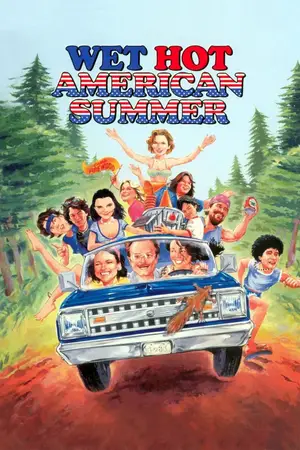
Wet Hot American Summer is a 2001 summer camp comedy directed by David Wain which takes place on the last day of camp in 1981. In my humble opinion, it’s also the funniest movie of all time.
The film initially bombed at the box office upon release and was panned by critics and audiences alike. The film has since been re-evaluated as being ahead of its time, garnering a cult following thanks to its run on VOD during the following decade. Nowadays, many consider Wet Hot American Summer to have graduated beyond cult status to be a bona fide seminal comedy classic. However, I still believe it to be a criminally under-seen film, and I have made it my mission in life to spread knowledge of this comedic masterpiece at each and every opportunity.

Many people, like myself, found themselves discovering this hidden gem in the early days of streaming, leading to Netflix acquiring the rights to the IP in the mid 2010’s, and the subsequent release of two limited series: Wet Hot American Summer: First Day of Camp and Wet Hot American Summer: Ten Years After, which both received a glowing reception. Every single original cast member returned to reprise their roles 15 years after the original film, along with an expanded cast of dozens of new characters, but that’s another story.

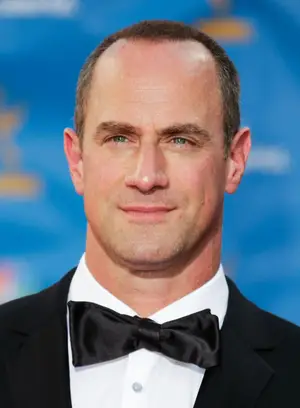
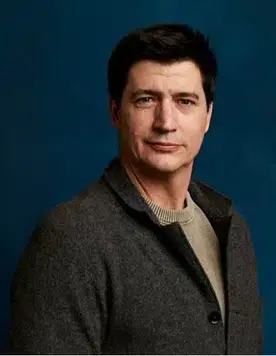
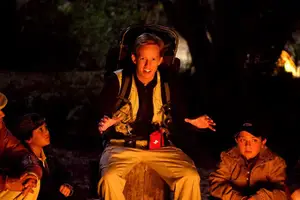
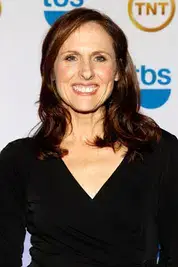
Speaking of the cast, this film is packed to the brim with recognizable names and faces. Wet Hot American Summer includes a mix of seasoned veterans including Janeane Garofalo, David Hyde Pierce, Christopher Meloni, and Molly Shannon; alumni from the 90’s sketch comedy series The State; and a bunkload of young up-and-comers, including debut feature film performances from Elizabeth Banks, Amy Poehler, Joe Lo Truglio, A.D. Miles, Ken Marino, Michael Ian Black, and Bradley Cooper (who skipped his college graduation to be in the film). The film also contains a pre-Friends Paul Rudd, and a cameo from H. Jon Benjamin as the voice of a sentient can of vegetables, but I’m getting ahead of myself here.

The film starts off as your run-of-the-mill summer camp flick, with some goofy jokes here and there, but nothing too weird. Characters and their relationships are established through regular camp activities, with the day building towards the big end-of-summer talent show later that night. However, as the film goes on, things get progressively more absurd until all sense of realism is left in the dust, tossed out the door of a moving van along a dirt road along with a camper (or two).

Tonally, the film has parody-like sensibilities, though writers David Wain and Michael Showalter (who also plays the protagonist, Coop) insist the film is not a parody, but rather a genuine summer camp movie. They can recall every event in this film happening to them, or someone they knew, at camp in some shape or form. Because of this, the film has heart and a sense of authenticity that shines through until the end credits. You can’t help but love and relate to these characters, regardless of how ridiculous the situations they find themselves in.

The single-day framing device comically compresses an entire summer’s worth of storylines into a 24 hour period. Characters go from being unacquainted, to in-love, to engaged, to pregnant with child before the movie is done. An entire Rocky III-style training montage takes place over the course of 15 in-world minutes. A group of campers spend half the movie inches away from going over a waterfall while white-water rafting. There’s also a subplot involving a falling piece of a space station, and a lengthy chase sequence to Loverboy’s “Turn Me Loose” where someone manages to outrun a motorcyclist on foot, in sandals. Did I mention the sentient can of vegetables?

No opportunity for a joke is left unseized, even down to things that most people wouldn’t think of or even notice, like scene exits, obvious stunt doubles and continuity errors, and the re-use of the same pot-breaking sound regardless of whether it fits contextually or not. Even the bad, dumb jokes are hilarious because they’re made with self-awareness. For example, there is a scene where a character kicks a bucket into the air, slips on a banana peel, falls into a kiddy pool, and then the bucket falls onto their head. We know it’s a cheap, stupid joke, but it’s funny because we know they know it too, yet they still chose to make the joke anyway.

It’s clear everyone involved in this film had an amazing time, as showcased by the 2015 documentary Hurricane of Fun: The Making of Wet Hot, directed by Amy Rice, which was released on Netflix in 2015 alongside the first limited series, and is now available to stream for free on David Wain’s vimeo.
The cast and crew stayed at the camp during the shoot, basically living the movie while making it. They slept in the bunks, ate meals together in the mess hall, and goofed around in the off-hours. To this day, Paul Rudd doesn’t even remember if he was paid for the movie. In a 2010 interview with Regis and Kelly, when asked with which actress was his favourite on screen kiss, Bradley Cooper instead chose his kiss with Michael Ian Black in Wet Hot. Many people involved with this film have gone on record stating the making of this film to be one of the best experiences of their career, if not the best, despite it ironically raining for 23 of the 28 shooting days. It’s no wonder why everyone chose to come back for the limited series, and it’s no wonder why this film has found a second life among the youth of today. The movie screams meme energy, and is endlessly quotable.

I watch this movie at least once a year, and I recommend it to everyone whenever favourite comedies are up for discussion because it matches my sense of humour like nothing else. If you’re a fan of movies like Airplane!, Hot Rod, and Anchorman, or shows like I Think You Should Leave, you may be inclined to agree. But if you haven’t had the pleasure of experiencing this film yet, I have only two questions for you: “Why not?” And “Well, what are you waiting for?”
Mentioned in this piece
 Wet Hot American Summer2001
 Wet Hot American Summer: First Day of Camp2015
 Wet Hot American Summer: Ten Years Later2017
 Hurricane of Fun: The Making of Wet Hot2015
 The State1993
 Role Models2008
 Saturday Night Live1975
 Medical Police2020
 Childrens Hospital2008
 Paul Rudd
 Bradley Cooper
 Amy Poehler
 Elizabeth Banks
 Janeane Garofalo
 David Hyde Pierce
 Christopher Meloni
 David Wain
 Michael Showalter
 Ken Marino
 Joe Lo Truglio
 Marguerite Moreau
 A.D. Miles
 Michael Ian Black
 Molly Shannon
Comments 5