'Bacurau': Apocalypse of Cannibalism
General Reviews
Column Introduction:
If watching a movie is like encountering a spark of light within darkness, then watching a suspense movie is like staring into the darkness in an abyss. This column focuses on representative Latin American suspense films since 2000, which can be grouped into the following three categories:
1. Reflective historical narratives of authoritarianism, such as "The Secret in Their Eyes" (Argentina, 2009) and "El Conde" (Chile, 2023)
2. Scrutiny of contemporary crime frenzy, such as "The Hidden Face" (Colombia, 2011) and "New Order" (Mexico, 2020)
3. Artistic explorations transcending boundaries, such as "Bacurau" (Brazil, 2019) and "Trenque Lauquen" (Argentina, 2022)
'Bacurau': Apocalypse of Cannibalism
In the 1950s, Margaret Mead (1901-1978), an American anthropologist known as the "Mother of Anthropology", believed that the hallucinogen LSD could free humanity from the cycle of self-destruction and violence and create a new civilization on Earth. Today, some movies behave like hallucinogens. The Brazilian film “Bacurau", co-directed by Kleber Mendonça Filho and Juliano Dornelles is one such film.
The film tells the story of a remote Brazilian town named Bacurau resisting American assassins. It is divided into four segments: a funeral, an election, American assassins, and a clash in the small town. With the scenic wilderness, rural drama and terrifying pursuits, it exudes a captivating surrealist atmosphere. It blends various movie genres and themes including science fiction, thriller, crime, mystery, Western, cult, and exploitation, while also embodying the Brazilian culture of cannibal spirit.
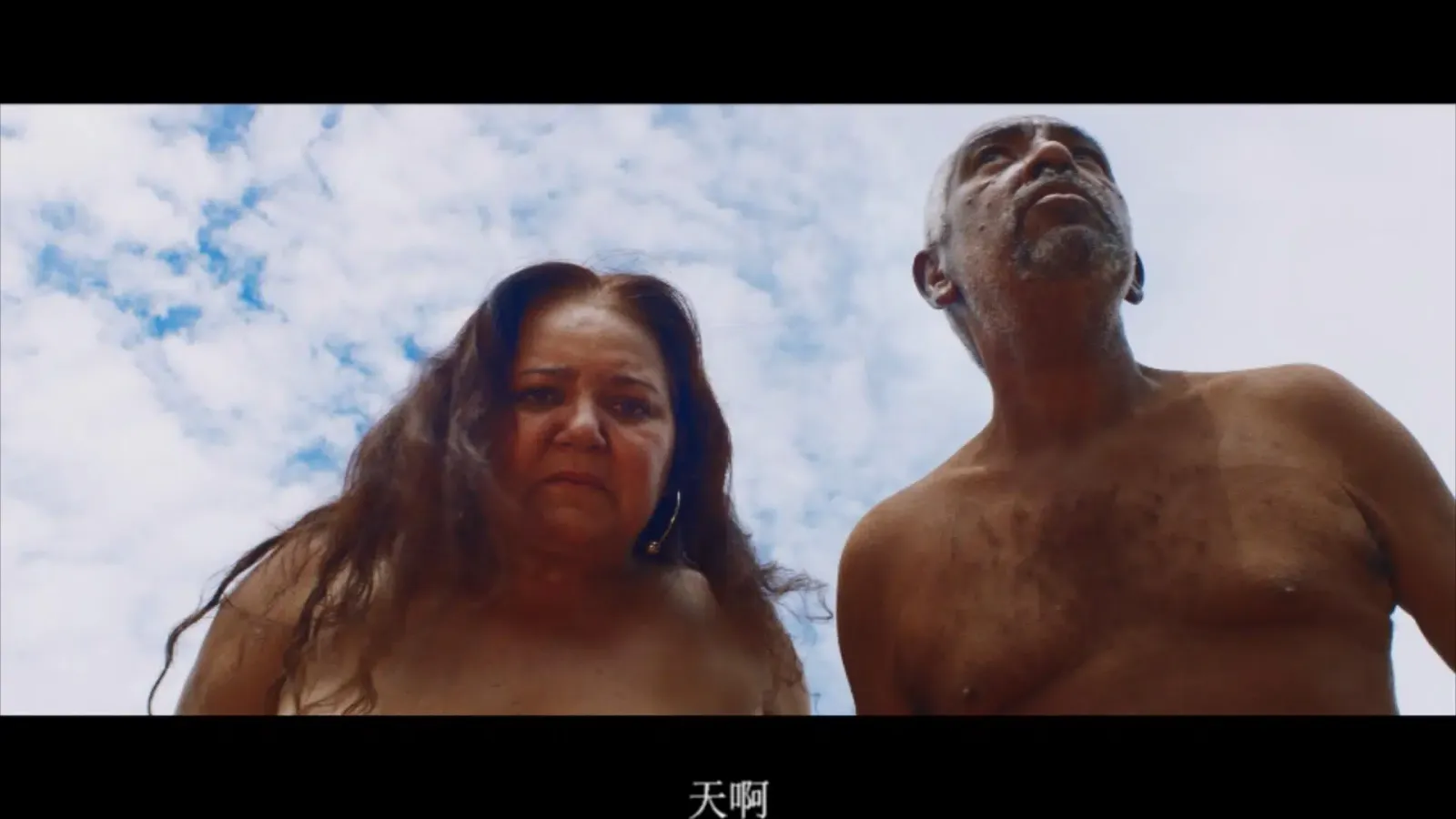
Sertão
The film establishes a space-time where the past, present, and future coexist from a "cosmic perspective". The transition from outer space, Planet Earth to the town of Bacurau is completed within a single tracking shot, accompanied by the gentle tunes of "Não Identificado" by Brazilian Tropicália singer Gal Costa. With a nostalgic atmosphere, the camera descends slowly from the clouds to the "hinterland" (sertão) of northeastern Brazil—a folded region thick with colonial and resistance history. A water truck travels across the wilderness of the hinterland, and the temporal setting is in the "near future". In other words, the truck comes from the depths of time and space and is moving towards the future. The hinterland, which is an arid area with alternating droughts and torrential rains, represents Brazilian history. It is both the womb that nurses Brazil and a maze that entraps it. However, unlike the thorny scrublands in Cinema Novo films or the semi-desert in "Central Station" (Brazil, 1998), the hinterland teems with vibrancy.

In the car sits a woman named Teresa as well as her driver. They arrive at a matriarchal town called Bacurau that is reminiscent of the fictional town of Macondo in Latin America. The funeral of Teresa's Afro-Brazilian grandmother, who is also the chieftain, is ongoing. The funeral symbolizes a crisis as the chieftain and Bacurau are on the brink of extinction. The lyrics of the dirge sung by the funeral service team hint at the recurring horrors in Bacurau: hauntings, curses, and nightmares.
Then, the cast appears. Perhaps only in Brazilian cinema can we see such a rich diversity of characters—whites, indigenous people, blacks, mixed individuals of these three races, homosexuals, transgenders, exhibitionists, alcoholics, fugitives, prostitutes, and troubadours. Bacurau is an autonomous utopia of high heterogeneity and diversity, which the Mexican philosopher José Vasconcelos described as "La raza cósmica" (The Cosmic Race). Filho called Bacurau a "remixed quilombo" (a settlement established by runaway slaves), "a black community", and "a historical place of resistance".
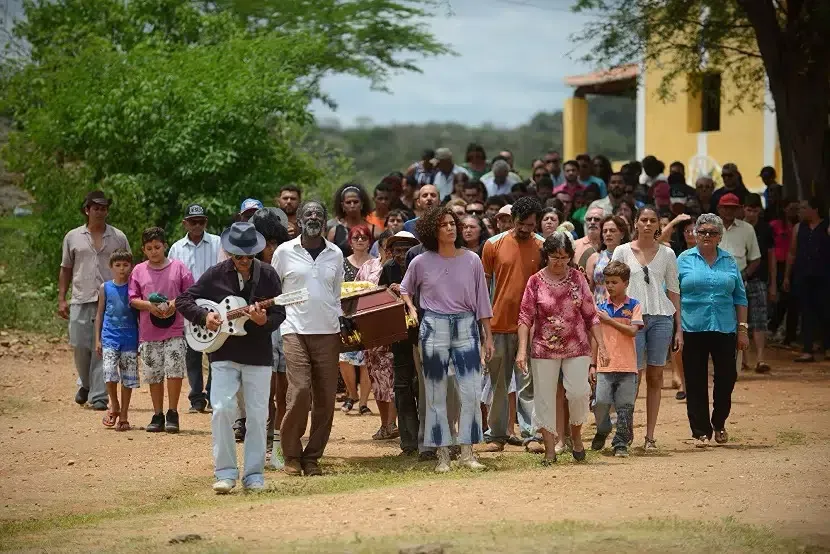
Although Bacurau appears to be a Macondo-style Latin American town, the townspeople are not primitive and ignorant individuals. It is a technologically modernized town where its people are familiar with the use of smartphones and GPS; information spreads rapidly, and crowds gather and disperse quickly. There is no single primary character in the film, and its narrative subverts the "dictatorship" of the protagonist/hero-led stories, unfolding in an egalitarian, ensemble cast manner. It is a film centered on Bacurau and "savages ".

Savages
The election segment reveals the paradox of Brazilian democracy. It is a game involving townspeople, politicians, capitalism, and American mercenaries where white capitalists manipulate politicians, while the latter hires American killers to slaughter townspeople. The townspeople are faced with three powerful forces: capitalism, power, and violence. It is almost an unwinnable, cruel game, turning the film itself into a political manifesto.
Subsequently, "Bacurau" transforms into a thriller film as a series of spooky events unfold. Unidentified objects fly in the sky; water trucks are ridden with bullet holes; herds of horses run through the streets at midnight; Bacurau disappears from satellite maps; communication signals are interrupted; a massacre occurs at a nearby farm; and tourists turn up at the town on motorcycles.
Following two tourists on motorcycles and a UFO drone, we see a group of professional killers who seem to have walked out of American movies. Led by a German-American named Michael, they collect bounties per head. He describes Bacurau as a "sh*t-hole town" and the townspeople as "f**king savages". What's more interesting is the identities of the killers—a New York nanny, a correctional officer in an American state prison, an HR employee in a supermarket, and a helpless man with a failed marriage. They are also marginalized people of the mainstream world, and violence is the hallucinogen for them to escape their failure-ridden lives.
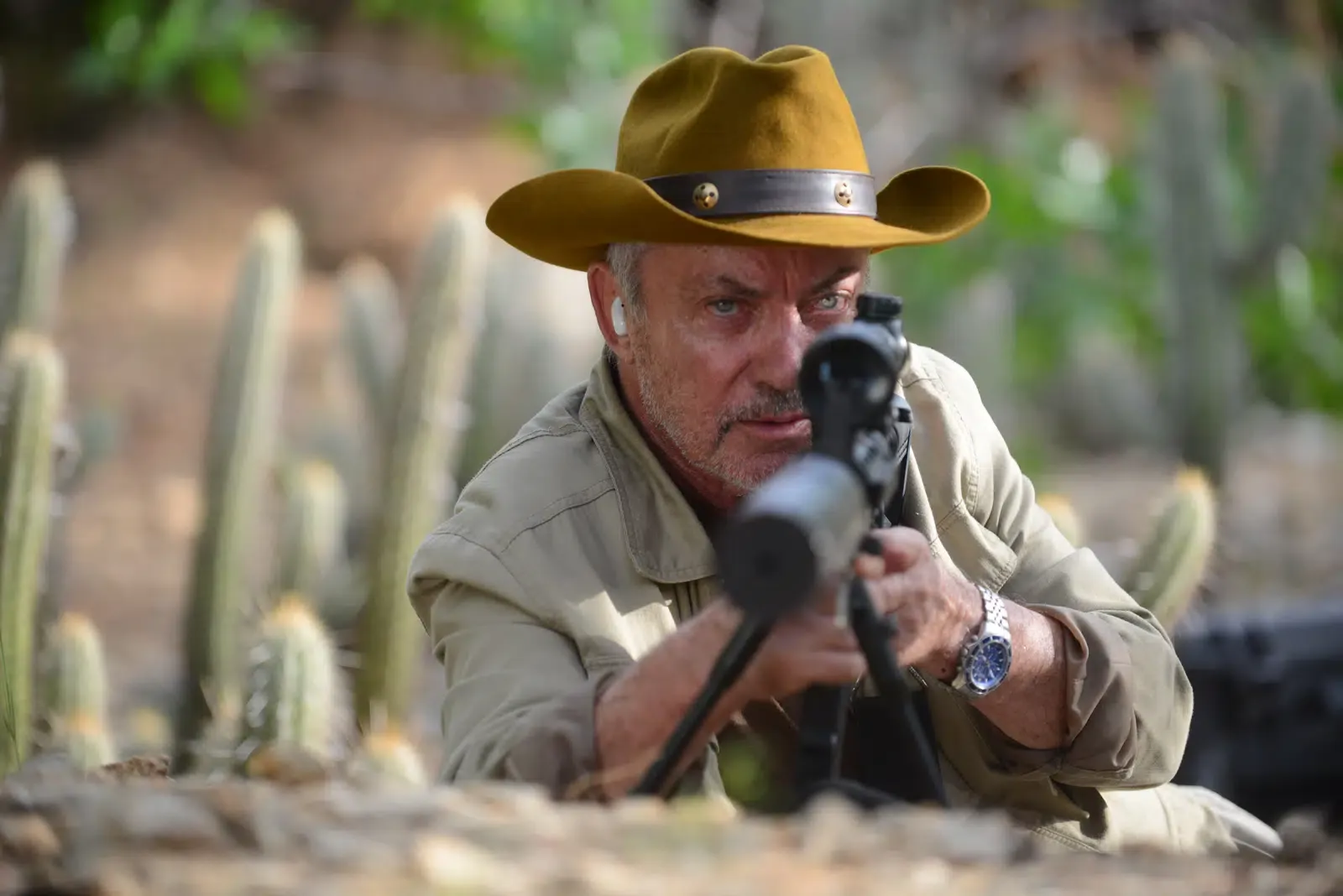
The group of armed mercenaries went on crazy massacre, killing innocent townspeople and calling them savages—undoubtedly a huge irony. The core conflicts in the film are the clashes between different races and civilizations, whites and non-whites, "noble savages" and modern people, as well as wilderness and modernity.
Bacurau must face a bloody and brutal battle for survival. When Michael leads his men into the town, he says, "I have documents that prove that we are not here." Thus, it is an existential battle, and a battle between spirits, UFOs and owls ("Bacurau" in Portuguese). Brazilian poet Oswald de Andrade published the Manifesto Antropófago (Cannibalist Manifesto) in 1928, in which he humorously transformed Shakespeare's famous "To be, or not to be?" quote into "Tupi or not Tupi" to signify his stance on indigenous people. The Tupi people are indigenous Brazilians south of the Amazon basin, who have a custom of cannibalizing prisoners of war. In the Cannibalist Manifesto, Andrade regarded cannibalism as a symbol of the Brazilian national spirit—with Brazilians being a unique civilization formed after engulfing American and European civilizations. In the film, when the American killers enter the town, the sequence close-up shots of townspeople’s’ mouths ingesting hallucinogens is an expression of the spirit of cannibalism.


At every turning point in "Bacurau", there are mouth close-ups of townspeople consuming hallucinogens: when Teresa enters the town, her grandmother is being buried, and the ultimate clash is about to happen. When danger lurks, the townspeople start practicing capoeira—a dancelike martial art originated from African slaves, and folk music is switched to psychedelic electronic music. The combination of a visual and auditory hallucinogen serves to obliterate fear, cast off hatred, and instil trust in oneself.
Violence
The final part of the film unfolds from the perspective of the killers, opposing Americans in an American way aesthetically and cannibalistically. The film references American director John Carpenter's horror films, Sergio Leone's Westerns, and pulp art. Cinematic languages such as CinemaScope, split diopter shots, dissolves, and wipes combine the history of the Brazilian hinterland, the Vietnam War, and Hollywood films in the 1970s, creating a nostalgic retro visual style. Dornelles once said that he and Filho love American films, but "Bacurau's references to American cinema go beyond mere homage – they're deployed toward a sharp, parodic critique of American culture and policy".

The film begins and ends with a funeral. As Filho said, in Westerns, "the cowboys are the Indians, and the Indians are the cowboys3." In "Bacurau", the killers are the townspeople, and the townspeople are the killers. The spirit of cannibalism lies in integrating the binary opposition and clashes between civilizations caused by modernity and being connected to a world of prophecy.







Comments 0
No comments yet.